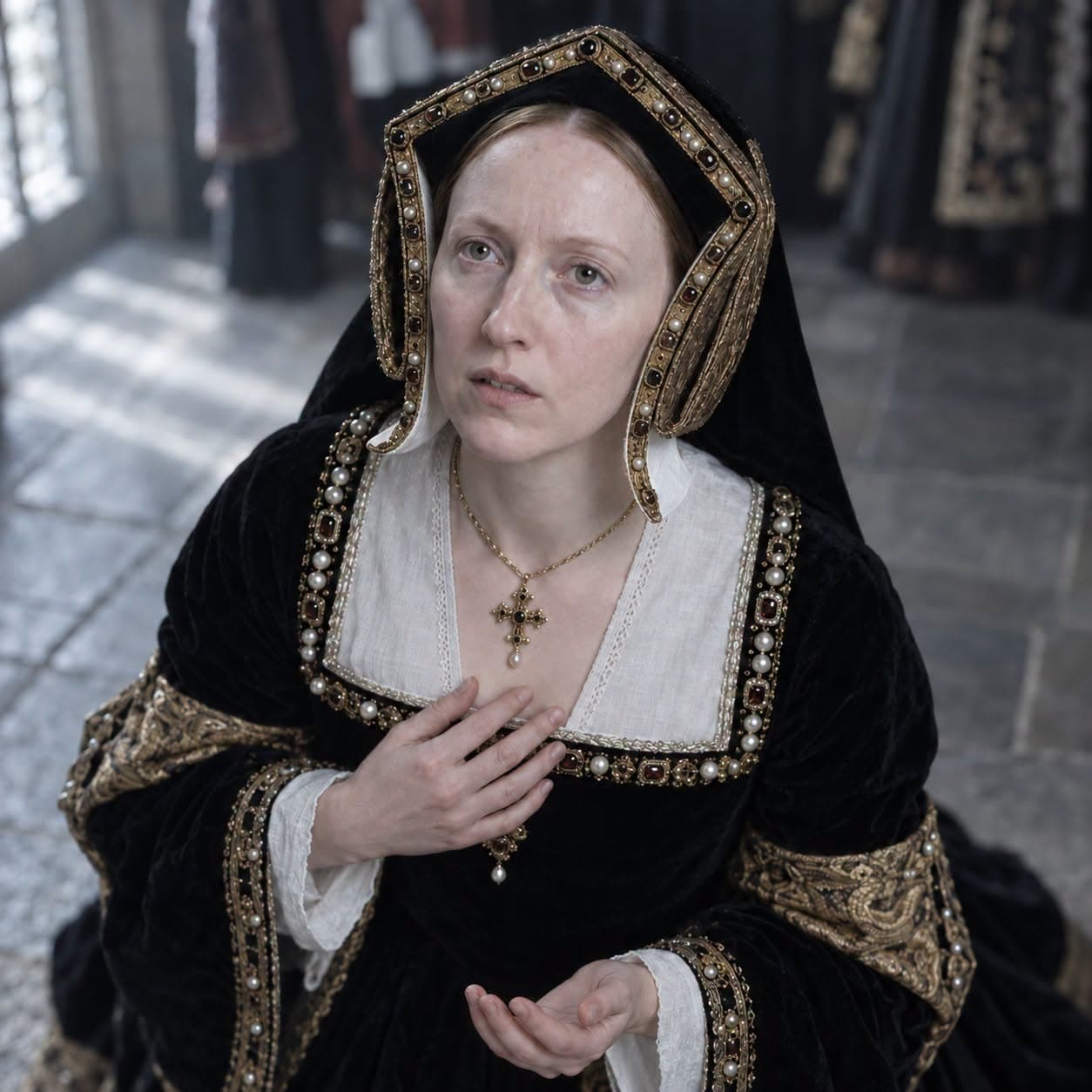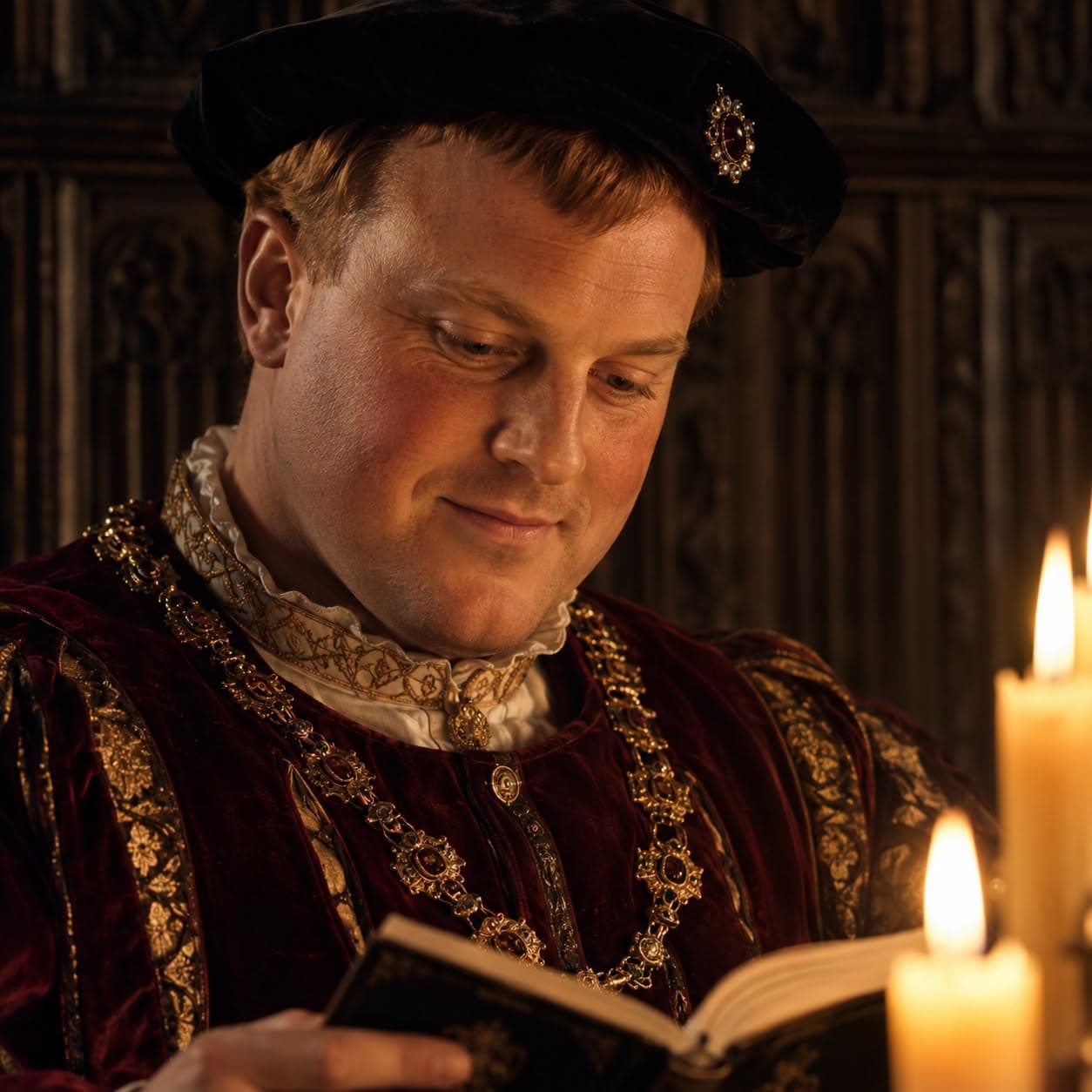

She refused to leave. So he had her dragged out by the arms. She spent a decade writing letters that nobody acted on. Then the moment came, and she told them everything.
Elizabeth Stafford was born around 1497, the daughter of Edward Stafford, third Duke of Buckingham, and Eleanor Percy, into one of the oldest and most dangerous bloodlines in England. The Staffords were not merely noble: they were royal-adjacent in a way that made Tudor kings nervous, and Elizabeth had watched what that proximity cost when she was still a girl. Her father was arrested in 1521 on charges of treason against Henry VIII and executed on Tower Hill in May of that year, his lands attainted, his family stripped of everything the Crown decided it could take.
She was approximately twenty-four years old. She had learned already, earlier than most, that a family's greatness was not protection: it was a target.
She had married Thomas Howard, the Duke of Norfolk, in 1513. He was one of the most powerful men in England, the pre-eminent nobleman of the Tudor court, a soldier and diplomat of considerable ability and colder personal qualities, and the marriage had begun with the reasonable expectations of a dynastic arrangement between two great families. It did not stay reasonable for long.
They had children together, Henry Howard, later Earl of Surrey, among them, and by the late 1520s Norfolk had installed a mistress, a woman named Bess Holland, and had done so with the specific brazenness of a man who did not believe his wife had any mechanism available to object.
Elizabeth objected.
She objected loudly, persistently, and in writing, across a decade, to her husband, to her brother, to Thomas Cromwell, to anyone who might conceivably intervene. Norfolk's response was to reduce her allowance, dismiss her servants, and confine her to their house at Redbourne in Hertfordshire with a diminished household and no practical means of leaving.
When she refused to accept this arrangement, he removed her by force.
Her own later testimony and his letters to Cromwell confirm the physical removal, the dragging by the arms, the violence used against a woman in her own home to make her comply with her own disposal.
Norfolk wrote to Cromwell describing his wife's conduct as wayward and her language as wild. These were the letters of a man explaining a problem he has created and would prefer someone else to manage.
While her husband was positioning the Howard family at the centre of Tudor power, his niece Anne Boleyn having become queen in 1533, Norfolk was navigating the court with the precision of a man who understood that a niece on the throne was an asset to be managed. Elizabeth, however, was doing something the rest of the Howards were not.
She was writing to the Imperial ambassador Chapuys. She was carrying communications on behalf of Katherine of Aragon. She attended Katherine's cause not from sentiment, which would have been understandable, but from a specific conviction that what was being done to Katherine was a precise mirror of what was being done to her, and that the mechanisms used to discard a queen were the same mechanisms, scaled upward, used to discard a wife.
Henry VIII banished her from court for it. Norfolk was furious. She kept writing the letters.
Anne Boleyn rose and fell. Jane Seymour came and died. Anne of Cleves arrived and was annulled. Catherine Howard knelt at the block. Henry married Catherine Parr. Elizabeth Stafford remained at Redbourne or wherever Norfolk had placed her, reduced in circumstance, in correspondence, in servants, but never in resolution.
She had been filing evidence for years. She understood, with the composure of a woman who had been waiting a long time, that the Howards were a family whose men attracted charges, and that her husband's career ran on the same machinery that had killed her father, and that the machinery would eventually come for him too.
It came in December 1546.
Norfolk and his son Henry Howard, Earl of Surrey, were arrested. Surrey had made the specific mistake of quartering the royal arms of England with his own, which in the atmosphere of a dying king's court was sufficient. He was executed in January 1547. Norfolk went to the Tower and waited. And Elizabeth Stafford gave her testimony.
She told them about the physical removal. She told them about the imprisonment. She told them about Bess Holland, installed openly in the household, and about the years of diminished allowance and dismissed servants and letters that were ignored or filed against her. She told them with the controlled precision of a woman who had been composing this statement in her head since approximately 1531 and was not going to waste it.
Norfolk was attainted. He was in the Tower waiting for the axe when Henry VIII died on the twenty-eighth of January 1547, and the execution scheduled for the following morning was suspended, and Norfolk lived. He lived through Edward VI's entire reign in the Tower and walked out when Mary came to the throne in 1553.
Elizabeth Stafford died in 1558. She had lived to see her testimony placed on the record at the highest level of the state, and she had outlived the man she testified against by four years. Norfolk died peacefully at Kenninghall in 1554 at the age of eighty-one, but he died with the knowledge that his wife had refused to be silenced.
The statement she had spent fifteen years composing is still there, in the archive, exactly as she left it. He could not take that back. He did not try.