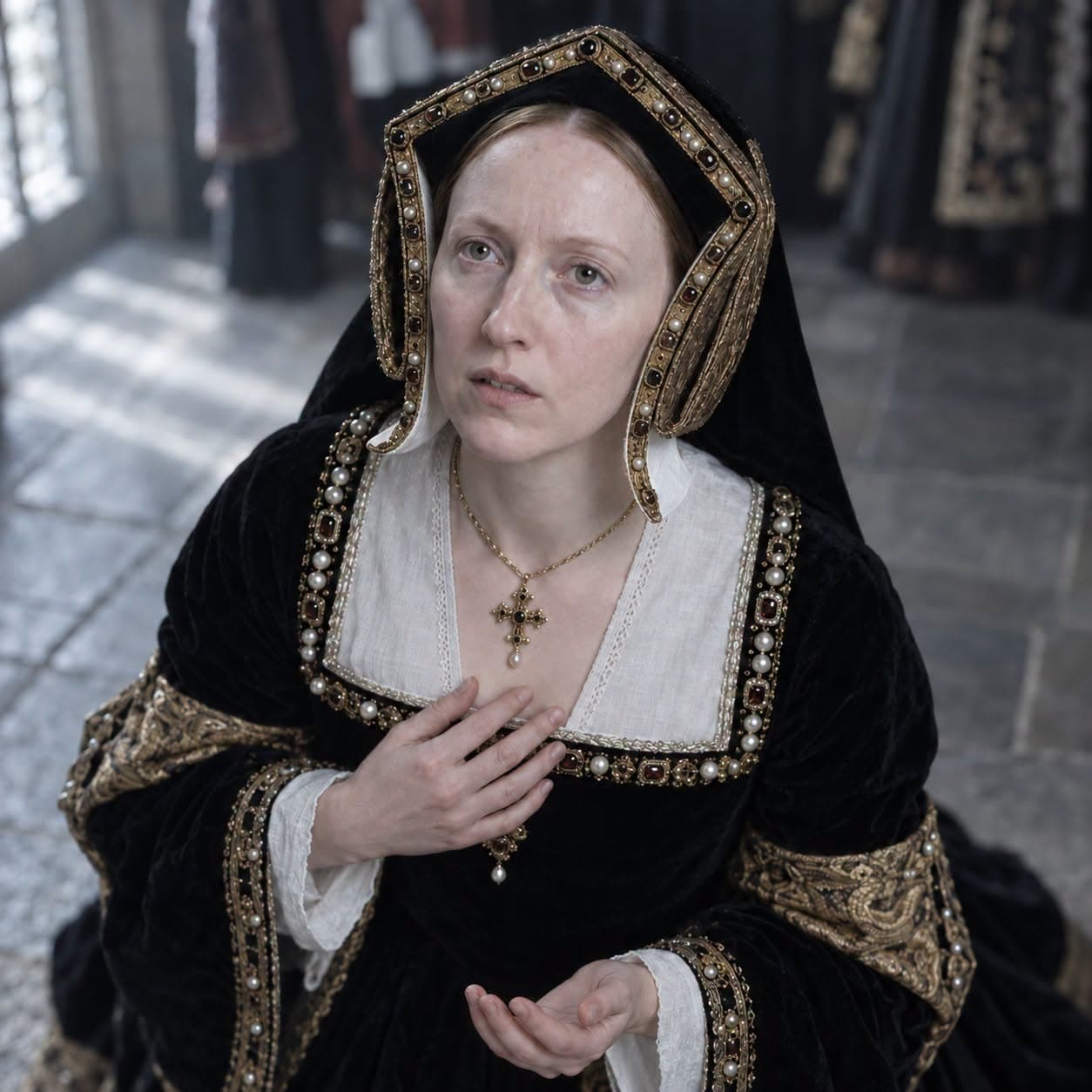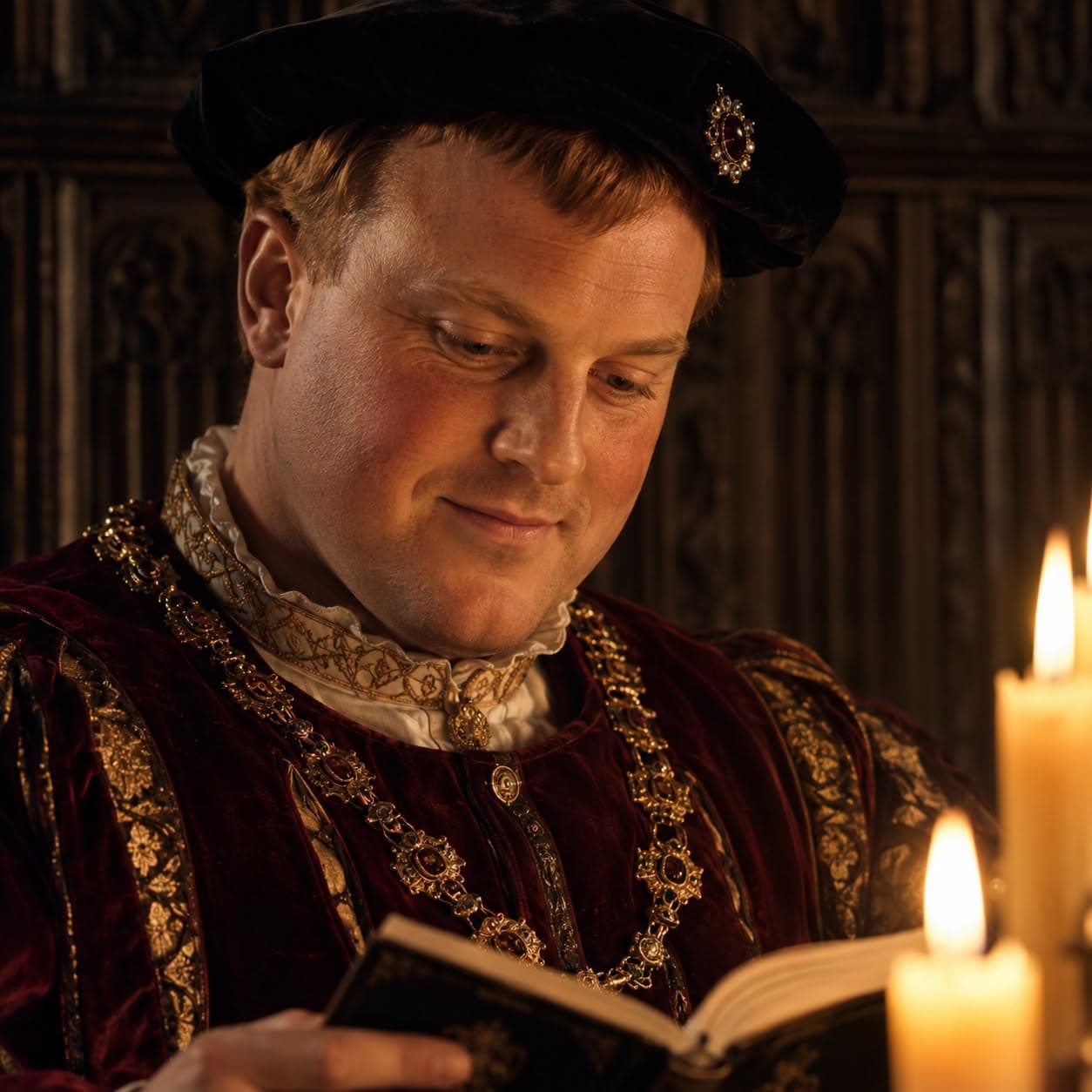

She was a poor illiterate servant girl from Kent who told the King of England to his face that God would destroy him if he divorced his wife. He could not execute God. He executed her instead.
Elizabeth Barton was born around 1506 in the village of Aldington in Kent, the daughter of a poor Catholic family, uneducated and almost certainly illiterate. In 1525, aged nineteen, she was working as a domestic servant in the household of Thomas Cobb, farm manager to Archbishop William Warham of Canterbury, when she fell gravely ill. She suffered seizures, paralysis, periods where she could not eat or drink and it was during this illness that she began to speak.
She spoke of heaven and hell and purgatory. She rebuked sin and vice with a precision and authority that no nineteen-year-old servant girl had any business possessing. Her neighbours concluded the obvious: that God was speaking through her. This was not, at the time, a particularly dangerous conclusion to draw.
Warham sent investigators. The investigators found her orthodox, sincere, and genuinely remarkable. In 1526 she was reported to have been miraculously cured of her illness at the chapel of Court-at-Street, in front of a crowd of three thousand witnesses. The following year she was admitted as a nun to St Sepulchre's convent in Canterbury.
She was twenty years old. She was famous throughout England. Bishops sought her counsel. Cardinals wrote to her. Sir Thomas More came to see her. People made pilgrimages. Cardinal Wolsey, the most powerful man in England after the king himself, granted her a private audience and treated her with the careful deference of a man who understood the political weight of popular religious devotion.
Henry VIII received her in audience not once but twice. A servant girl from Kent, received privately by the King of England, twice, and on both occasions listened to what she said with the attentiveness of a man who had not yet decided whether she was an asset or a problem.
The church establishment, which understood the popular power of a holy woman and the uses to which it could be put, embraced her completely and moved quickly to ensure it was managing the phenomenon rather than being managed by it.
The problem was that Elizabeth Barton could not be managed. Her prophecies had begun as the safely mystical visions of a devout young woman, heaven, the Virgin, the saints, but they had grown more specific, more political, and considerably more dangerous.
When Henry moved to annul his marriage to Catherine of Aragon, Barton said publicly, repeatedly, and with the calm certainty of a woman who believed she had divine authority, that if the king set aside his lawful wife and married Anne Boleyn, he would die within a month. She said it in sermons. She said it in letters. She said it to the king's face in a private audience. Henry heard it, said nothing, and began to pay very close attention to her.
The machinery that had been assembled for Edward Stafford in 1521 was now well maintained and considerably more efficient. In the autumn of 1533 Barton and her circle were arrested and examined. In November she was made to stand at St Paul's Cross in London and publicly recite a prepared confession admitting that her visions had been invented and her prophecies fraudulent. Whether this confession was genuine or extracted by the specific means available to Wolsey's successors is a question that has occupied historians ever since.
In January 1534 she was condemned by bill of attainder meaning that there was no trial, no jury, no requirement to prove anything to anyone. Thus on the 20th of April 1534 Elizabeth Barton was hanged at Tyburn. She was twenty-eight years old. Five men who had supported her were hanged alongside her, their heads displayed on London Bridge and the city gates.
Her head was displayed on London Bridge as well. She was the only woman in English history to have that distinction.
She had done what the charges claimed. She had prophesied against the king's marriage, loudly and publicly and to his face, and in doing so she had committed the specific error of all Henry's early victims: she had made herself visible, made herself a symbol of opposition, and made the king look like a man who could be corrected.
Henry VIII was not a man who could be corrected.
He had been demonstrating this since 1521 with increasing regularity. What changed in 1534 was not the principle but the scale. He had moved from executing dukes to executing nuns, from the highest blood in England to a servant girl from Kent who could not read. The machinery required very little adjustment for the new material. It simply needed a name to process.
Sir Thomas More watched it happen and understood exactly what it meant. He had visited her. He had corresponded with her. His name had been included in the original bill of attainder and was removed only after he mounted a careful and specific defence. He had fourteen months left.