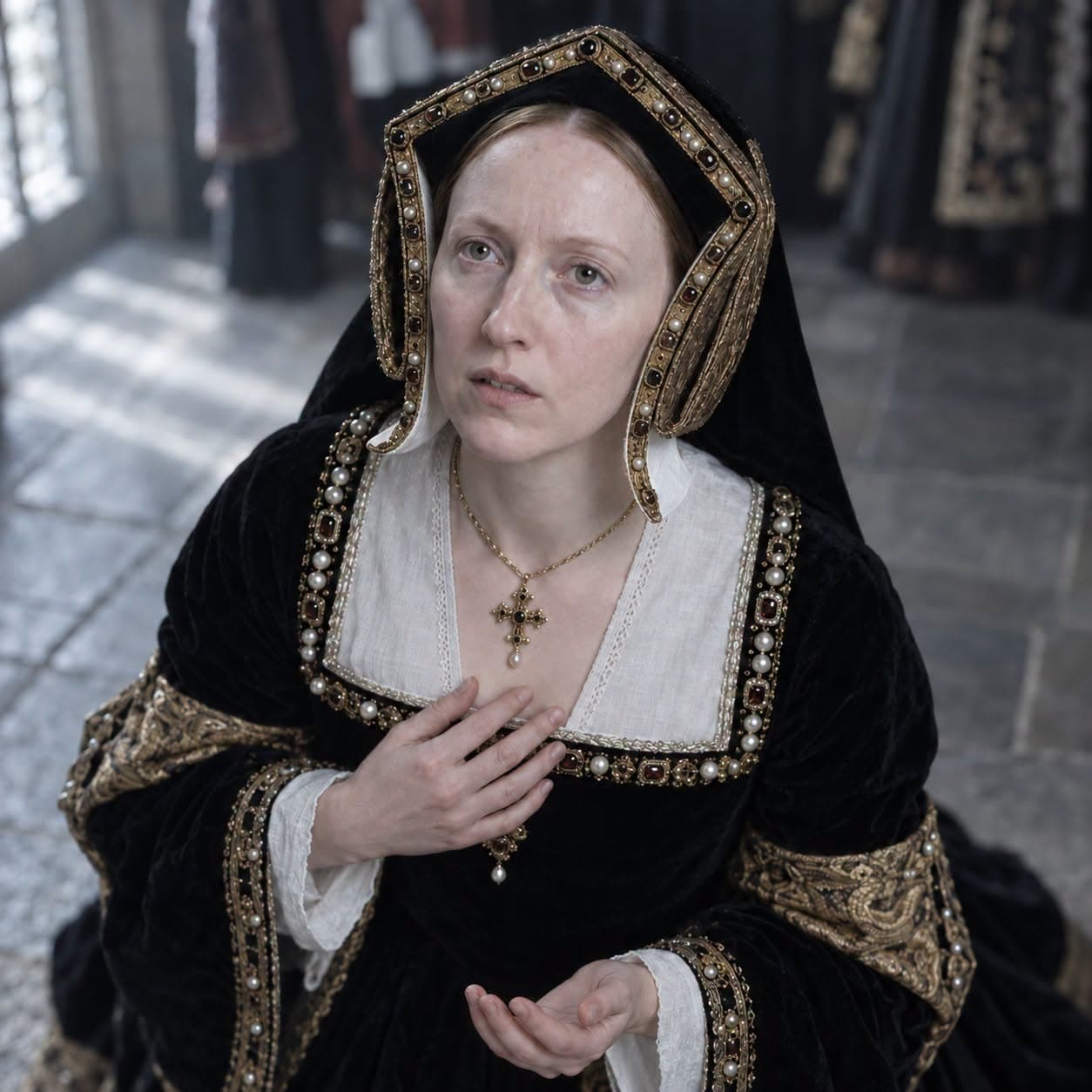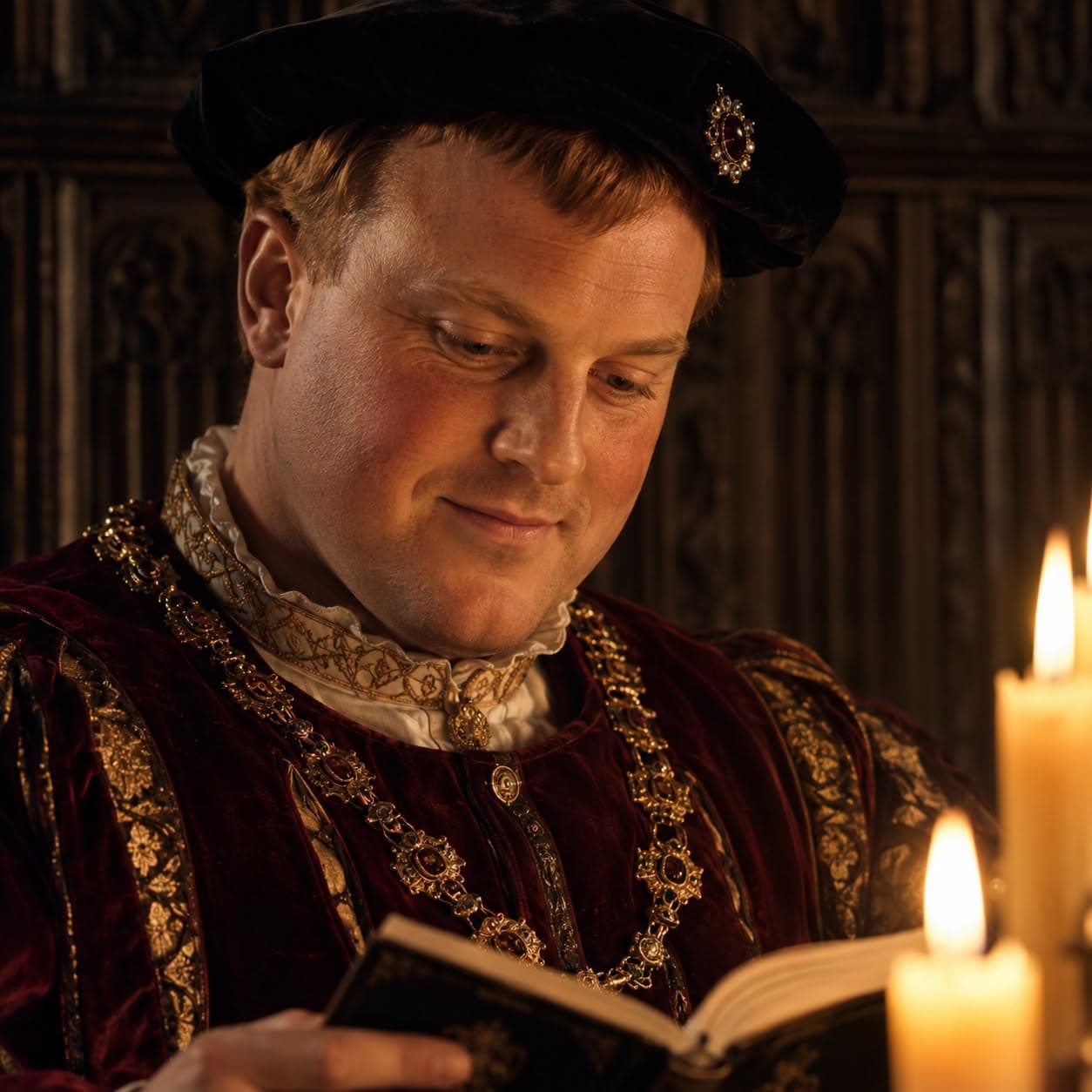
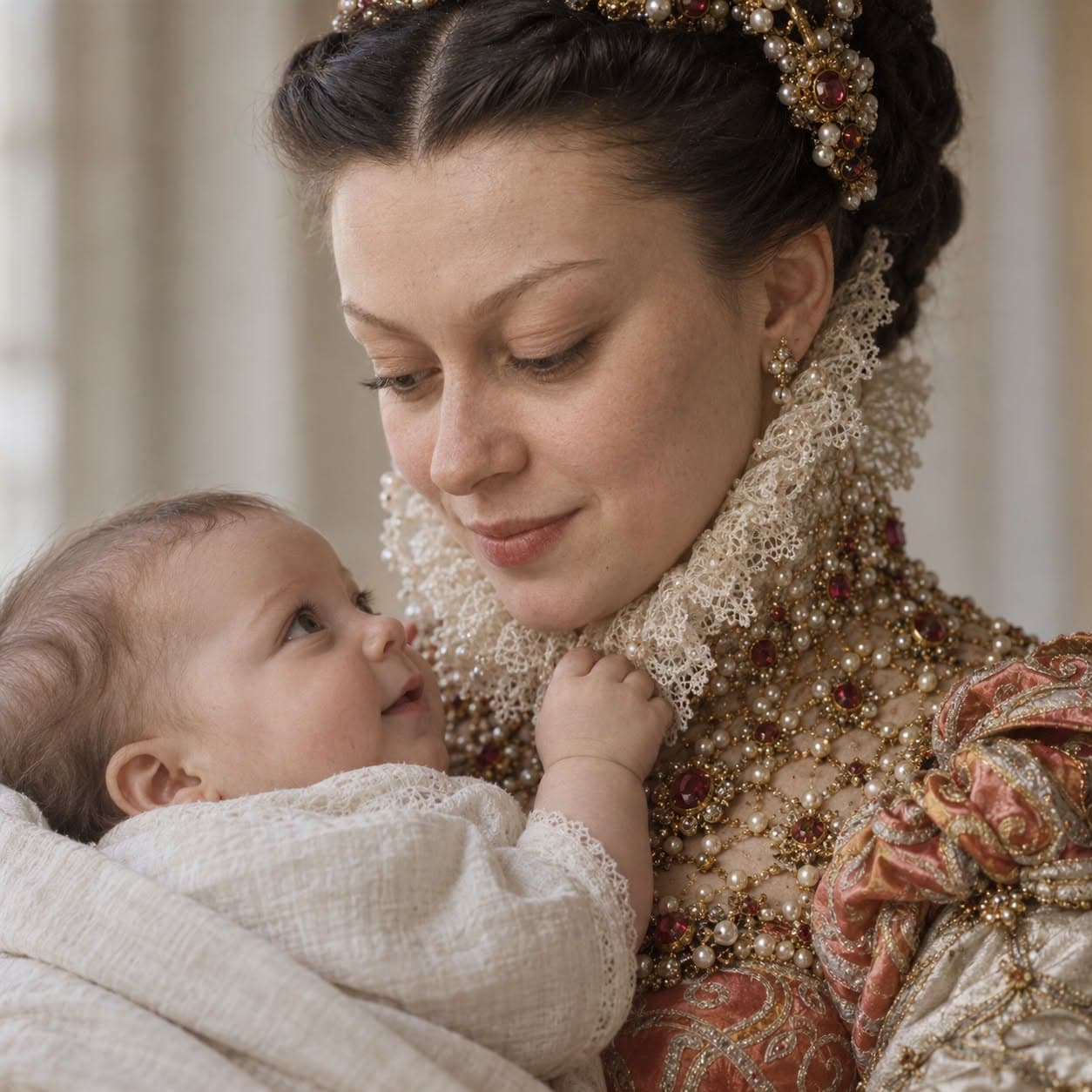
She was thirteen when they gave her to her fiancé's father.
For years the plan had been Don Carlos, the heir to Spain, a boy only months older than she was. Then the English queen who was Philip II's wife died, and the peace being written between France and Spain needed a bride for the widower. The widower was thirty-two. Carlos was fourteen. Nobody asked either of them.
On 22 June 1559, in Notre-Dame, she was married to a man who was not in the building. The Duke of Alba stood in for the king. Eight days later her father rode out into the lists to celebrate the wedding, and a splinter of a lance went into his eye. He took ten days to die, and she was still in Paris when he did.
She was meant to leave for Spain that summer. There was a funeral, and her brother's coronation, and an illness of her own, and it was November before the household set out. It was a hundred and sixty people, wagons of plate and linen and jewels, and the gowns, which were too grand to fit in any trunk and went to Spain by ship. Mary, Queen of Scots, came to say goodbye. Her mother did not. The new king had asked her not to leave his side.
The roads were already deep in snow. She crossed the Pyrenees in the dead of winter and reached Guadalajara at the end of January. Her husband was waiting at the door of the great hall. Before she could kneel to him he put his arms around her in front of the whole court, and the court was astonished. They were married on 2 February 1560. Spain called her Isabel of the Peace.
She turned fifteen in April.
Spain was stricter than France. Every night her majordomo locked the doors of her rooms and handed the key to the Countess of Ureña. She danced anyway, in her own chambers, which the court did not like, and in seven years at least forty-one plays were put on in her apartments. Philip made the painter Sofonisba Anguissola her lady-in-waiting, and the queen learned to paint. She wrote to her mother that she had been fortunate in her husband, so charming a prince.
In June 1565 she rode to the border at Bayonne to see her mother. It had been five and a half years. The Duke of Alba went with her. Catherine said her daughter had become very Spanish. Elisabeth said that she had, as her duty and reason required.
They did not see each other again.
On 12 August 1566 she gave birth to a daughter. She named her Isabella Clara Eugenia, Eugenia for the saint whose relics she had brought to Spain and prayed to for a child. It was said that she and Philip were as glad of a girl as if it had been a son. Over the next two years they bought their daughters dolls and toys and jam. A second daughter, Catalina Micaela, was born on 10 October 1567.
Don Carlos's behaviour had been growing stranger for years, but he was always gentle with her. Later centuries made them lovers. The record has a stepson who was kind to her and a queen who cried for days when he was locked away. That was on 18 January 1568. Carlos died on 24 July.
She was expecting another child by May. In September a kidney illness took hold, and the physicians did what physicians did and bled her. They were at Aranjuez, where in the summer of 1564 they had picnicked in the gardens. Philip stayed. For most of those weeks he sat beside her bed and held her hand.
Before dawn on 3 October they heard Mass together. She asked him to look after their daughters and her household. He promised. It was the last time he saw her.
At half past ten that morning she gave birth to a girl, five months along. The child was baptised Juana. She lived for an hour and a half. At noon the child died, and so did her mother. Elisabeth was twenty-two. She had been married for nine years. It had been seventy-one days since Carlos.
It was said that Philip was seen to weep on one day in his life, and that it was this one. Isabella was two. Catalina was a week short of her first birthday.
At nightfall her body was carried from her apartments along the long galleries of the palace to the chapel. She had asked to be buried in a Franciscan habit, and she was. She was laid at the Descalzas Reales in Madrid, and some years later she was moved to El Escorial. The kings and queens of Spain lie in one vault there. She was placed in the vault of the infantes and infantas.
She had never been the mother of a king.