
She kept a secret her whole life. She died with it. Fifteen years later, two boys were taken into the Tower on the strength of it, and they were never seen again.
Eleanor Talbot was born around 1436, the second daughter of John Talbot, first Earl of Shrewsbury, and Margaret Beauchamp of Warwick, into a family that was among the most militarily distinguished in England; her father was the commander of English forces in France, a soldier of such reputation that his name alone was said to make French soldiers afraid. He died at the Battle of Castillon in 1453, the last engagement of the Hundred Years War, when Eleanor was seventeen, and she inherited from him a name that meant something and an estate that would require a husband to manage it.
She married Sir Thomas Butler, heir to the Barony of Sudeley, around 1449 or 1450, when she was perhaps thirteen or fourteen. It was a respectable match, appropriate to her station, unremarkable in every particular. She bore him no children who survived. He died in 1461, leaving her a widow at twenty-five, without children, without her father, with her estates reduced by the political turbulence of a civil war that had rearranged the ownership of half of England.
She was young, she was beautiful, she had a famous name, and she was at court.
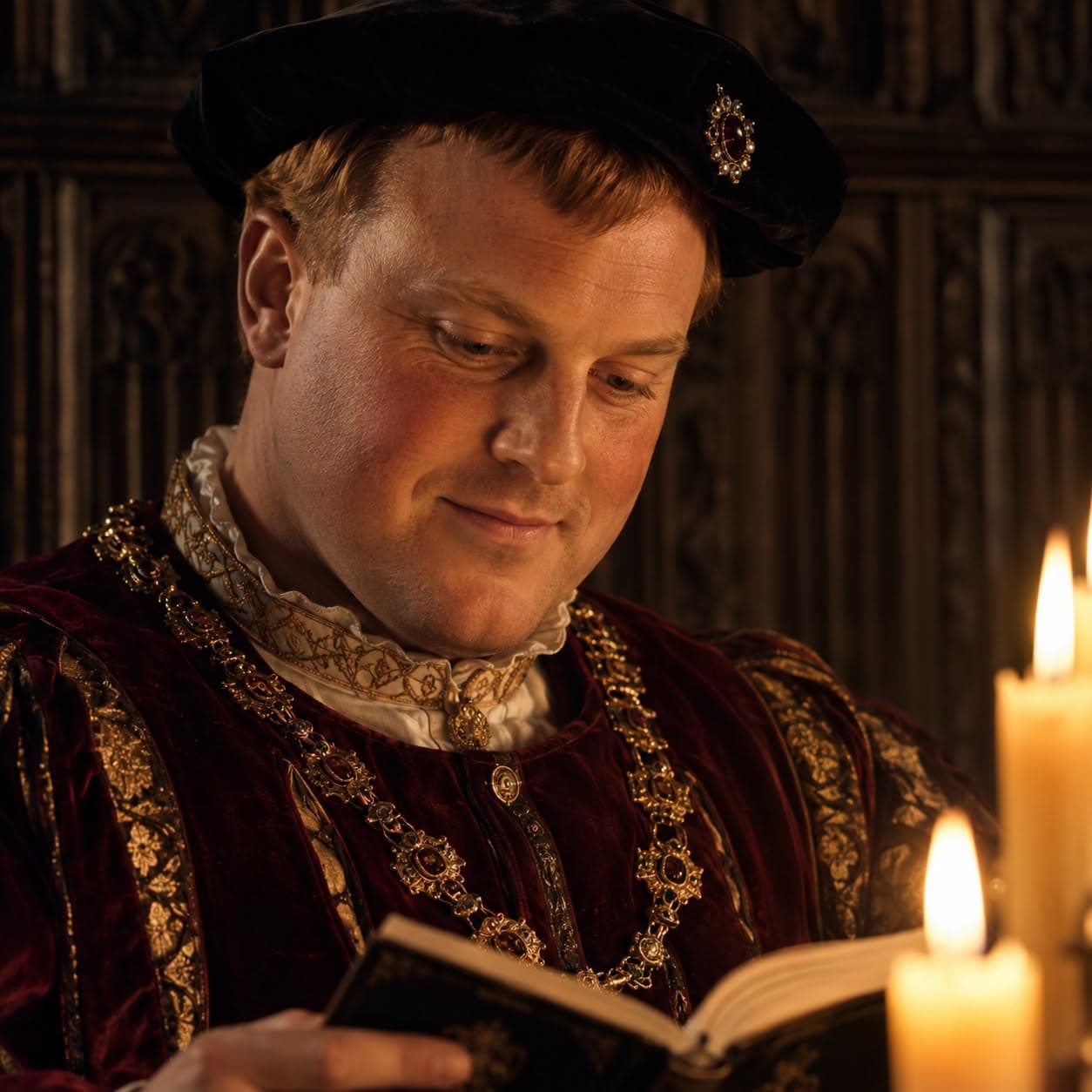
Edward IV noticed her. He was twenty years old in 1462, freshly crowned, tall and broad-shouldered and possessed of the specific easy confidence of a man who had never been told no and had no expectation of starting now. Eleanor Talbot was a widow of good family, educated, composed, the daughter of a soldier whose reputation had crossed the Channel before him, and she was not, by all available evidence, a woman who could be talked into anything quickly or cheaply.
Edward made her a promise of marriage.
The precise nature of what happened between them is the question on which five hundred years of historical argument has turned, and it turns on it still, because Eleanor is not available to answer it, and Edward is not available to answer it, and the only witness who came forward did so fifteen years after Eleanor was dead, when doing so served a specific political purpose, which is the kind of timing that makes historians cautious and defence lawyers uncomfortable.
What the evidence supports is this: Robert Stillington, Bishop of Bath and Wells, who had served as Edward's Lord Chancellor, later claimed to have witnessed a pre-contract, a formal promise of marriage, legally binding under canon law, between Edward and Eleanor, made before Edward's secret marriage to Elizabeth Woodville in 1464. A pre-contract did not require a church ceremony. It required witnessed words of present consent between two parties. If it happened, it meant that when Edward married Elizabeth Woodville he was already, in the eyes of the Church and the law, married to Eleanor Talbot.
If it happened, everything that followed was illegitimate. Every child Elizabeth Woodville bore him. The Prince of Wales. The Duke of York. The daughter Elizabeth, who would one day be Queen of England. All of them born outside a valid marriage, all of them barred from the succession, all of them rendered, by a promise made in private to a quiet widow who asked for nothing afterward, legally nothing.
Eleanor asked for nothing afterward. This is the detail that sits at the centre of the story and refuses to move. If Edward made her a promise of marriage to obtain what he wanted and then abandoned her for a woman he loved more or needed more, Eleanor had every reason to speak. She had the law on her side. She had a bishop who had witnessed it. She had a claim that, if pressed, would have removed Elizabeth Woodville from the throne and given Eleanor a position of considerable power.
She said nothing.
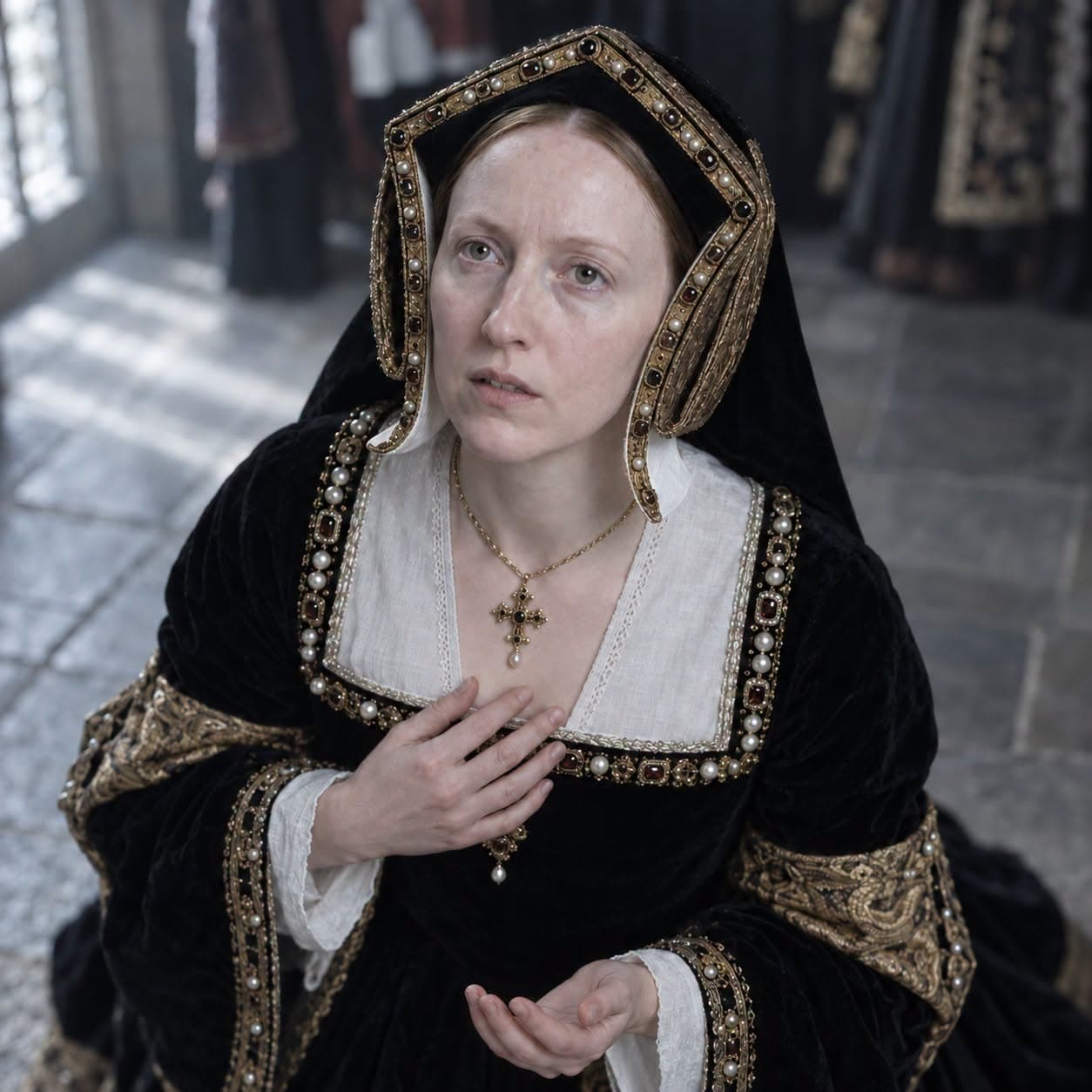
She retreated instead. She withdrew from court, moved to Norwich, entered into association with the Carmelite convent of the Whitefriars, and spent the last years of her life in a form of religious retirement that contemporaries understood as the behaviour of a woman doing penance, or a woman seeking peace, or a woman who had decided that the world of Edward IV's court had nothing further to offer her and that the company of God was preferable to the company of men who made promises they did not intend to keep.
She died on the twentieth of June 1468. She was thirty-two years old. She was buried quietly. She had never spoken publicly about Edward. She had never pressed her claim. She had never done anything with the secret except carry it, for seven years, until the carrying was finished.
Stillington said nothing either. He had witnessed whatever he had witnessed and he kept it while Edward was alive and healthy and in possession of the crown and the specific capacity to make a bishop's life very uncomfortable. He kept it through the 1470s while Edward consolidated his reign and his sons grew and the Woodville faction extended its grip on the court. He kept it until Edward IV died suddenly in April 1483, aged forty-one, leaving a twelve-year-old heir and a court full of men calculating their positions before the body was cold.
Richard, Duke of Gloucester, Edward's younger brother, moved first and fastest. He took the young king into his protection, placed him in the Tower, and neutralised the Woodville faction with the decisive efficiency of a man who had been governing the north of England for a decade and understood that political crises reward speed above everything else. In June 1483 Stillington came forward.
What he told the council stopped the room.
Parliament later convened and passed Titulus Regius in January 1484, the act that laid out the case in plain legal language: Edward IV had been pre-contracted to Eleanor Talbot before his marriage to Elizabeth Woodville. The Woodville marriage was therefore invalid. The children of that marriage were illegitimate. They could not inherit. Richard, Duke of Gloucester, as the legitimate male heir of the House of York, should be king.
Richard had taken the throne as Richard III on the sixth of July 1483.
The two boys, Edward, aged twelve, and Richard, aged nine, remained in the Tower. They had been princes. They were now, by act of Parliament, bastards, their claim to everything dissolved by a promise their father had made to a dead woman in a private room twenty years before either of them was born. They were sighted occasionally through the summer of 1483. After that, the sightings stopped. They were never seen again.
While the Tower kept its silence, a woman was at prayer in Norwich.
She had retreated to Norwich. She said her prayers. She died at thirty-two having told nobody anything, and the secret she carried died with her, or should have.
Henry Tudor defeated Richard III at Bosworth in August 1485 and took the crown. He intended to marry Elizabeth of York, Edward IV's eldest daughter, the woman whose legitimacy depended entirely on the Eleanor Talbot pre-contract being false. His first act as king, before the marriage, was to repeal Titulus Regius and order every copy destroyed.
He did not want the document examined. He did not want the question asked. He did not want anyone reading the legal case that made his future wife a bastard and his future dynasty's claim to the throne a problem requiring management rather than a right requiring no explanation.
The suppression failed. Despite Henry's absolute command, the original parchment membranes were never excised, remaining stitched directly into the official Rolls of Parliament where the clerks simply left them. The legal case survived in plain sight, preserved in the archives until the dynasty was old enough that the text was merely an historical inconvenience rather than a threat.
Eleanor Talbot died in a convent in Norwich in 1468, having kept a secret that was not asked of her, having said nothing that could have helped her, having retreated from a court that had used her and a king who had moved on. She left no letters. No accounts. No version of events in her own voice. She is present in this story only through her absence; through the secret she kept and the silence she maintained and the name that was borrowed, after she was dead, to unmake a queen's children and open a door that two boys walked through and did not walk back out of.
Henry VII made sure she stayed forgotten. He was thorough, where it mattered.