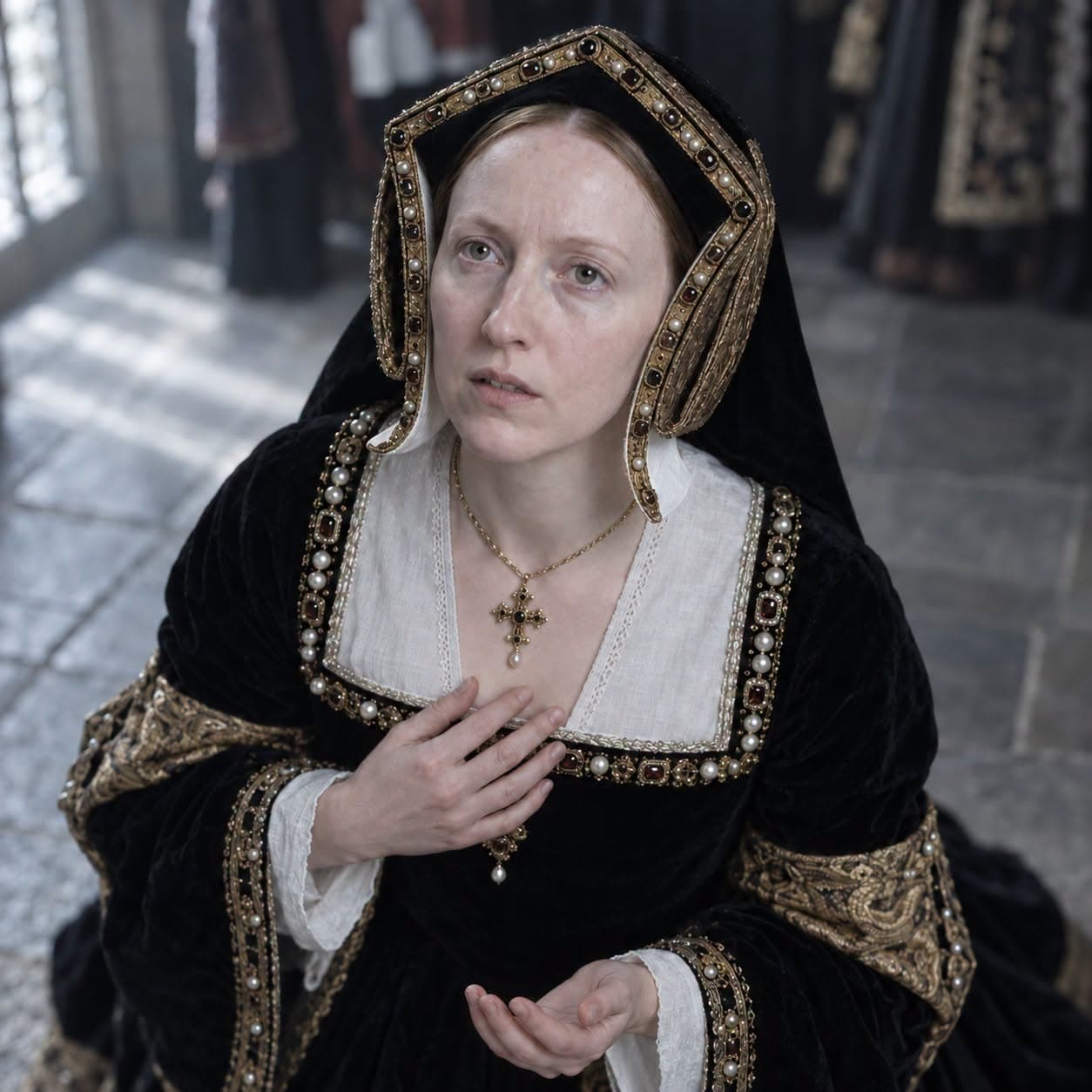
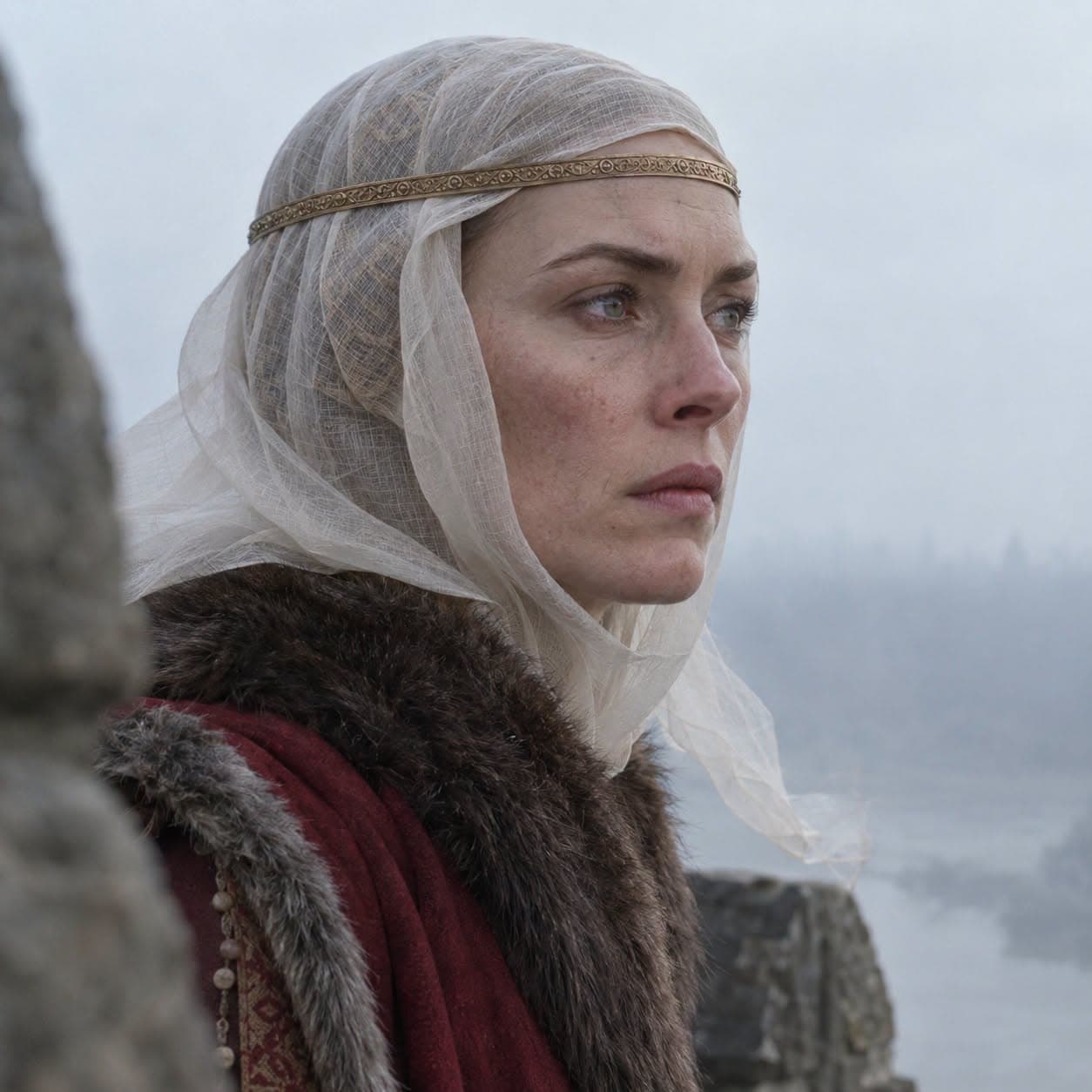
Eleanor de Clare held the Tower of London for a month. Then they locked her inside it.
Her blood ran back to the throne on both sides of the family. Her grandfather was Edward Longshanks, king of England and Hammer of the Scots. Her grandmother was Eleanor of Castile, who had followed him across Europe and into the Holy Land, and who died at Harby in the November of 1290, two years before her granddaughter was born.
Eleanor's mother, Joan of Acre, was born in the spring of 1272, in the city that gave her her name, while her parents were away on crusade. At eighteen she was married in Westminster Abbey to Gilbert de Clare, the Red Earl of Gloucester, who was forty-six and one of the most powerful nobles in England. His castle at Caerphilly rose out of its lakes in the hills of Glamorgan, and it was there, on 3 October 1292, that Eleanor is believed to have been born.
Her father died when she was three. In January 1297 her mother, a widow of twenty-four, did a thing that no one expected of a king's daughter. She secretly married a squire of her household, a young man named Ralph de Monthermer. Edward I was so angry that he had the bridegroom thrown into prison. By August he had relented, and Ralph was Earl of Gloucester by right of his wife. Eleanor was four years old.
In May 1306, at Westminster, she was married to Hugh Despenser the Younger. She was thirteen, and her grandfather gave her a dowry of two thousand pounds.
Within a year the world she had been born into was gone. Her mother died at Clare in April 1307. In July her grandfather the king died as well, and her uncle became Edward II. That November her sister Margaret was married to the new king's favourite, Piers Gaveston.
In June 1314 her brother Gilbert, the last of the Clare earls, was killed at Bannockburn without a child. Eleanor and her two sisters divided the great Clare inheritance between them. She and her husband took Glamorgan, the richest lordship in Wales, and with it the castle where she had been born.
Two years later the Welsh came for it. On 28 January 1316 Llywelyn Bren and his men besieged Caerphilly, which had only a small garrison inside. The records name its commander as the lady of Clare. For six weeks she held the walls, until a relieving force reached them on 12 March. She was twenty-three.
By then her husband had become the favourite of her uncle the king, who came often to stay with them and gave them gifts.
In the autumn of 1326 the queen came home. Isabella of France landed with Roger Mortimer and an army, and London rose against the king. Edward II rode west, and Hugh rode with him. Before they left, the king made his niece Constable of the Tower. No other woman has ever held the post.
She was alone in the strongest building in the city, with the city in uproar outside its walls. For a month it was hers.
In mid-November the citizens of London made her hand it over. On 17 November she was taken prisoner inside it, along with one of her sons. The man the city chose, John de Gisors, took her place as Constable, and she was now the one locked inside it's walls.
A week later her husband was executed at Hereford, on 24 November. In December his head was brought to London and fixed on London Bridge, close to the Tower where she was held.
Her children were taken from her one at a time. Her eldest son, Hugh, held Caerphilly for his father until the spring of 1327, in the castle where his mother had been born. When it fell he was kept a prisoner until 1331. Three of her daughters were veiled as nuns, Joan at Shaftesbury, Eleanor at Sempringham and Margaret at Watton, who was about three years old. Only Isabel, who was already married, and the baby Elizabeth were spared.
In February 1328 she was freed, and in April she was given back her lands and did homage for them.
She did not keep them long. In January 1329 William la Zouche took her from Hanley Castle, by force or by arrangement. He had been one of her husband's captors, and he had led the siege of Caerphilly. Within days the royal clerks had recorded the abduction twice, once of Hugh Despenser's widow and once of the wife of a knight named John de Grey, and they never saw that these were the same woman. The king seized her lands and ordered the couple's arrest. She was accused of stealing jewels from the Tower, and she was shut up in it a second time, then moved to Devizes.
In January 1330 she was let out and pardoned. The price for her freedom was the most valuable part of her share of the Clare inheritance, which she signed over to the crown. She could have the rest back only by paying fifty thousand pounds in a single day.
Within the year Mortimer fell. Eleanor told the young Edward III that she had signed her lands away because Mortimer had threatened that she would never be freed otherwise. In 1331 the king let her recover them for a fine of ten thousand pounds, later cut to five. She paid part of it. Most of it was still owing when she died.
Sir John de Grey of Rotherfield was twenty-eight, and he insisted that Eleanor was his wife. He had been saying so since that January, and he did not stop. He took his claim to the Pope at Avignon three times. In October 1331 he accused Zouche of stealing his goods and six of his horses from Lechlade. Once, in front of the king and his council, he went for his dagger and was arrested. In May 1333 the Bishop of Coventry and Lichfield declared that William la Zouche was Eleanor's rightful husband.
Eleanor, who could have asked the king to undo the marriage, never did. In 1330 she gave Zouche a son, William, who would become a monk at Glastonbury. Zouche died in February 1337, and she followed him that summer, aged forty-four.
She is thought to have ordered the windows in the choir at Tewkesbury Abbey, though she did not live to see them set in place. Her family is there in the glass: ancestors in armour, her brother, her husbands. In the great east window, below the Last Judgment, a naked woman kneels and looks up.
She may be Eleanor.