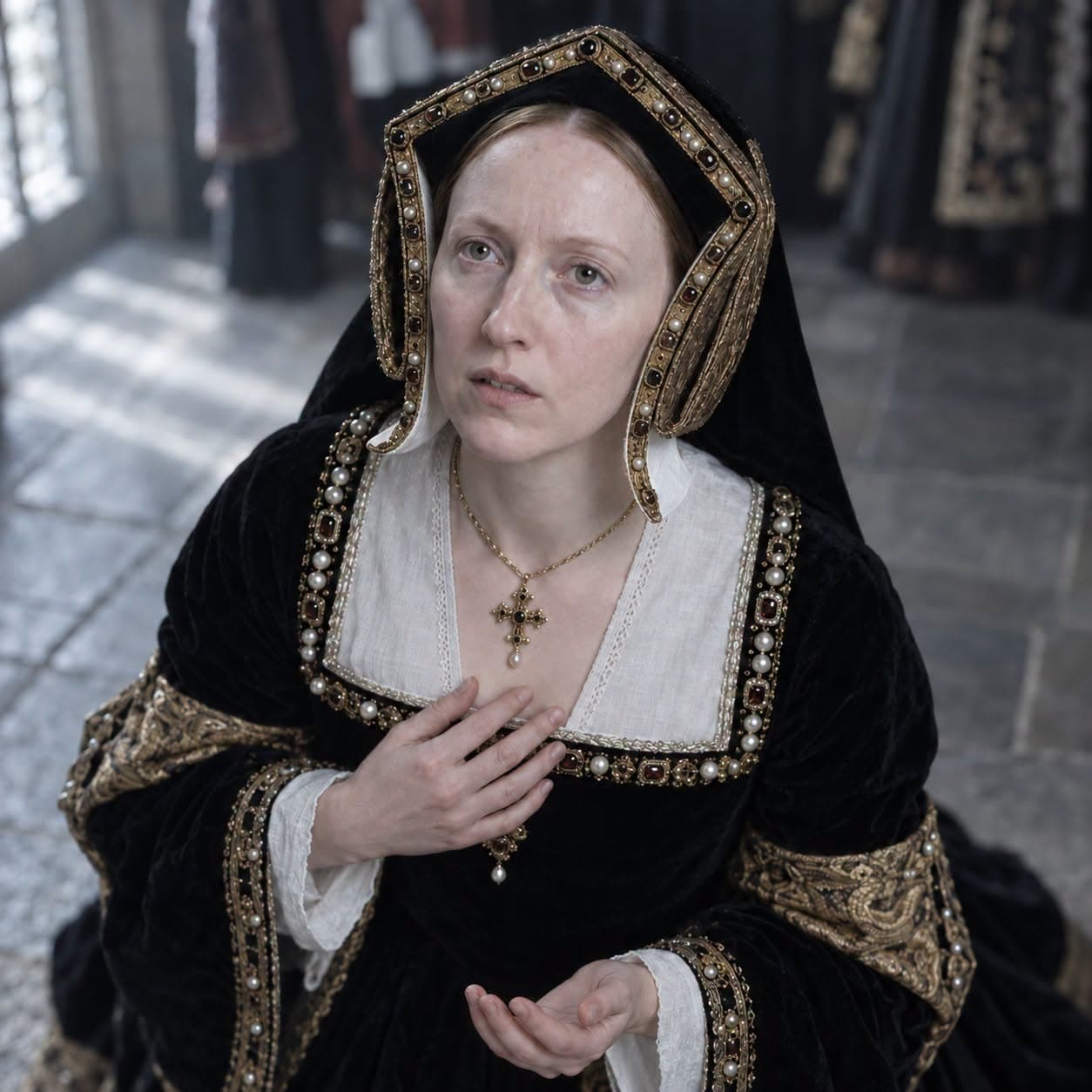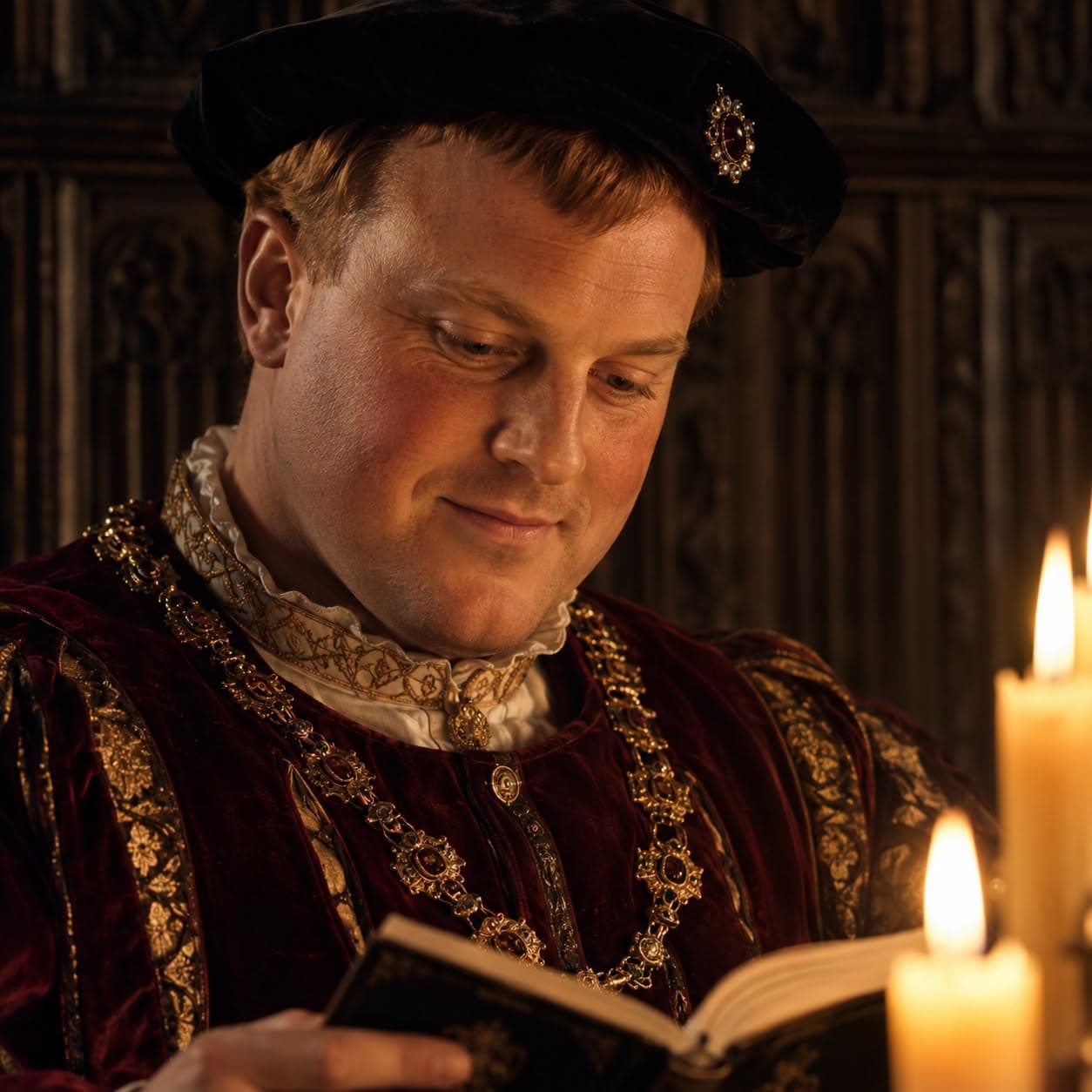
His father had declared his sisters illegitimate. His father's will had restored them. As he lay dying he removed them again. A hundred men signed the document.
Four weeks later Mary Tudor rode to London and took her throne back anyway.
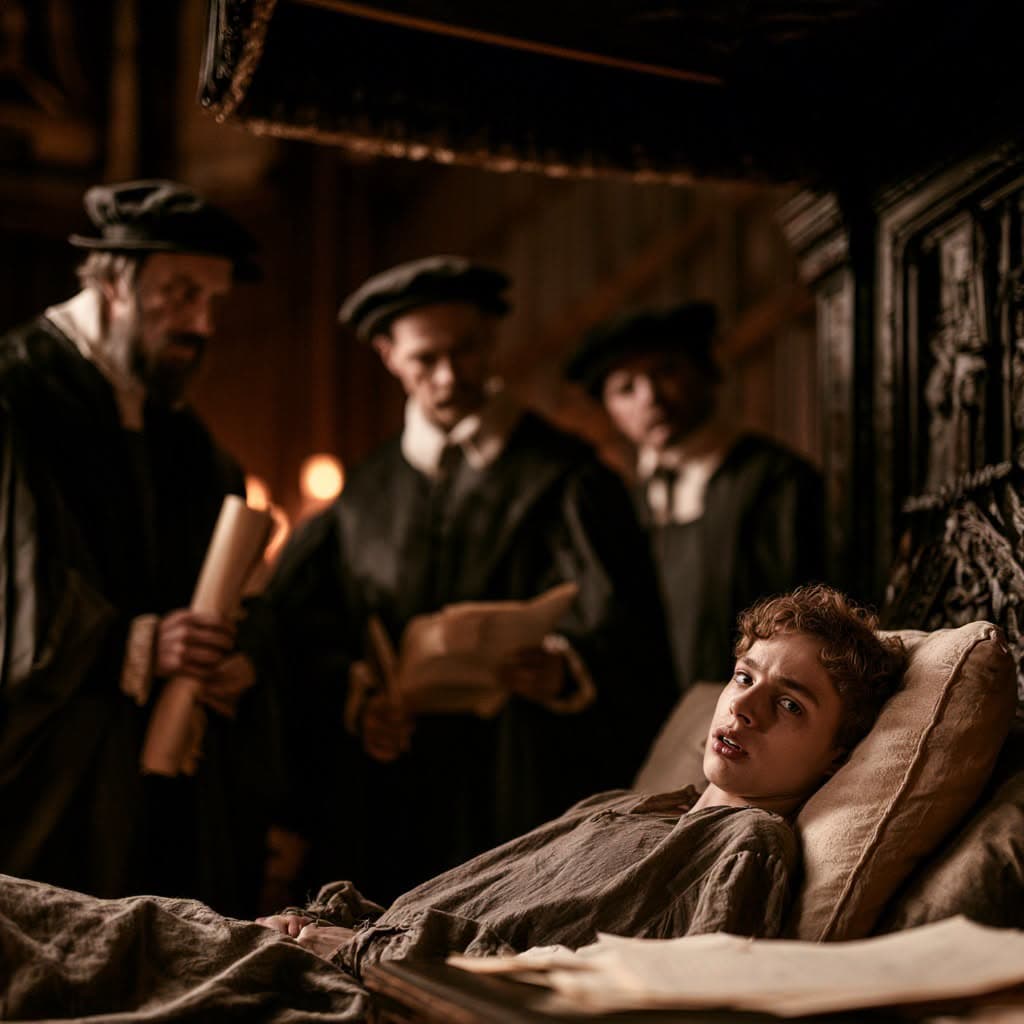
Henry VIII had spent his reign doing everything available to a king to produce a male heir and avoid a female succession. He had got his son. His son was fifteen years old and dying of tuberculosis in a sickroom at Greenwich, coughing black sputum into his handkerchief, and in the weeks before his death he had set about undoing the one concession his father had finally made to his daughters. The Letters Patent Edward finalised on 21 June 1553 used a specific word for what Mary and Elizabeth were.
Disabled.
Disabled to claim or challenge the imperial crown of England. The daughter of Catherine of Aragon and the daughter of Anne Boleyn, both declared illegitimate by their father and both restored by his will, were swept aside again by their brother in a document assembled in a dying boy's bedroom.
The legal problem was visible to everyone who handled the paper. Henry VIII's will and the Act of Succession of 1544 had placed Mary and Elizabeth in the line of succession by parliamentary authority. Edward had no power to override an Act of Parliament by letters patent. His own Lord Chief Justice said as much when summoned on 12 June, refusing to touch the document and telling the room plainly that preparing such letters was an act of high treason. Edward harangued the judges with sharp words and angry countenance and commanded them on their allegiance to sign. The Lord Chief Justice agreed to do so only on condition of a pardon under the Great Seal in advance — protection against the treason charge he knew the document carried. He signed. Most of them did.
There were two documents. The first was the Letters Patent itself. The second was a separate binding oath committing every signatory to uphold Edward's wishes unto death. Archbishop Cranmer refused at first and then signed. Judge Sir John Hales refused absolutely and never signed. The Earl of Arundel signed the Letters Patent and refused the oath. On 22 June, the day after Edward finalised the document, 102 noblemen, bishops, councillors, and officials put their names to it.
They signed beside a dying boy who had fifteen days left to live, swearing on paper that they would hold to his wishes until their own deaths. The Duke of Northumberland, whose daughter-in-law Lady Jane Grey stood to inherit the crown under the new arrangement, was the most powerful force in the room. Edward was genuinely committed to a Protestant succession and believed what he was doing was right. Northumberland needed Edward to believe it. The document was both things at once.
When Jane was told she was queen she wept and said the crown was not her right and that the Lady Mary was the rightful heir. She was correct as a matter of law and she understood it perfectly. She accepted the crown as duty. She wore it for nine days before the men who had sworn their oath unto death abandoned it almost without exception the moment Mary raised her forces and marched on London. The Letters Patent that had required a pardon in advance to sign were abandoned without consequence by nearly everyone who had signed them.
Henry VIII had spent his reign declaring his daughters illegitimate and then, in his final act, restored them to the succession. His son spent his dying weeks undoing that restoration. Mary took her throne without the permission of any man in that room. Elizabeth followed her. Jane Grey died in the Tower on the twelfth of February 1554. The last thing Henry VIII did for his daughters was give them back their place in the succession. It lasted six years.