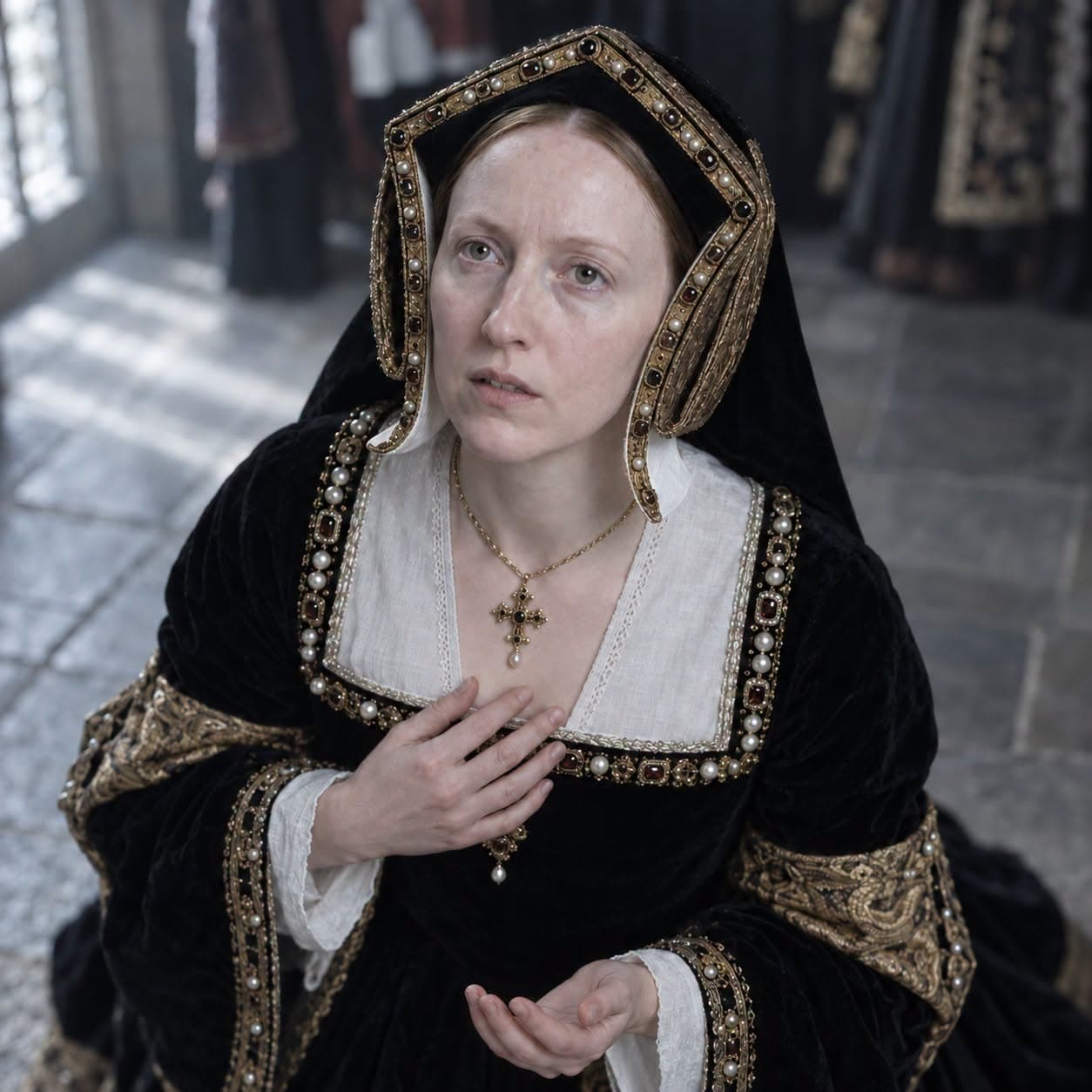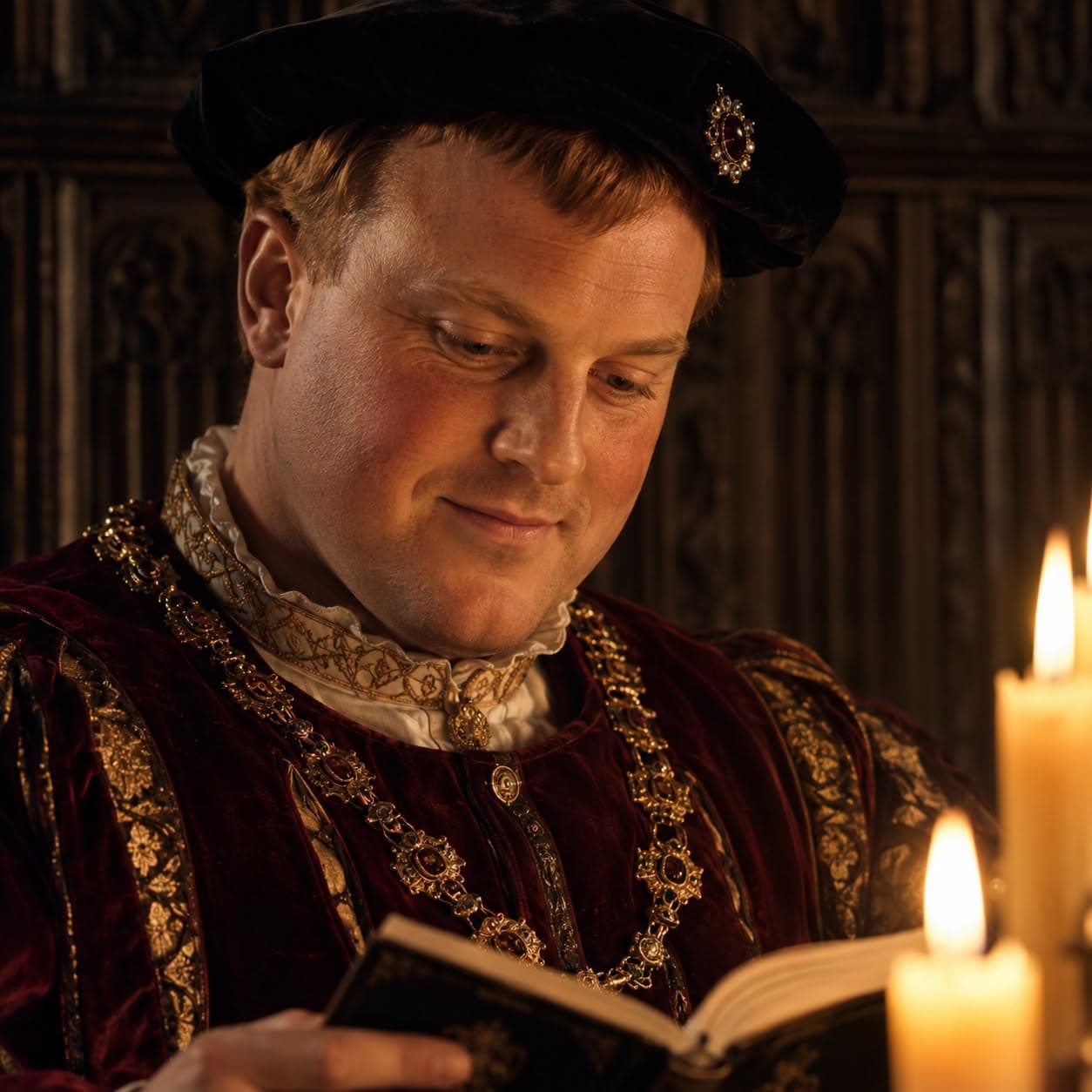
A fifteen year old boy died at Greenwich on the sixth of July 1553. His death put three women on a collision course none of them had chosen. Two would soon become queens. The third would watch and wait.
He had been King of England since he was nine years old, crowned in Westminster Abbey in February 1547 as Henry VIII’s only surviving legitimate son. By the spring of 1553 his body was failing. He coughed blood and black matter. His legs swelled until he could no longer stand. On the first of July he appeared at a window of Greenwich Palace so thin and wasted that courtiers said he was doomed. On the evening of the sixth of July 1553 he whispered that he was faint, asked God to have mercy on him, and died.
He was fifteen years old. He had never married. He left no child.
Months before he died he had taken a pen and tried to decide who would rule after him. His father’s will and the Succession Act named his half-sisters Mary and Elizabeth as heirs after him. He did not want Mary to inherit. She was Catholic. He was not. In his own hand he wrote a document called the Devise for the Succession that moved both his sisters aside on the grounds that they had been declared illegitimate.
He set down that the crown should pass instead to his cousin Jane Grey and the sons she might have, then, as his illness worsened and his time shortened, to Jane herself. Six weeks before he died, Jane was married to Guildford Dudley, son of the Duke of Northumberland. The judges hesitated to sign away two daughters of Henry VIII. They were told the boy’s will was law.
One hundred and two men put their names to it.
Three days after the boy’s death, Jane Grey was brought to Syon House. She was about sixteen years old. The most powerful men in England knelt before her. She did not understand at first why they were kneeling. Then they told her the king was dead and that she was queen. She fell to the floor weeping.
"The crown is not my right and pleases me not", she said. "The Lady Mary is the rightful heir."
They told her she was wronging herself and her house. Her parents pressed her. Her husband pressed her. She gave way. She was taken to the Tower of London and lodged there as a queen. When she was told her husband should be proclaimed king beside her she refused and said he must remain only her consort.
While Jane was weeping at Syon, Mary Tudor was already moving. She had been summoned to court as her brother’s illness worsened and warned on the road that the summons was a trap meant to capture her before his death. She turned aside. She rode into East Anglia, first to Kenninghall, then to Framlingham Castle on her own estates. There she wrote to the Privy Council declaring herself the rightful queen under her father’s will and demanding that they proclaim her. Men began to come to her. Norfolk gentry, Suffolk and Essex families, the Earls of Sussex and Oxford, Lord Wentworth, and towns like Norwich sent money and men. Five royal warships sent to guard the coast mutinied to her side. Mary was thirty-seven years old.
She had been declared a bastard. She had buried her mother without being allowed to attend. From Framlingham she raised England for herself.
Elizabeth watched all of this. In July 1553 she did not join Mary in East Anglia. She did not come to Jane’s court in London. She stayed on her own estates and waited for events to take shape. When the news reached her that the Council had abandoned Jane and proclaimed Mary, she rode to meet her half-sister on the road and took her place beside her in the triumphal entry into London, two daughters of Henry VIII riding together through the cheering streets. Mary gave Elizabeth a place of honour at her coronation three months later and held her by the hand in public.
In London, Jan had been proclaimed queen on the 10th of July, but the crowds in the city were silent and one man who shouted that Mary was the rightful queen had his ears cut off for it. Northumberland marched out with an army to capture Mary. Men deserted him. The ships had already gone over. On the 19th of July the Privy Council that had signed the Devise changed its mind, tore down Jane’s arms, and proclaimed Mary queen instead. Bells rang all day and bonfires burned in the streets. Jane’s father, Henry Grey, left the Tower and went to Tower Hill to proclaim Mary queen himself, leaving his daughter behind in the fortress.
She had been queen for nine days.
Mary spared her at first. Jane was kept in the Tower as a prisoner rather than executed. On the 13th of November 1553 she and Guildford Dudley were tried for treason at Guildhall in London, found guilty, and condemned to death, his sentence to hanging, drawing, and quartering, hers to burning or beheading. The sentences were not carried out. Jane remained in her cell as winter came.
Mary announced her intention to marry Philip of Spain. A group of nobles rose in revolt rather than see a Spanish prince on the English throne. The rising that mattered was Sir Thomas Wyatt’s in Kent. Plans had been made for four uprisings across the country in March 1554. News reached the council early and Wyatt was forced into action ahead of schedule.
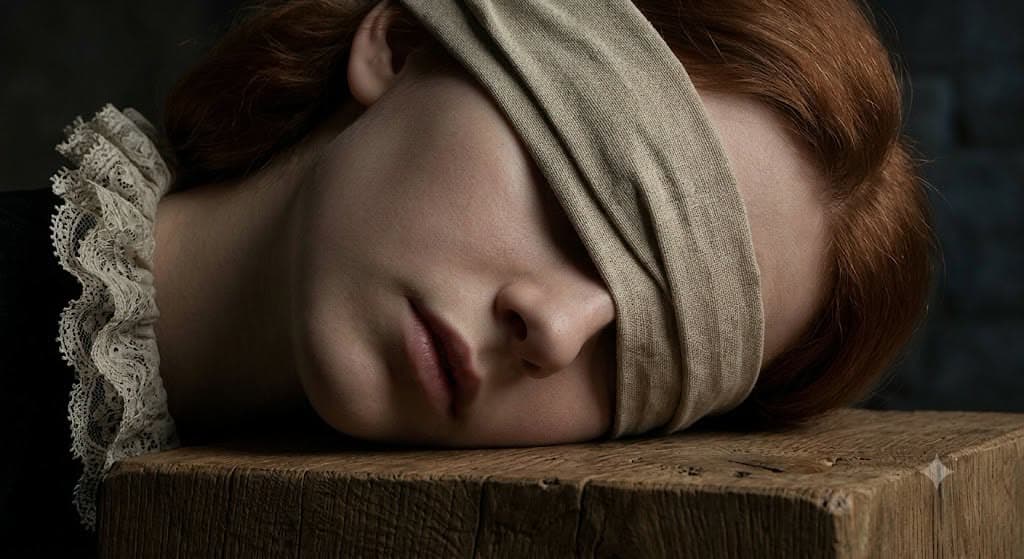
His men marched on London in January and early February. They were defeated at the city walls on the 7th of February. Jane’s own father had joined the conspirators. Jane herself refused Mary’s demand that she accept the Mass. On the 12th of February 1554 Guildford Dudley was taken out to Tower Hill and beheaded. A short time later Jane was brought to a scaffold on Tower Green. She made a brief speech, declared she had never sought the crown, knelt, and asked for help tying her eyes. Blindfolded, she groped for the block and could not find it. A bystander guided her hand. She laid down her head. The axe fell.
She was sixteen or seventeen years old.
Wyatt’s rising gave Mary cause to fear every possible rival. Elizabeth was one of them. In March 1554, weeks after Jane’s death, Elizabeth was brought to London under suspicion of involvement in the plot. On Palm Sunday, 18th March, she was taken by boat along the Thames to the Tower of London and lodged there under guard. She was questioned for weeks. Councillors urged Mary to have her killed. Mary refused to sign a death warrant without proof.
Elizabeth eventually left the Tower alive. On the 19th of May 1554 she was released to house arrest at Woodstock and kept under watch while Mary’s health began to fail. At Woodstock she is said to have scratched into a window with a diamond the words much suspected of me, nothing proved can be. Mary remained queen. She never forgot that Elizabeth had been one of the figures her brother’s Devise had tried to remove, and she never fully ceased to see her as a rival. Elizabeth never forgot that her sister had executed the girl the boy had chosen instead.
The boy who died at Greenwich had tried to write both his sisters out of England’s future. One became the queen who killed the girl he chose in their place. The other waited, watched, and outlived them all.