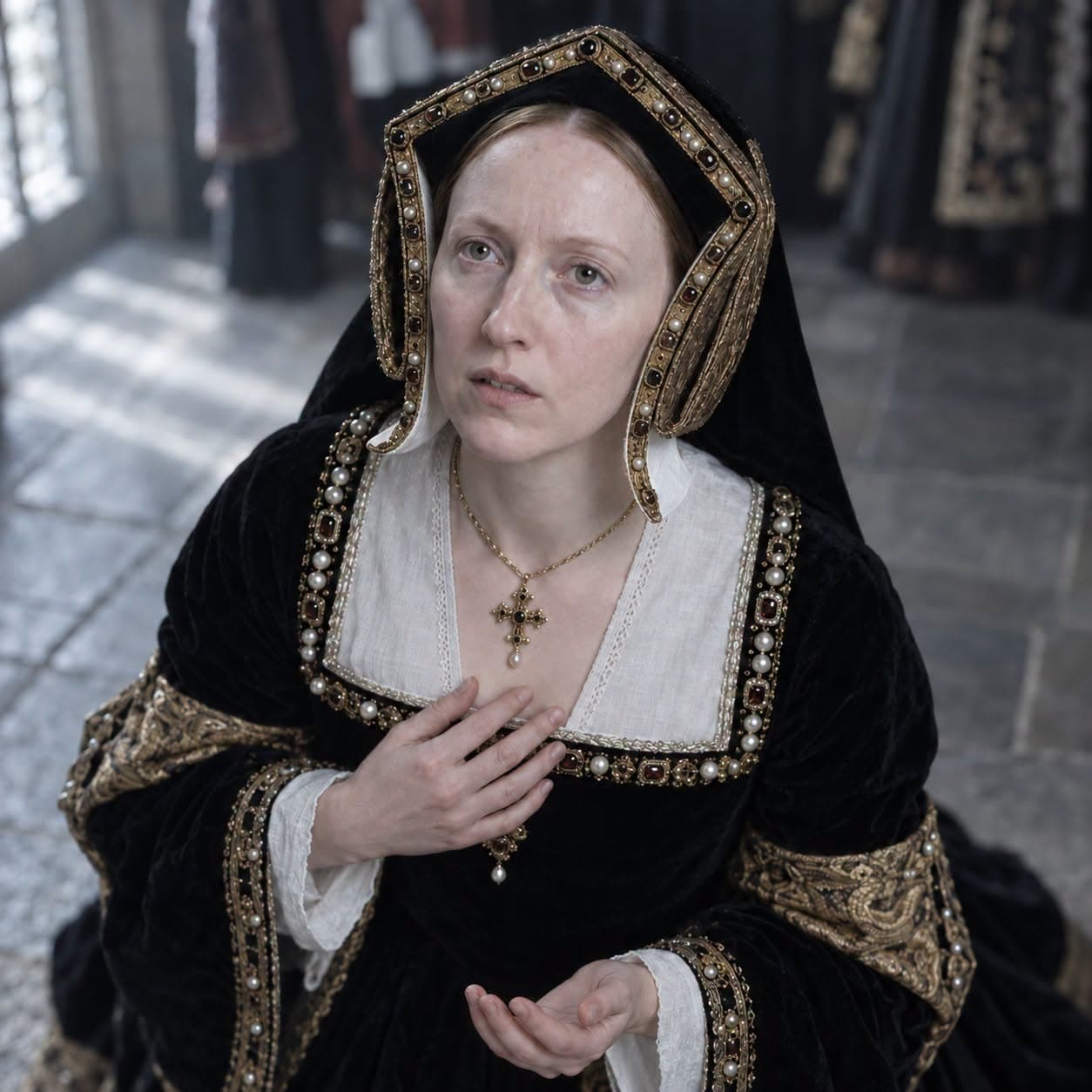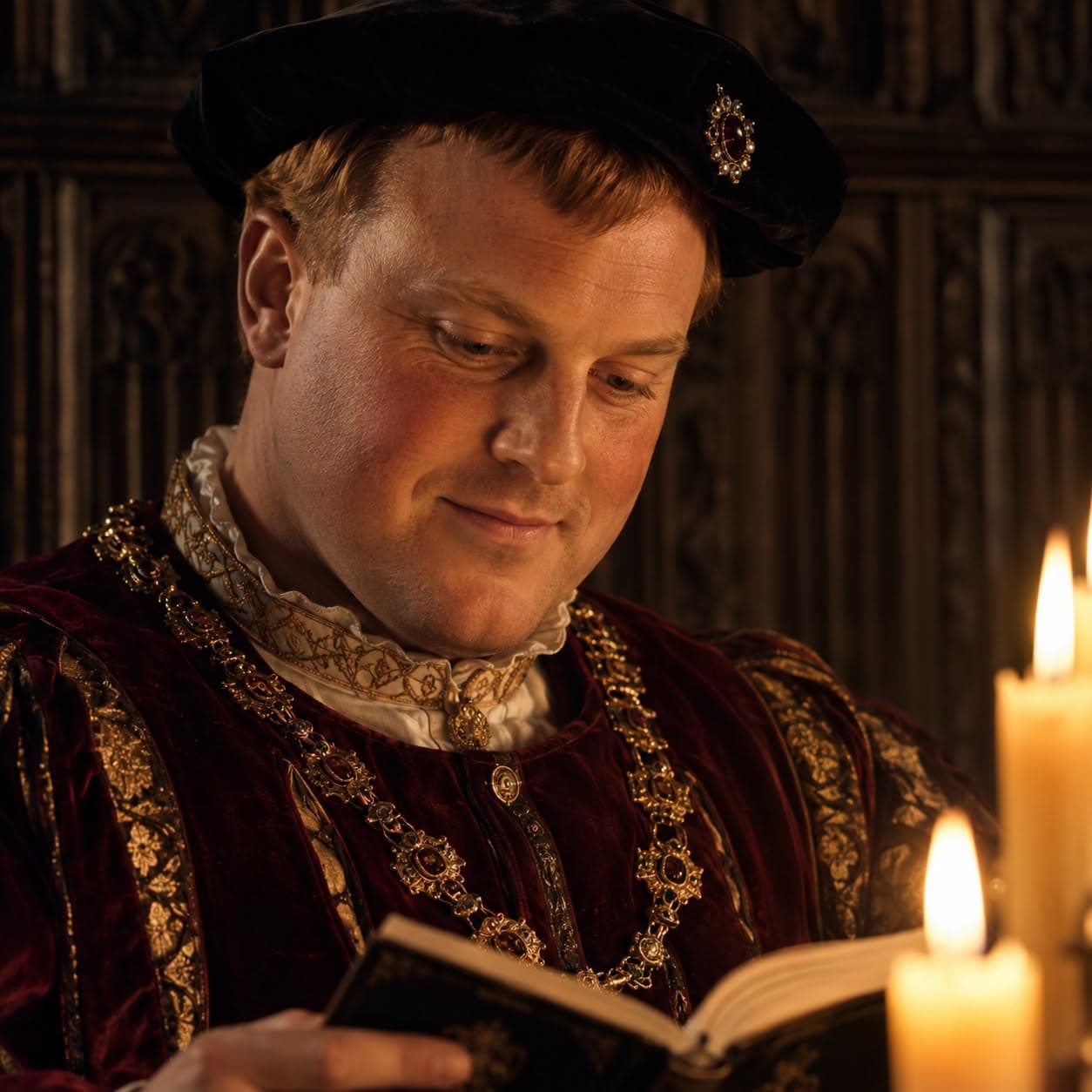
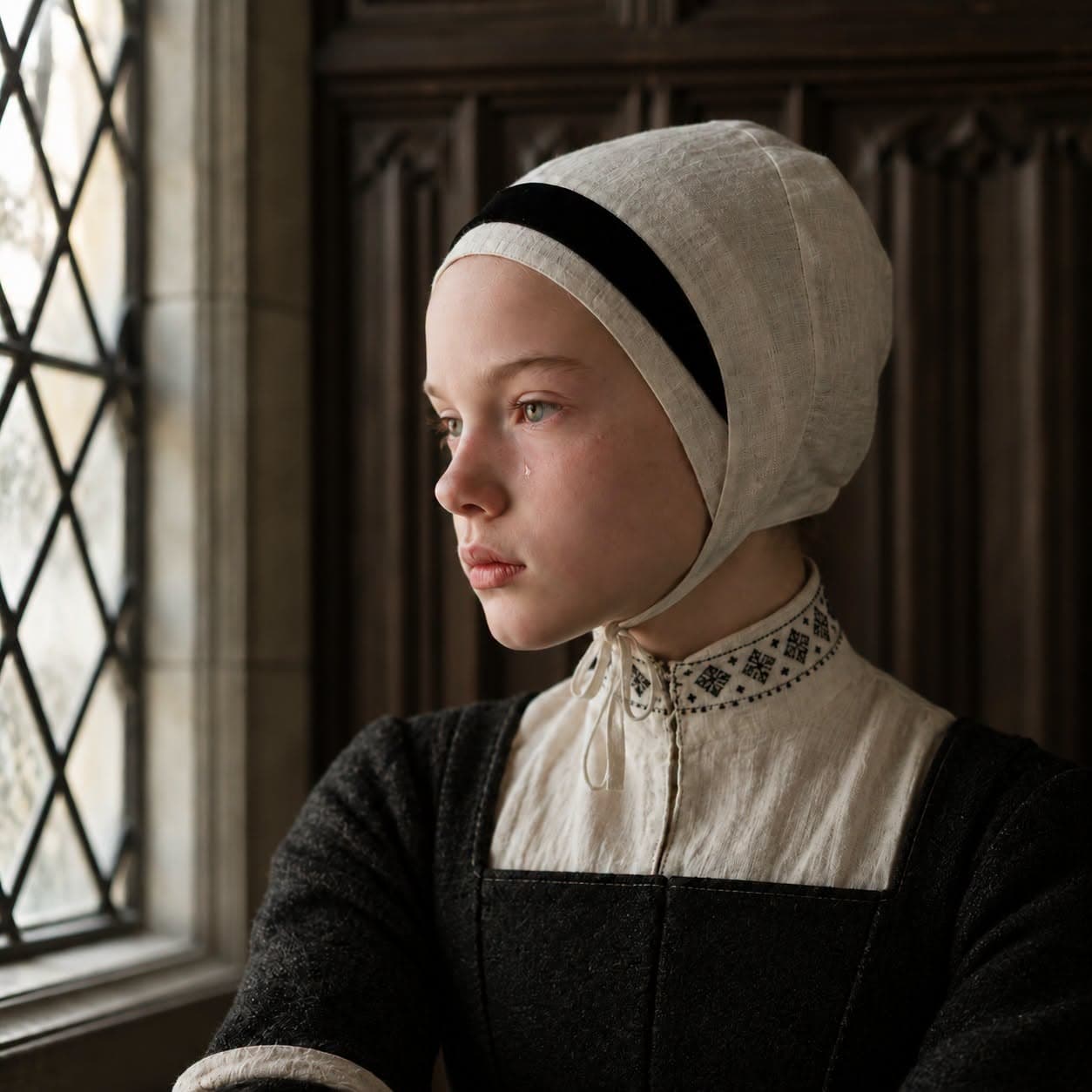
She was born into a family the Tudors had broken twice. Then she took Mary Boleyn's husband for herself.
Mary Boleyn had been dead for two years when Dorothy Stafford married Sir William Stafford, and he came to her as a widower. What Dorothy took was not a husband from a living rival. She took a place in the Boleyn story, a seat at the edge of a family whose daughters had been the talk of Europe. It was a place that would matter far more than anyone could have guessed while she was still a girl.
She was born on 1 October 1526, in the reign of Henry VIII, the daughter of Henry Stafford, Baron Stafford, and his wife Ursula Pole. On her father's side stood the Staffords, a house that had already felt the Tudor axe, and her grandfather had been the Duke of Buckingham. On her mother's side stood Margaret Pole, Countess of Salisbury, a woman of the old Plantagenet blood, whom Henry VIII would one day send to execution. Dorothy was a child of both families. She was fourteen when her grandmother was executed.
Part of her childhood was spent in the household of her aunt, Elizabeth Stafford, Duchess of Norfolk. A girl raised among people who knew exactly how fragile their safety was would have learned early to read a room.
Then came the marriage. Dorothy was eighteen. Sir William Stafford had once been married to Mary Boleyn, sister of Anne, and aunt of the future Elizabeth I. Through him, Dorothy stepped into a household that carried the faint scent of the most scandalous family in England. She had six children with him. Nobody in that household could have known how useful the connection would become.
Then Mary I took the throne, and the Staffords, committed Protestants, did what many of their faith did. They left. Dorothy and William took their young children to Geneva, the city of John Calvin, because staying in England had become too dangerous.
In Geneva, her family grew by one. Her son John was born in exile, and on 4 January 1556 Calvin himself stood as his godfather. Four months later, on 5 May, her husband William died there. She was a widow in a foreign city, with children to protect and no sure way home.
Then Calvin claimed custody of her youngest son. The godfather would have the boy, and the widow was forbidden to leave Geneva with him. She was a woman who had lost her husband, left her country, and was now being told by one of the most powerful men in Protestant Europe what would become of her son. She left anyway. She got her children out of Geneva and went to Basel, where the family lived amongst other English exiles including John Foxe. It took a woman with a particular kind of steel to defy Calvin while still grieving.
When Mary I died and Elizabeth took the throne in 1558, Dorothy came home. The new queen was the niece of Mary Boleyn, the woman whose husband Dorothy had married. Elizabeth kept Dorothy close. Dorothy joined her privy chamber and became one of the queen's favourites, and in time her Mistress of the Robes, even sharing the intimacy of the royal bedchamber as a sleeping companion. In an age when proximity to the monarch was power, there are few closer places than that.
She stayed for decades. In 1576 she broke her leg in a riding accident and could not serve, and Mary Scudamore was recalled from her holiday to take her place so that the queen could sleep peacefully. Her daughter Elizabeth joined the privy chamber as well, so that two generations of Stafford women now moved through the rooms of the queen.
In 1586 her son William was drawn into a plot against the queen, with the French ambassador's secretary and a man named Michael Moody. One idea was to lay a train of gunpowder and blow up the queen's bed. It was pointed out that Lady Stafford, who served in that bedchamber, would probably die with her. The talk turned to stabbing and to poison, perhaps in a saddle or a gown. His mother was the queen's Mistress of the Robes.
William confessed in January 1587 and was sent to the Tower, where he stayed until the following year. Dorothy kept her place in the bedchamber.
A girl whose grandfather and grandmother had been broken by the Tudors ended her life among the Tudors' most trusted women. The family that Henry had tried to erase was, in a quiet way, restored through his daughter's bedchamber. Dorothy did not lead armies or write treatises. She was simply there, steady and loyal, when the queen needed someone close.
She died on 22 September 1604 and was buried at St Margaret's, Westminster. Her son Edward had her monument set up as she had asked him to long before. It shows her kneeling in black, with her children below. The inscription spells out the blood the Tudors had tried to break: her father's father, the last Duke of Buckingham, and her mother's mother, the Countess of Salisbury, daughter of the Duke of Clarence. It says she continued a true widow until her death, and that she served the queen for forty years, lying in the bedchamber. It says "she never hurted any."
It is a small marker for a woman who watched her family be destroyed, crossed a continent to keep her children safe, defied a reformer, and then came home to serve the daughter of the king who had been the cause of so much of the family's fear.