Cynisca of Sparta: The Woman Who Read the Olympic Rulebook More Carefully Than The Men Who Wrote It
In 396 BC the ancient Olympic Games had a rule about women. Women could not compete. This was very clear, very firm, and enforced with the specific energy of people who had never considered that it might require a loophole check. Cynisca of Sparta, princess, horse breeder, and a woman with the kind of focused patience that tends to produce either great art or catastrophic institutional humiliation, read the rulebook and noticed something.
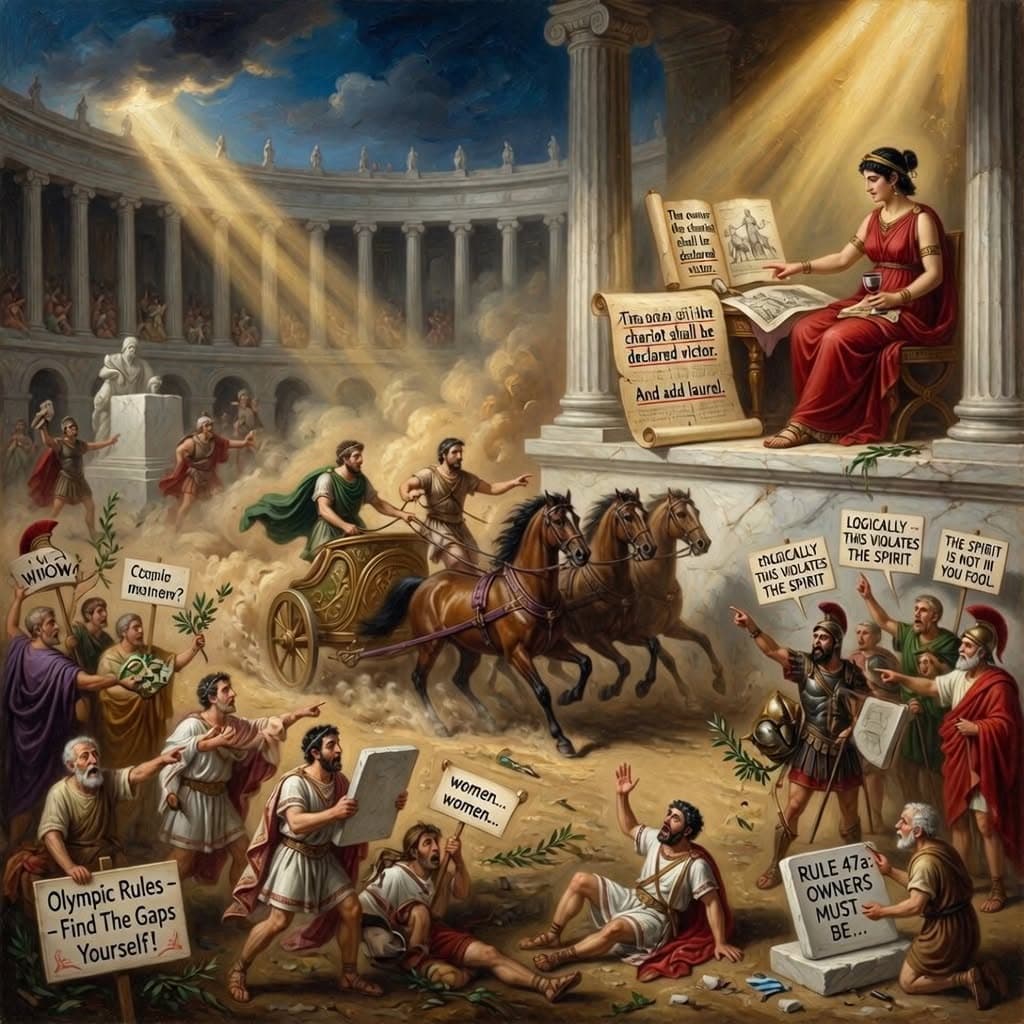
The Olympic chariot racing rules stated that the victor's crown went to the owner of the winning horses, not to the person who actually drove them. There was no rule, anywhere, that said the owner had to be male. There was no rule, anywhere, that said a woman could not enter a chariot team. The men who wrote the rules had simply not considered it necessary to specify this, in the same way you do not specify that your house rules about board games do not apply to the furniture.
Cynisca considered it extremely necessary. She bred a chariot team, entered the Olympic Games, watched her horses win from a viewing area where she was technically permitted to observe proceedings, and collected the victory crown. She won again in 392 BC. Then she built a monument at Olympia commemorating both victories so that nobody could quietly forget this had happened. The monument included a dedicatory inscription in her own name. She wrote it herself.
The Spartan context is important here because it explains both how Cynisca existed and why she was the specific person to do this. Spartan women occupied a completely different position in Greek society to their Athenian counterparts. Where Athenian women were largely confined to the home and excluded from public life, Spartan women exercised regularly, competed in their own athletic festivals, owned property, managed estates while their husbands were away at war for decades at a time, and were by Athenian standards spectacularly, alarmingly free.
Cynisca's brother was King Agesilaus II of Sparta, who reportedly encouraged her to enter the Olympic Games specifically to demonstrate to other Greek men that chariot racing was a sport of wealth and horse breeding rather than masculine virtue, which was a point he wished to make for political reasons. Agesilaus had not fully gamed out the consequences of making this point using his sister, who turned out to have opinions about monuments. The political point was made. Several additional points were made alongside it that Agesilaus had not specifically requested.
The Greek world's response to Cynisca's victories was, in the manner of institutions confronted with a loophole they failed to close, a combination of grudging acknowledgement and furious rule revision. She was given heroic honours at Sparta, which was the highest recognition available and which she accepted with the composure of someone who had expected nothing less.
In the wider Greek world, male writers noted her victories with the specific tone of people recording something they wish they could unrecord. Plutarch mentions her. Pausanias saw her monument at Olympia still standing centuries later and described it in detail, which means Cynisca's monument outlasted most of the men who were irritated by it.
No other woman won an Olympic crown for chariot racing for decades. Not because the rules were immediately changed to stop it, but because it had not occurred to anyone else to look. It had occurred to Cynisca. She looked, she entered, she won, she built the monument, and then she went home to Sparta, where presumably she had always been perfectly comfortable.