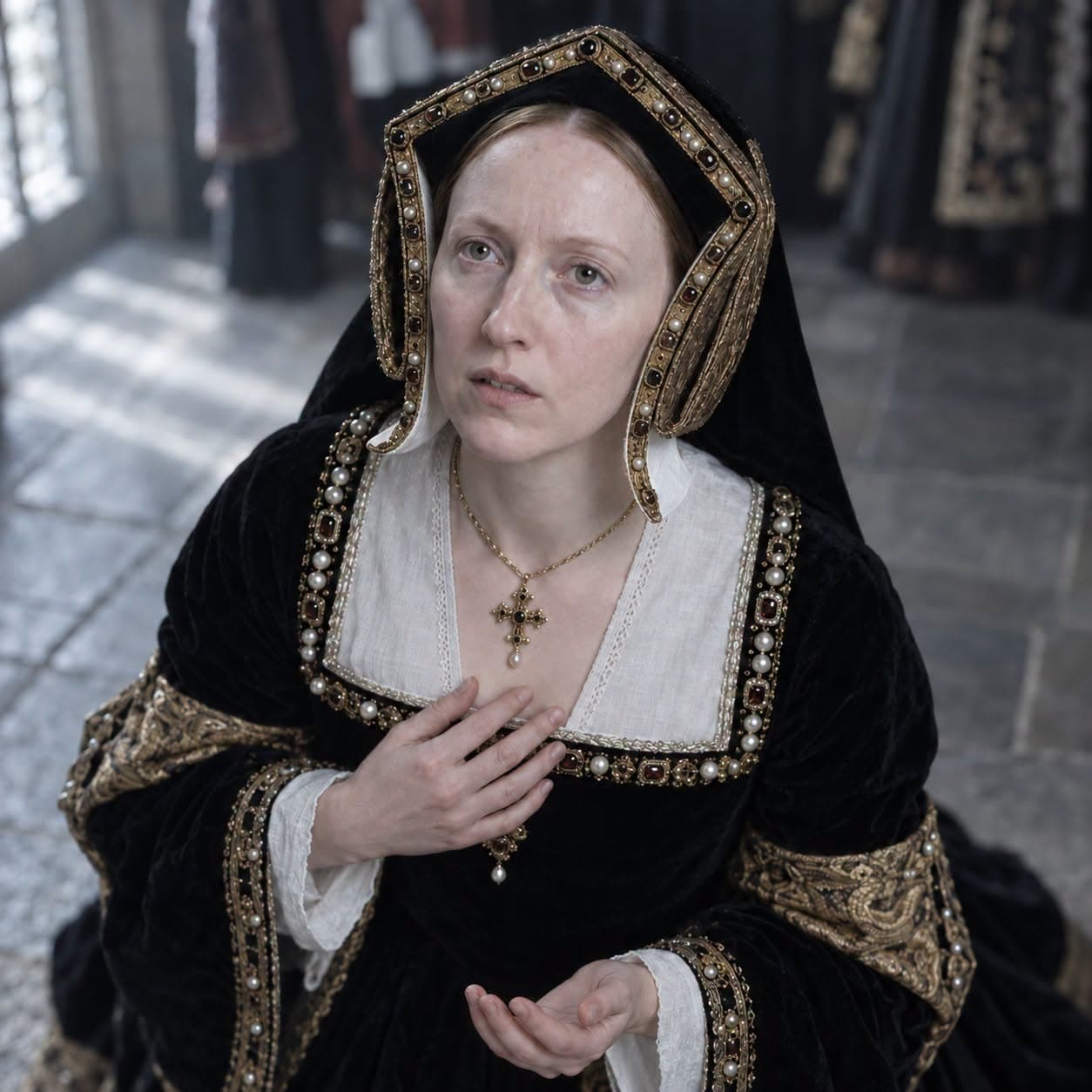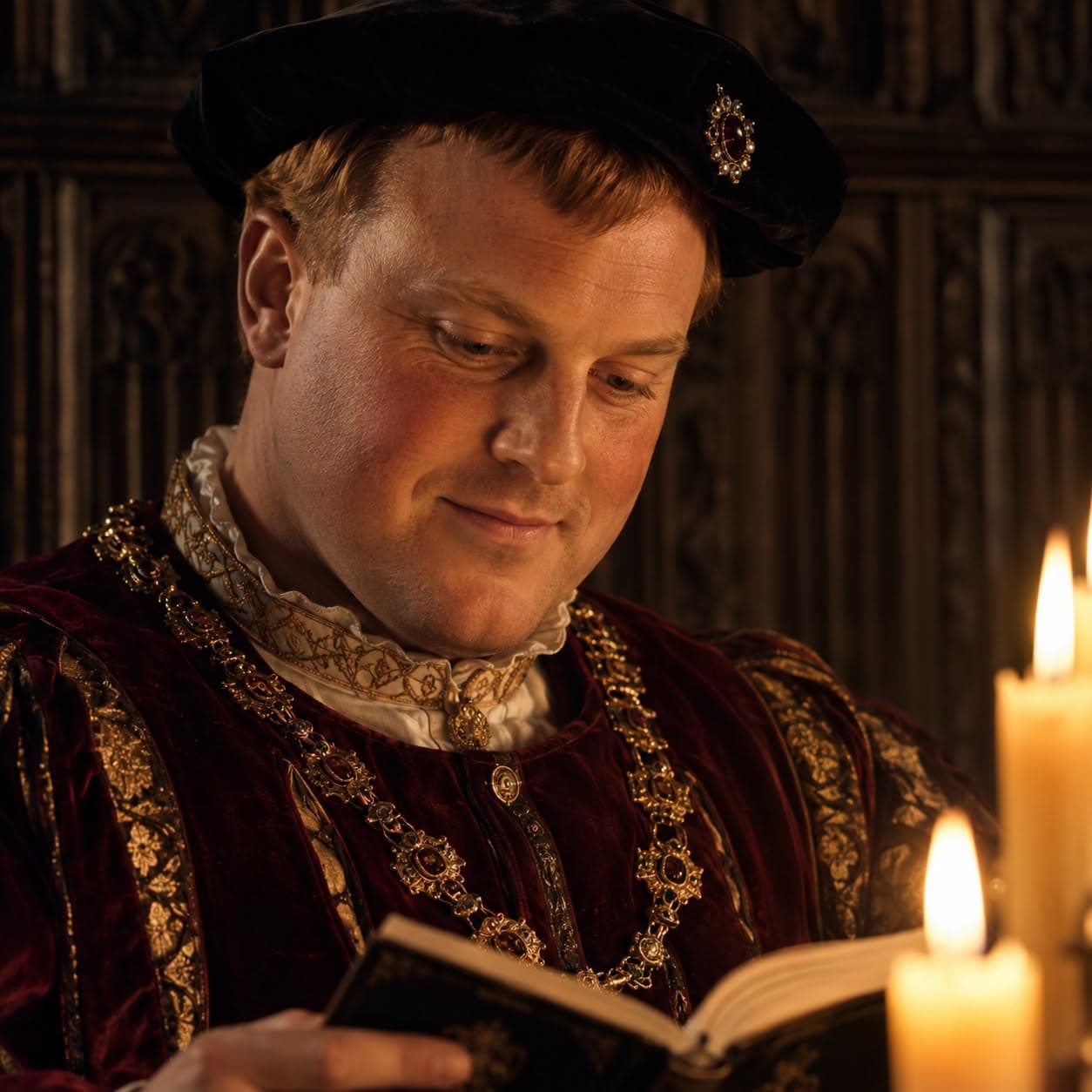
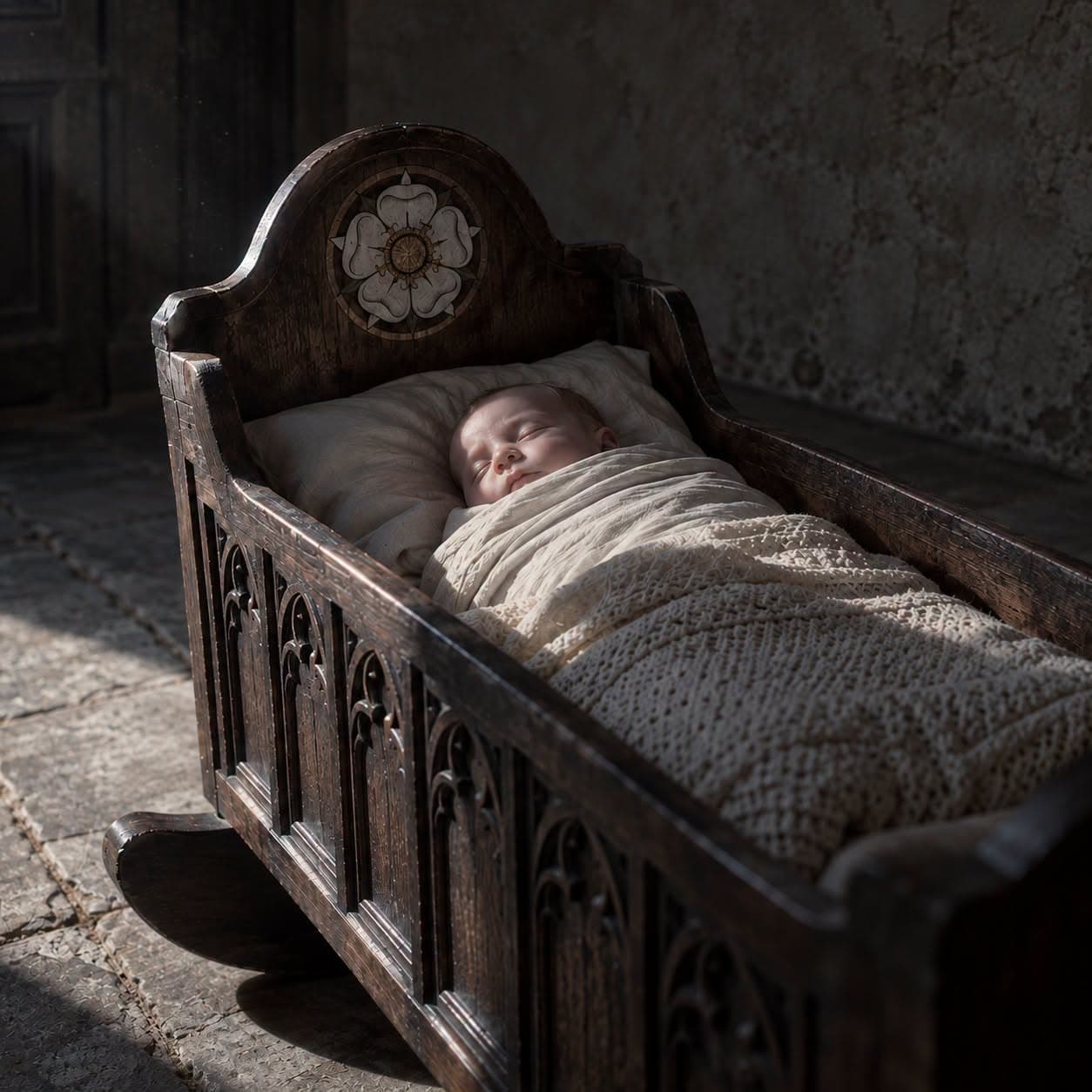
Cecily was the youngest of her father's twenty-two children and would give birth to twelve of her own. Thirty-three years after giving birth to her youngest son, she had outlived her husband, all her sons, and the dynasty they had built.
She was born at Raby Castle on 3 May 1415, the daughter of Ralph Neville, Earl of Westmorland, and his second wife, Joan Beaufort. Through Joan she descended from John of Gaunt and Edward III. Before her tenth birthday, she was betrothed to Richard Plantagenet, Duke of York, another child being raised within the great network of Neville power.
For years there were no children. Then, in the summer of 1439, Cecily gave birth to a daughter at Fotheringhay. During the next sixteen years she bore eleven more children in England, France and Ireland as her husband's service carried the family from one royal appointment to another. Five died young. Seven survived infancy.
Edward was born at Rouen in 1442, Edmund the following year. Margaret came in 1446, George in 1449. By the time Cecily returned to Fotheringhay in the autumn of 1452, she was thirty-seven years old and had already buried several children.
On 2 October 1452, she gave birth to Richard.
He was the fourth of her sons to survive infancy and the eleventh of her twelve children. A family genealogy recorded little more than the fact that he "liveth yet." Edward, Edmund and George stood between him and the inheritance of his father. There was no reason to suppose that the small place given to Richard in the family record would ever need to be enlarged.
Fotheringhay was one of the principal homes of the House of York. Its castle stood above the River Nene, with the family church close by. The church held the tombs and heraldry of the people whose blood had given his father a claim to the English throne.
That claim was already drawing the family into danger. Earlier in 1452, the Duke of York had marched towards London in an attempt to force changes upon Henry VI's government. He submitted at Dartford and returned to his estates, but the quarrel had not ended. Richard was born into the interval between one failure and the wars that followed.
Cecily remained with her husband as the division at court deepened. In 1459 the Yorkist position collapsed at Ludford Bridge. York fled to Ireland, while his eldest sons escaped to Calais. Cecily was left at Ludlow with George, Richard and their sister Margaret. The duchess and her children were taken into custody and placed in the keeping of Cecily's sister, Anne, Duchess of Buckingham.
Richard was seven years old.
Cecily appeared before the Parliament at Coventry that condemned her husband and sons. She secured financial provision for herself and the children who remained with her. The family's estates had been declared forfeit, its men scattered, and its head driven from England. Cecily stayed.
The Yorkists recovered quickly. In July 1460, their victory at Northampton placed Henry VI in their hands. York returned from Ireland and was recognised as the king's heir. Cecily came to London with George and Richard. For a few months, her husband stood one death away from the crown. He never reached it. On 30 December 1460, York was killed at Wakefield. Their son Edmund, seventeen years old, died during the same defeat.
The Lancastrian army began moving south. Cecily sent George and Richard across the sea to the court of Philip, Duke of Burgundy. Richard was eight when he left England. His father and brother were dead, his family's lands were in jeopardy, and his eldest brother was preparing to continue the war.
Edward did more than continue it. He was proclaimed king in March 1461 and secured his position at Towton. George and Richard returned from Burgundy for their brother's coronation. Cecily was now the mother of a king.
Richard became Duke of Gloucester. At thirteen he entered the household of Cecily's nephew, Richard Neville, Earl of Warwick, and spent part of his youth at Middleham. Warwick's younger daughter, Anne Neville, was being raised in the same northern world.
The family did not remain united. Warwick rebelled against Edward IV and joined the Lancastrian cause. George joined him, married Warwick's elder daughter and allowed himself to be presented as an alternative to his brother. Cecily attempted to reconcile her sons, but the settlement did not last.
Richard stayed with Edward. When the king was driven from England in 1470, Richard went into exile with him. He returned the following year and fought as Edward recovered the throne. Warwick was killed at Barnet. Anne's first husband, Edward of Westminster, died at Tewkesbury soon afterwards.
Richard married Anne around 1472. The youngest surviving son of Cecily Neville had married the youngest daughter of her nephew, bringing two damaged branches of the family together. They established their household in the north and had one legitimate child, Edward of Middleham.
George's quarrels with Edward continued. In 1478 he was condemned for treason and executed by his brother's government. Cecily had now lost one son beside her husband in battle and another by order of the son who wore the crown.
Edward IV died on 9 April 1483. His twelve-year-old son succeeded him as Edward V, and Richard was named protector. Preparations began for the boy's coronation. Richard took charge of his nephew and brought him to London, where the young king was lodged in the Tower. His younger brother joined him there.
The coronation did not take place. Edward IV's marriage to Elizabeth Woodville was declared invalid on the grounds of an earlier marriage contract, and their children were excluded from the succession. Richard accepted the crown on 26 June and was crowned on 6 July.
Her London home at Baynard's Castle had been used during the meetings that preceded Richard's accession. Her youngest son had taken the throne from the children of her eldest. The two boys disappeared from public view. Cecily had lost Edward only months earlier. Now his sons were gone from the ceremonies of the dynasty he had founded.
Richard and Anne's son was invested as Prince of Wales at York in September 1483. He was their only legitimate child and the remaining future of the Yorkist crown. In April 1484, while his parents were at Nottingham, he died at Middleham.
Two months later Richard wrote to his mother. "Madam," he wrote, "I heartily beseech you that I may often hear from you to my comfort."
Anne Neville died on 16 March 1485. Richard followed her five months later. On 22 August he met Henry Tudor's army near Bosworth. He was killed in the battle, and his body was carried to Leicester for burial. He was thirty-two years old.
Cecily was seventy.
Her husband had died at Wakefield. Edmund had died with him. George had been executed. Edward had worn the crown for more than twenty years and left two sons who had disappeared. Richard had worn it for two and died defending it. The sons who had not reached adulthood had been buried long before.
Henry Tudor took the crown and married Cecily's granddaughter Elizabeth of York in January 1486. The blood of York remained on the throne, but its kings now bore another name.
Cecily lived for another decade at Berkhamsted. Her household followed an ordered religious routine, with prayer, meals, reading and rest marked through the day. She died on 31 May 1495 at the age of eighty.
Her will asked to be buried beside her husband at Fotheringhay, and she had items sold to pay for the journey.
She was taken back to Fotheringhay.
Cecily was buried beside her husband and their son Edmund in the church near the place where Richard had been born on 2 October 1452, with a papal indulgence tied around her neck on a silver ribbon. Richard lay at Leicester, under a tomb Henry VII had paid for that same year. Edward lay at Windsor. George lay at Tewkesbury.
The youngest child of twenty-two rested beside the family she had married into. Of the twelve children she bore, two daughters remained alive. The sons were long gone, and so was the crown they had fought one another to possess.