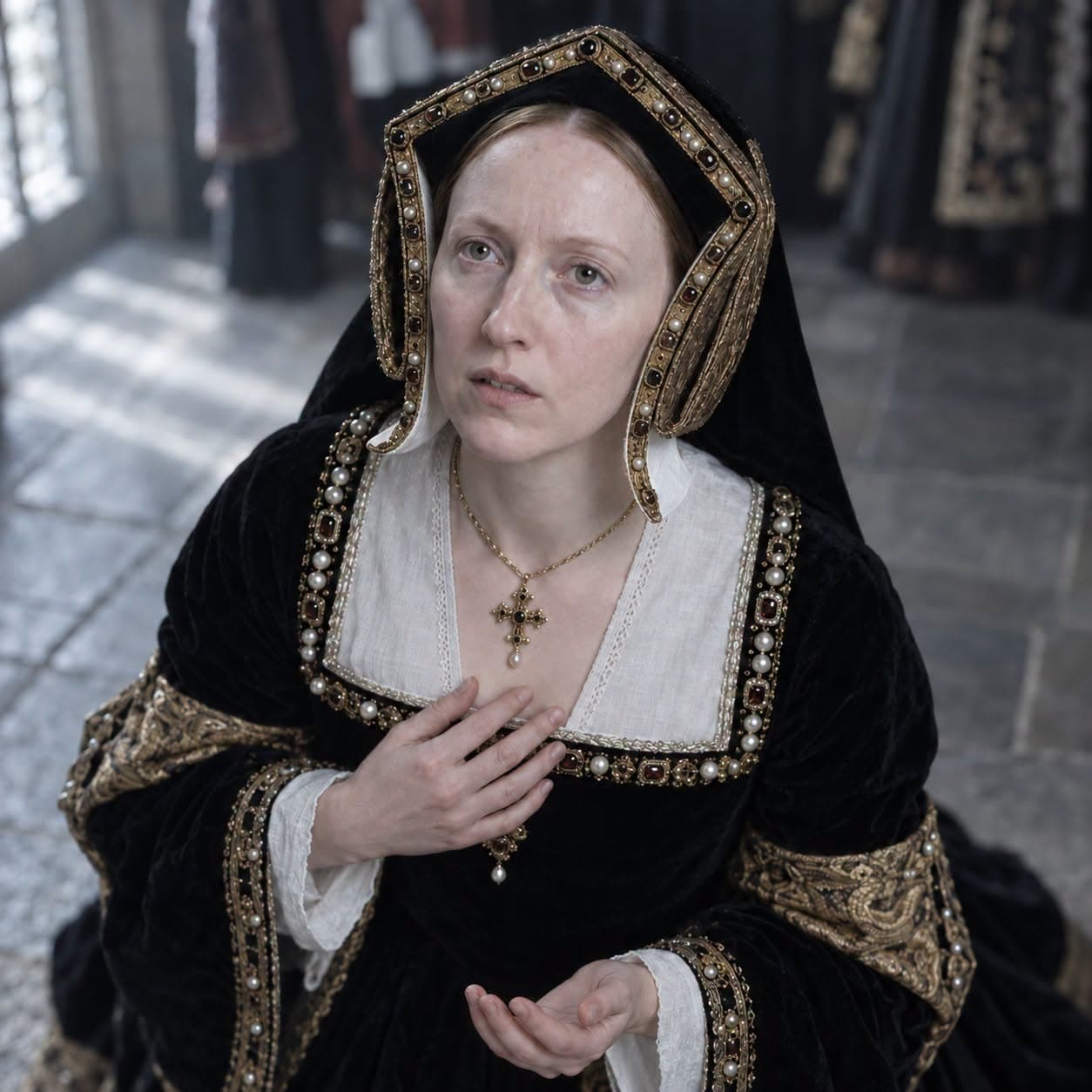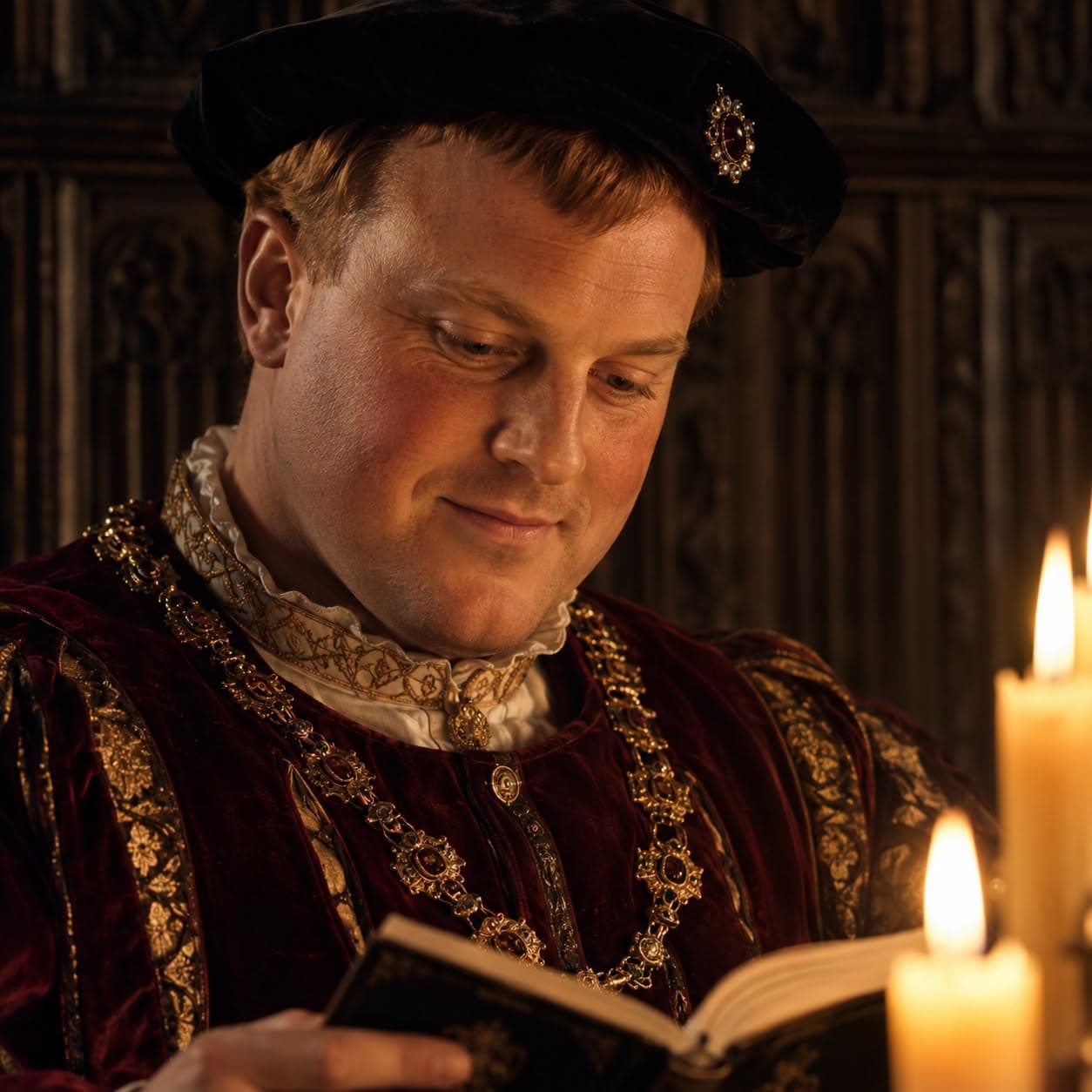
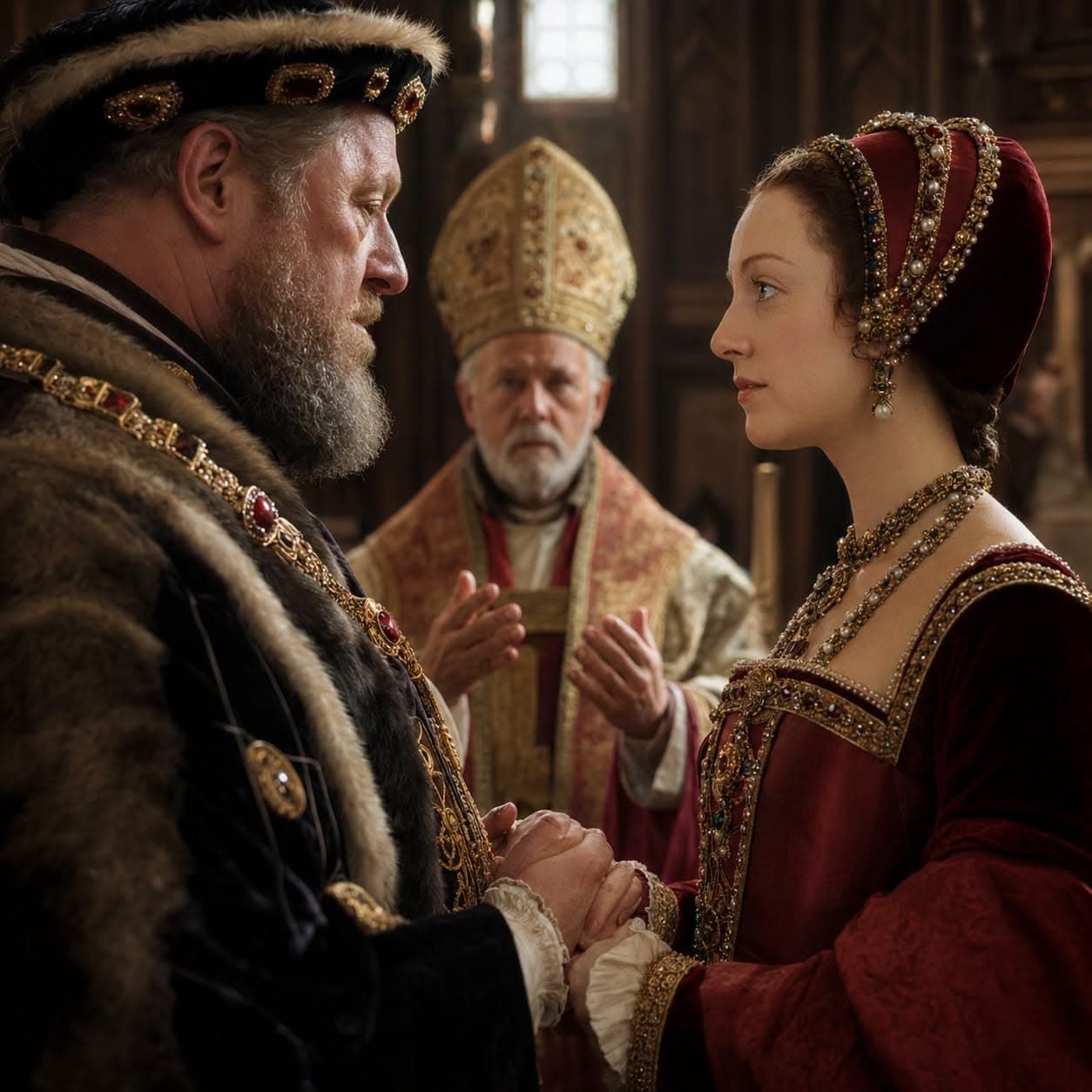
Catherine Parr was already in love with another man when Henry VIII decided he wanted her. She said yes anyway. It was the only way either of them was getting out of it alive.
She had been widowed twice already by 1543, and by then she had begun a courtship with Thomas Seymour, a match she wanted for herself rather than one arranged around her. Once Henry made his interest known, that courtship ended. Seymour was sent abroad on a diplomatic posting, conveniently out of the way, and Catherine married the king instead, on 12 July 1543, in the Queen's Closet at Hampton Court.
She knew exactly what she was stepping into. Catherine of Aragon had been discarded. Anne Boleyn had been executed. Jane Seymour had died giving him the son he wanted. Anne of Cleves had been quietly set aside. Catherine Howard had been executed in turn, not two years before Catherine Parr's own wedding. She was the sixth woman asked to share a throne that had already destroyed four of the five who came before her, and she walked into the marriage with her eyes fully open.
What she did with the position was not passive. In 1544, while Henry campaigned in France, Catherine was formally appointed regent of England, sitting at the head of the Privy Council and signing official documents with her own initials, KP. It was one of the only times in English history a queen consort held that kind of formal governing authority in her own name, not as a figurehead but as the person actually running the country while the king was elsewhere.
She was also, dangerously for the time, a serious reformist intellectual. In 1544 she published an English translation of an earlier Latin devotional work anonymously, and the following year put her own name to a second book of prayers she had compiled herself, widely credited as the first book published in England in English under a woman's own name. Henry himself reportedly complained to an adviser about her growing theological confidence, saying, "A good hearing it is, when women become such clerks, and a thing much to my comfort, to come in mine old days to be taught by my wife," a line that reads warmer than the situation actually was.
According to an account later written by John Foxe under Elizabeth I's Protestant regime, conservative factions at court built a heresy case against Catherine in 1546 that came close to destroying her exactly as it had destroyed Anne Boleyn and Catherine Howard. She talked her way out of it, performing a careful, humble submission to Henry that persuaded him to abandon the charges before they reached her. Her most original work, The Lamentation of a Sinner, would not appear until after Henry's death, the boldest thing she ever wrote, published only once he could no longer read it.
Catherine married Thomas Seymour in secret, within months of Henry's death, the marriage she had wanted years before Henry ever noticed her. Elizabeth, then fourteen, came to live in their household as Catherine's ward. Seymour began visiting the girl's bedchamber in the early mornings, a habit her governess found alarming enough to report. On at least one occasion, by the governess's account, Catherine herself was present rather than intervening.
Eventually, and only after the behaviour continued, Catherine sent Elizabeth away from the household entirely.
The marriage Catherine had chosen for herself, the one she'd wanted all along, did not turn out to be the safe one. She died the following year of childbed fever, days after giving birth to her only child, having reportedly accused her husband, in her final delirium, of poisoning her.