She had waited seven years to be crowned. When the procession finally came, it rained so hard she had to shelter under a draper's stall. London dressed itself in cloth of gold and crowned her queen the next morning anyway.
Arthur, Prince of Wales had died in April 1502, five months after their wedding, leaving his sixteen-year-old widow stranded in a country that was not her own. Henry VII kept her in England as a diplomatic instrument, promising her to his younger son while paying her an allowance so inadequate she sometimes could not afford food for her maids. She wrote to her father that she was in rags.
The years passed and no resolution came.
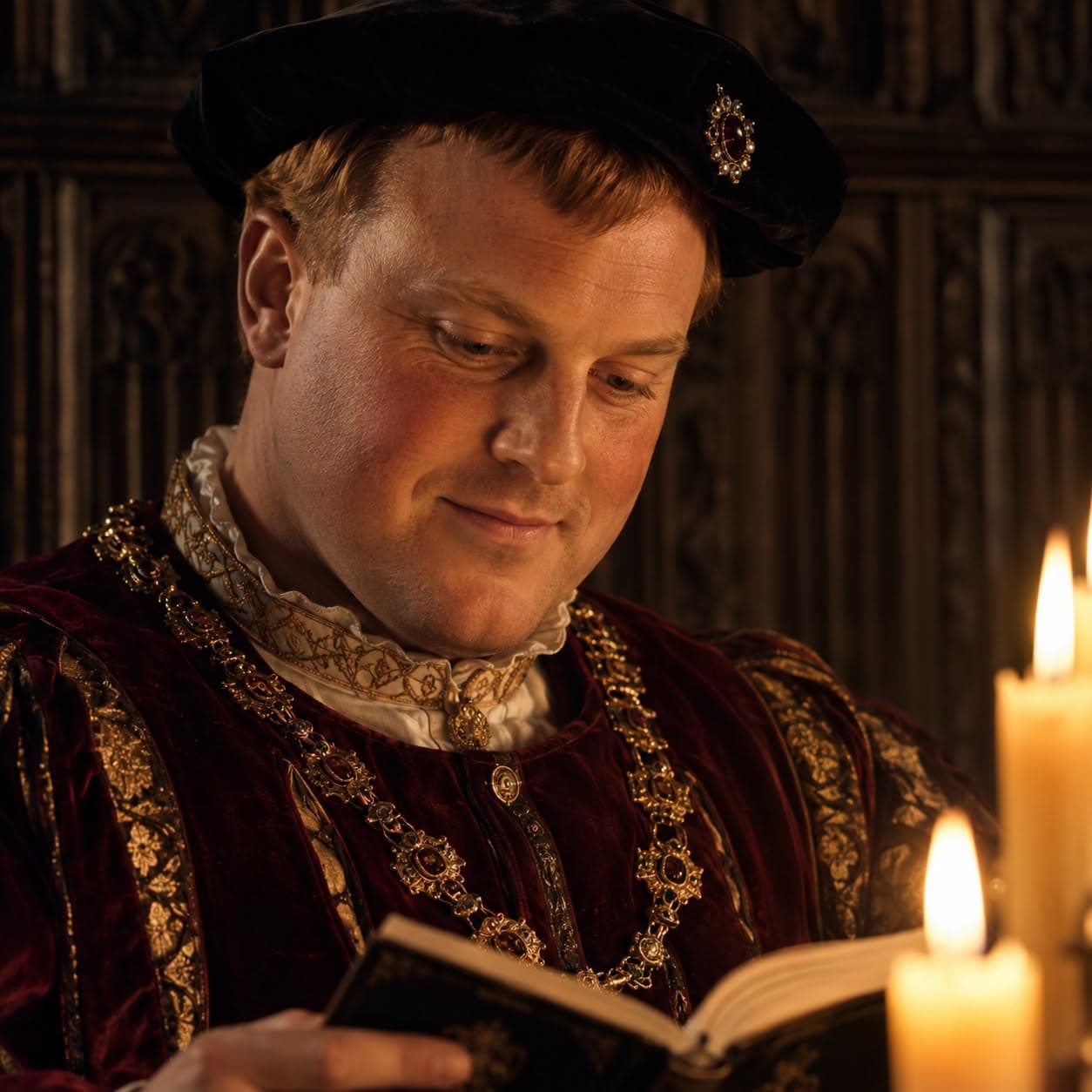
In 1507, with no clear prospect of marriage and no other available role, Ferdinand of Aragon appointed his daughter as his ambassador to the English court. She became the first woman in recorded European history to hold an ambassadorial post. She negotiated, wrote coded dispatches, and waited. Then Henry VII died in April 1509 and his seventeen-year-old son chose her immediately.
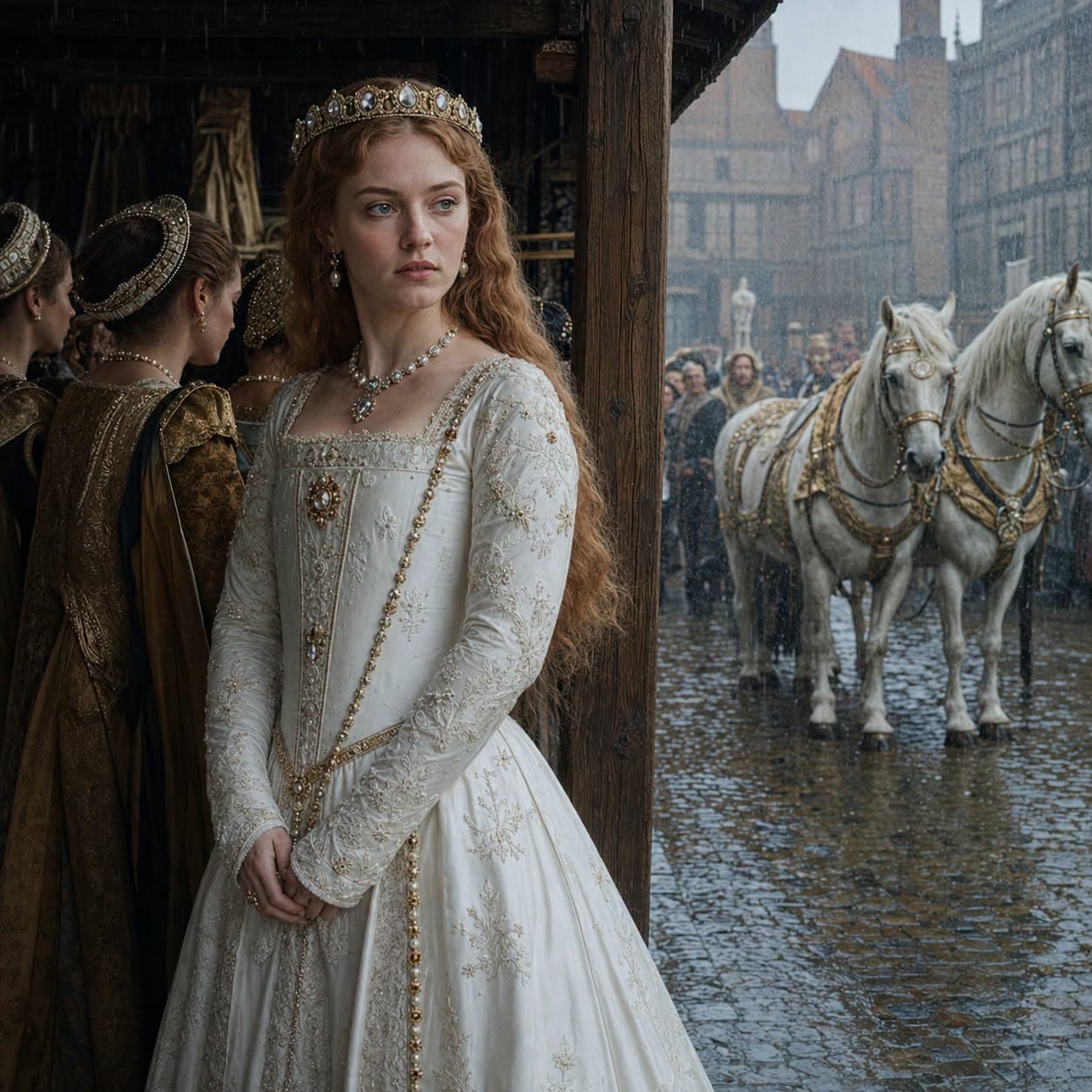
The procession through London was on the twenty-third of June. The south side of Cheapside was hung with cloth of gold. Catherine rode in a litter carried by two white palfreys trapped in white cloth of gold, dressed in white satin embroidered, her hair hanging loose down her back in the old coronation custom.
Just past the Cardinal's Hat tavern in Cornhill the sky broke open. The rain was so violent that Catherine was forced to take shelter under the hovel of the drapers' stalls at the side of the street. The future queen of England was left taking shelter under a market awning during her own coronation procession while London's crowd stood drenched around her. Thomas More, who was watching, wrote a poem making light of it afterward.
The coronation itself was Midsummer's Day, the twenty-fourth of June, the feast of St John the Baptist. As the royal party prepared to walk into Westminster Abbey, the traditional striped ray cloth was spread along the path beneath their feet. The moment the sovereigns passed over it, the eager crowd tore the carpet to pieces, pulling it apart strip by strip to keep as souvenirs of the historic day.
Bonfires had burned on Midsummer's Eve and David Starkey would later write that Henry and Catherine on that morning seemed like another Oberon and Titania, figures from a world where the ordinary rules did not quite apply. Archbishop Warham crowned them both at Westminster Abbey. The conduits of the city ran with wine. Thomas More wrote a coronation ode. The banquet that followed lasted through the afternoon.
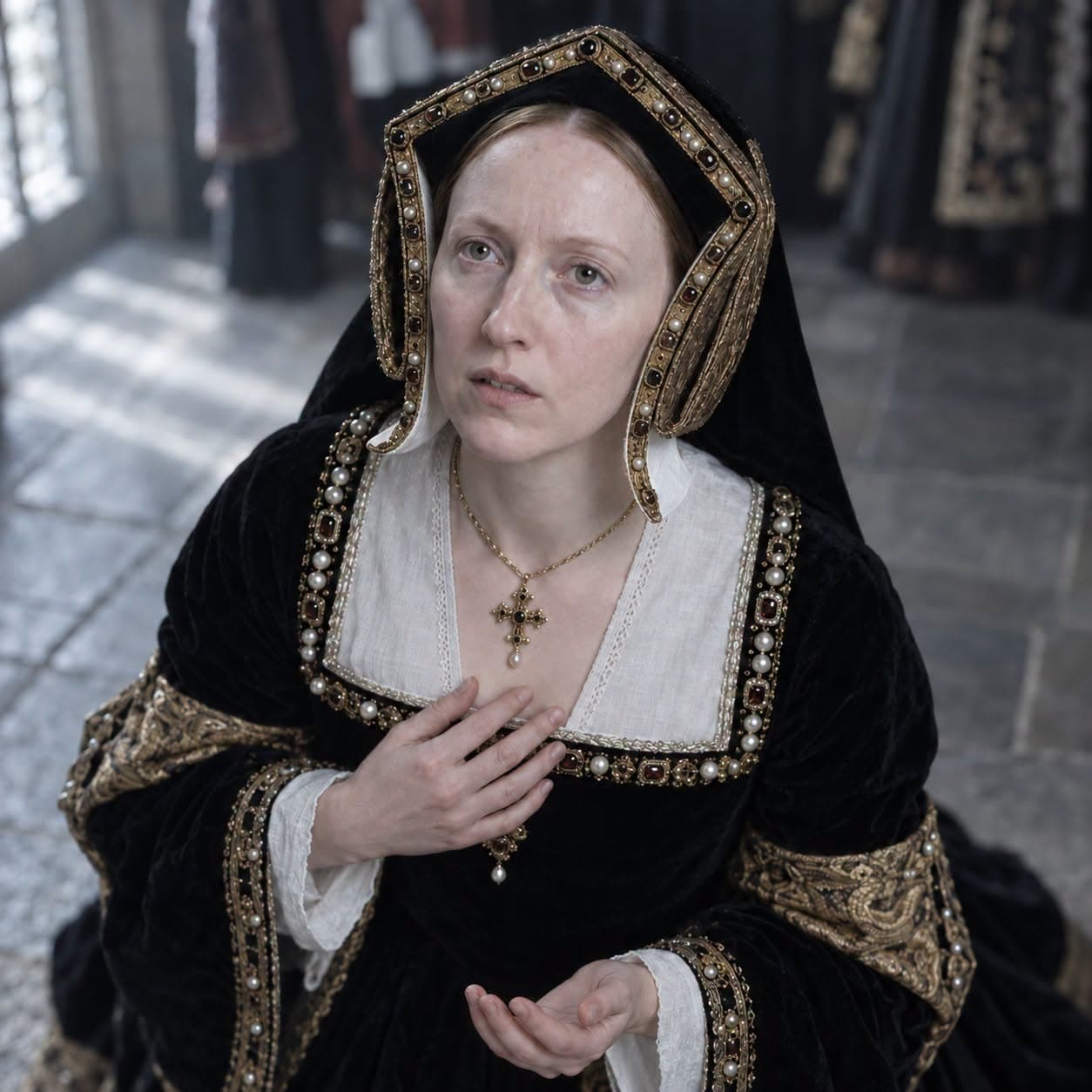
She was queen for twenty-four years. Henry's lawyers declared the marriage invalid in 1533. She refused to accept it. She signed her letters Catherine the Queen until she died at Kimbolton in January 1536.
She never wore the crown again. She never stopped believing it was hers.