Six months earlier she had been seven miles away while another woman sat in her chair. On the twelfth of June 1530 she said so to Henry's face. He left the room without a word. There were six more years of it still to come.
Catherine of Aragon had been Queen of England for twenty-one years. She had come to England as a girl of sixteen from the Spanish court of Ferdinand and Isabella, married Arthur Prince of Wales, buried him six months later, waited seven years in legal limbo while Henry VII calculated the value of returning or keeping her, and then married his second son, who became Henry VIII, in a private ceremony on the eleventh of June 1509. She had been a good queen and a loyal wife and had buried most of her children and had stood beside Henry through the years when the marriage was good and had remained standing beside him through the years when it was not.
She knew how to endure. She had been enduring since she was seventeen years old.
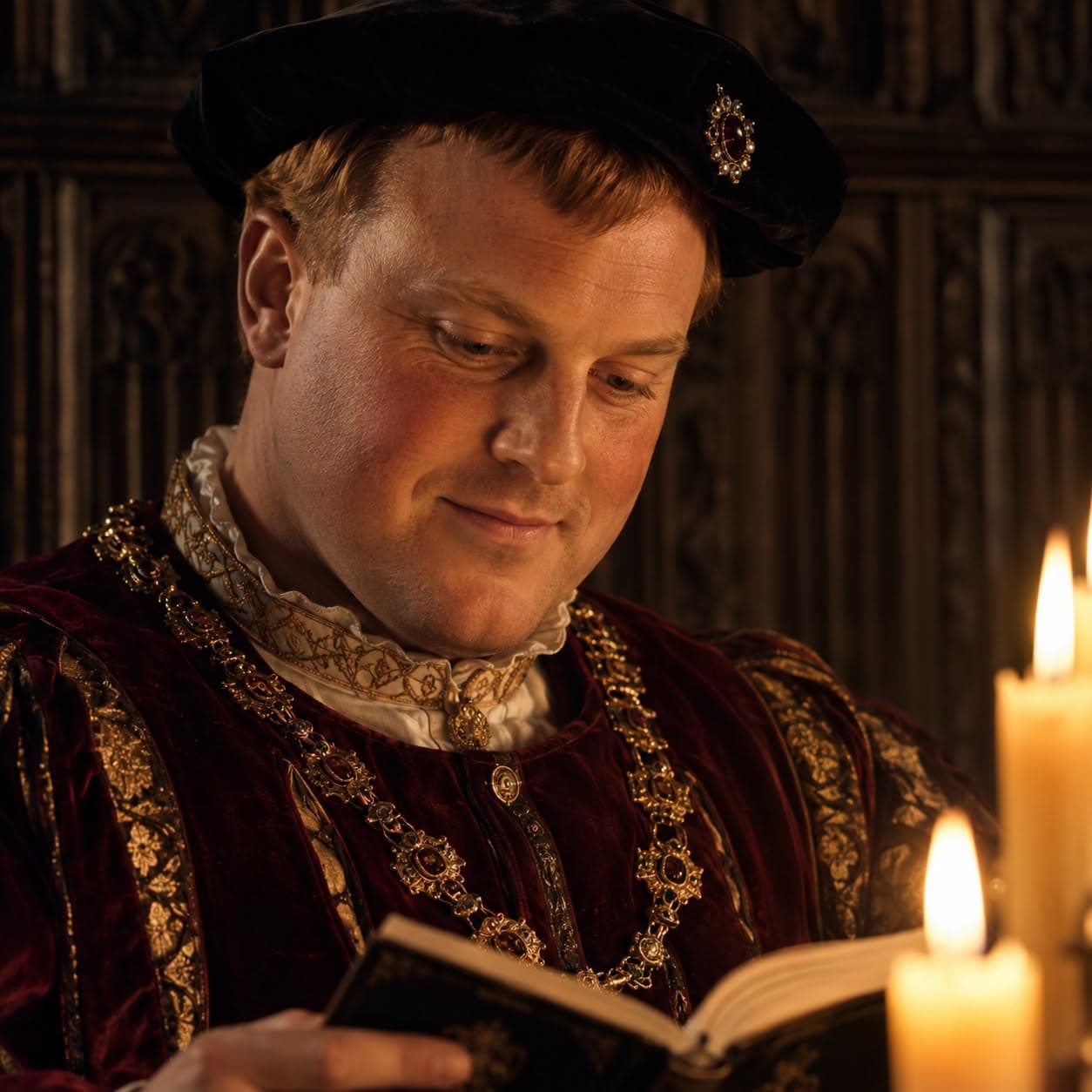
By 1530 the machinery to end the marriage had been running for three years. Henry was convinced his marriage to Catherine was invalid, that the papal dispensation allowing him to marry his brother's widow had been improperly granted, and that the annulment he was seeking from Rome was not a matter of convenience but of conscience. He believed this with the specific conviction of a man who needed to believe it, and the distinction between genuine conscience and convenient conscience was not one Henry was equipped to make about himself. Anne Boleyn was waiting. The years were passing. Rome was not cooperating.
Henry's patience, never his most developed quality, was exhausted.
Catherine knew all of this. She knew it the way a woman knows the thing that is going to happen before it happens, because she was intelligent and well-informed and because Eustace Chapuys, the Imperial Ambassador, was her most reliable source and he missed nothing. Six months before the twelfth of June he had written to his master about a grand feast in London to which several ladies of the court had been invited. Anne Boleyn, he wrote, had taken precedence over all the other ladies, including the Duchesses of Norfolk, and had sat beside the king occupying the very place allotted to a crowned queen. After dinner, Chapuys wrote, there was dancing and carousing so that it seemed as if nothing were wanting but the priest to give away the nuptial ring and pronounce the blessing.
Catherine had not been at the feast. Catherine had been seven miles away, holding, in Chapuys's words, her own feast of sorrow and weeping.
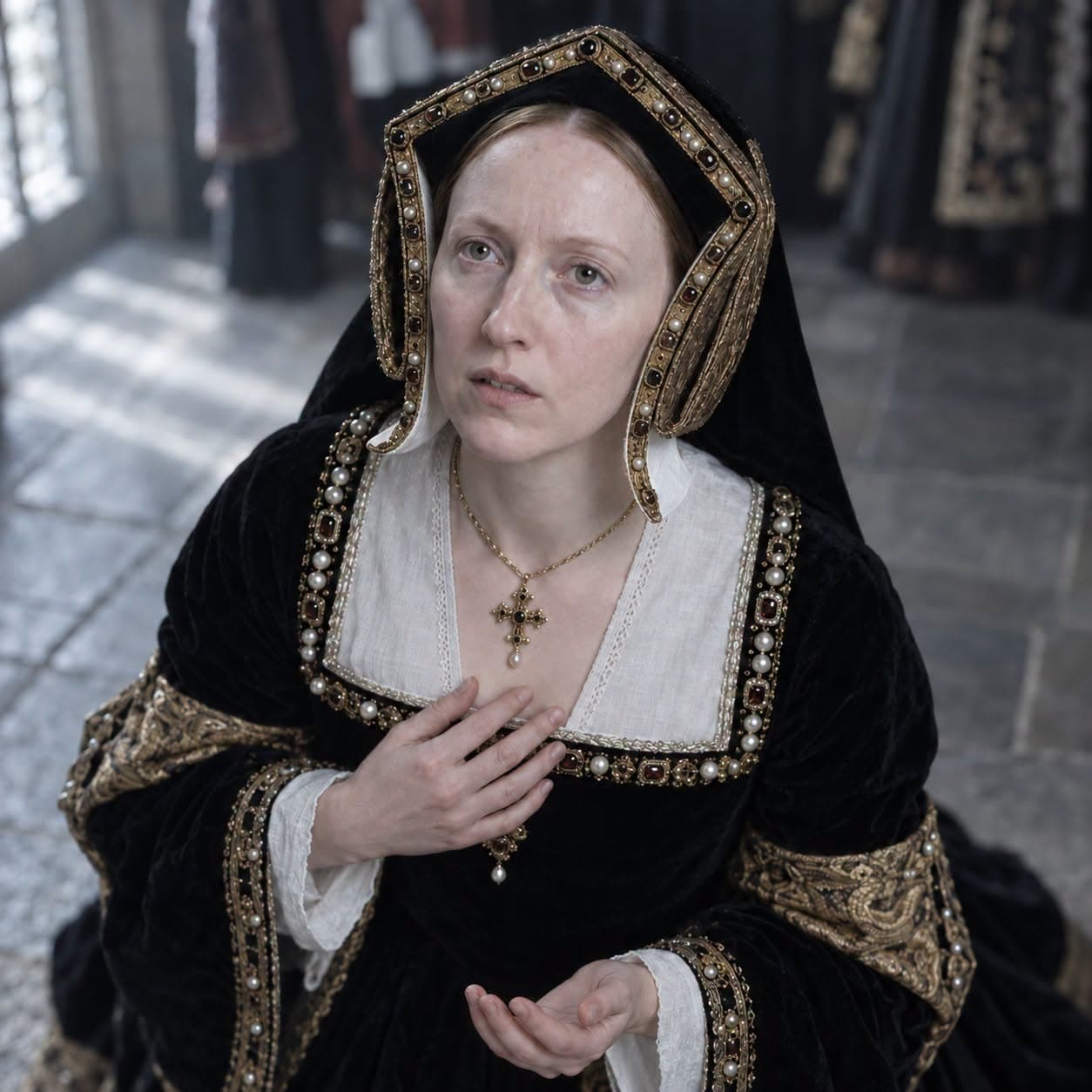
She had applied to the Pope for a brief ordering that no one should, on pain of excommunication, judge, counsel, or otherwise speak in the matter of the dissolution of her marriage. The Pope had issued it. It was a legal instrument and a symbolic one, the Church planting a flag between Catherine and the machinery that was trying to destroy her. On the twelfth of June 1530 she used it as a weapon. She called Henry before her and she said what she thought.
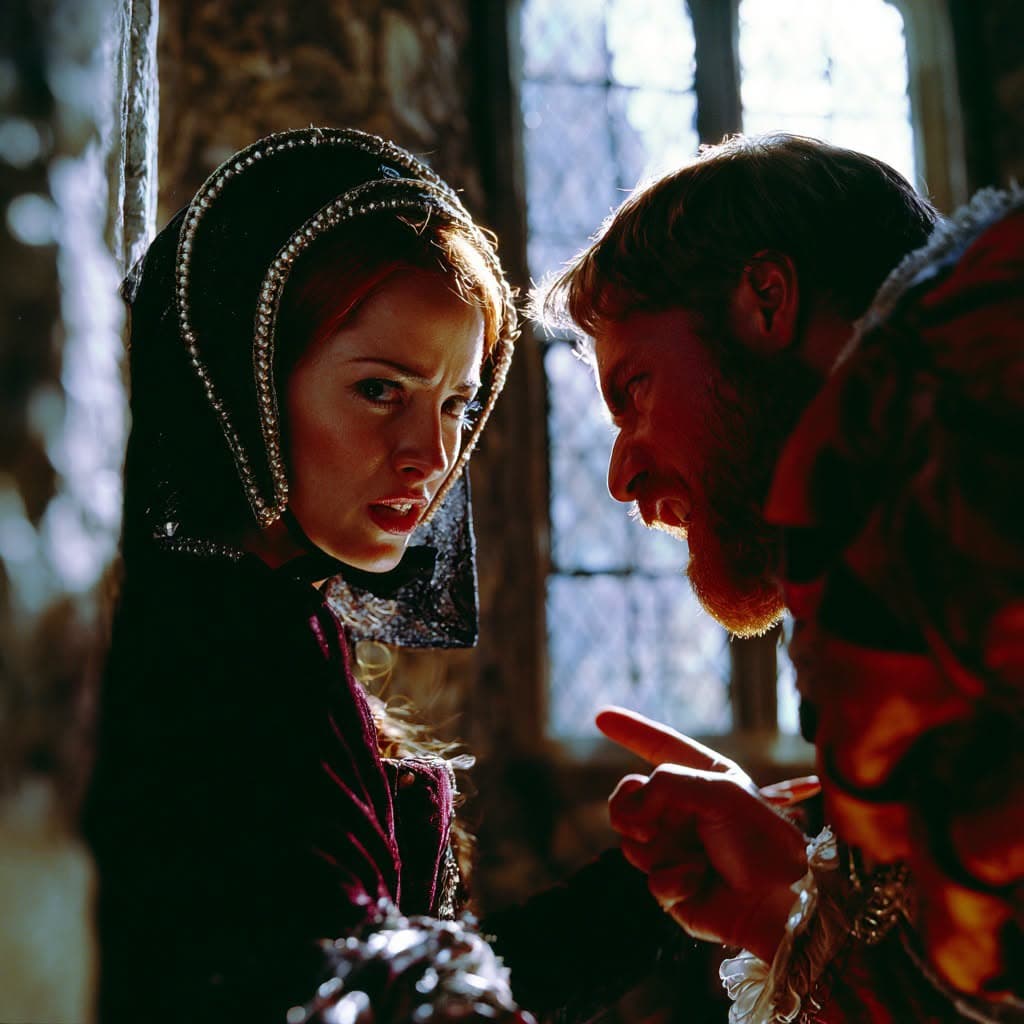
She exhorted him to be again to her a good prince and husband. She told him to quit the evil life he was leading and the bad example he was setting. She told him that even if he did not respect her, his true and lawful wife, he should at least respect God and his conscience. She told him he should not ignore the brief issued by the Pope. She said all of it directly, without softening, without the diplomatic mitigation that the advisors around her urged, because Catherine of Aragon had been the daughter of Isabella of Castile before she was the wife of Henry Tudor and she knew how to stand in a room and say an unwelcome thing.
Henry replied that the Pope's brief was of very little consequence and that there were plenty of people on his side. Then he left the room without another word.
She had said everything there was to say and he had dismissed it in a sentence and walked out, and there was nothing to do but watch the door close and understand that the man who had just walked through it had stopped listening some time before the twelfth of June 1530 and was not going to start again. The brief meant nothing to him. Her words meant nothing to him. The twenty-one years meant nothing to him, or not enough, which amounts to the same thing in the end.
There were six more years before she died at Kimbolton in January 1536, six years of reduced households and moved residences and increasing isolation and refused access to her daughter Mary, six years of refusing to call herself anything other than what she was, the Queen of England, because she had been a queen longer than Henry had been pursuing Anne Boleyn and she was not going to stop being one because he had walked out of a room.
He had the machinery of the English state and the power of an absolute king and the particular cruelty of a man who had decided the inconvenient person in his life was going to be made to disappear. She had the truth and the Pope's brief and the specific stubbornness of a woman who had been enduring the wrong things for long enough to know that survival was a form of argument.
She did not survive long enough. She was fifty years old when she died and she had been fighting for twelve years and she was buried in Peterborough Cathedral with the honours due to a Princess Dowager of Wales and not the Queen of England she had always been. Henry wore yellow at the news of her death. He called it a relief.
On the twelfth of June 1530 she had told him to his face what he was doing and what it meant and what God and his conscience required of him. He had left the room. It was already too late, probably, and she may have known it, and she said it anyway, because she was Catherine of Aragon and the truth did not stop being the truth simply because Henry Tudor had decided to stop listening to it.