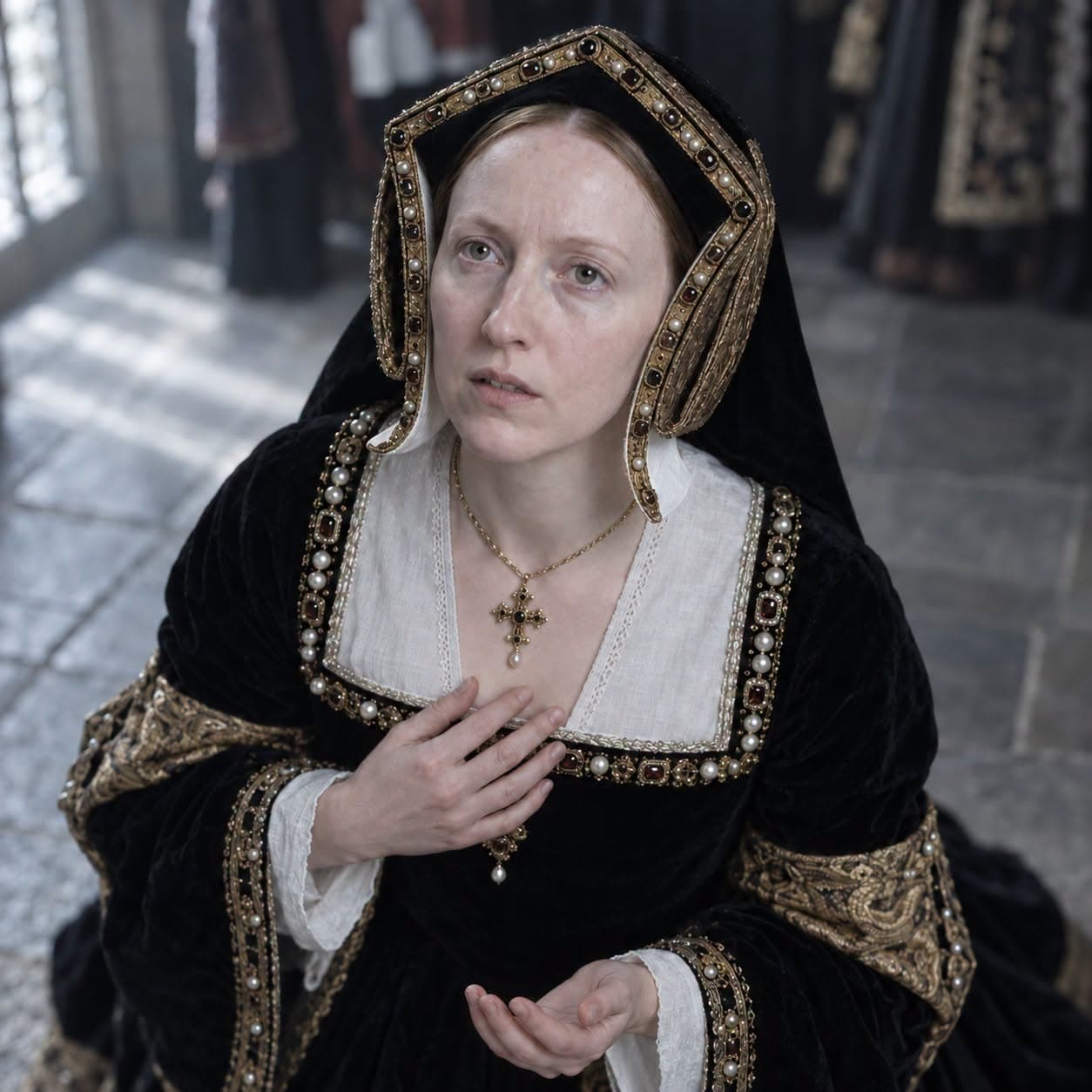
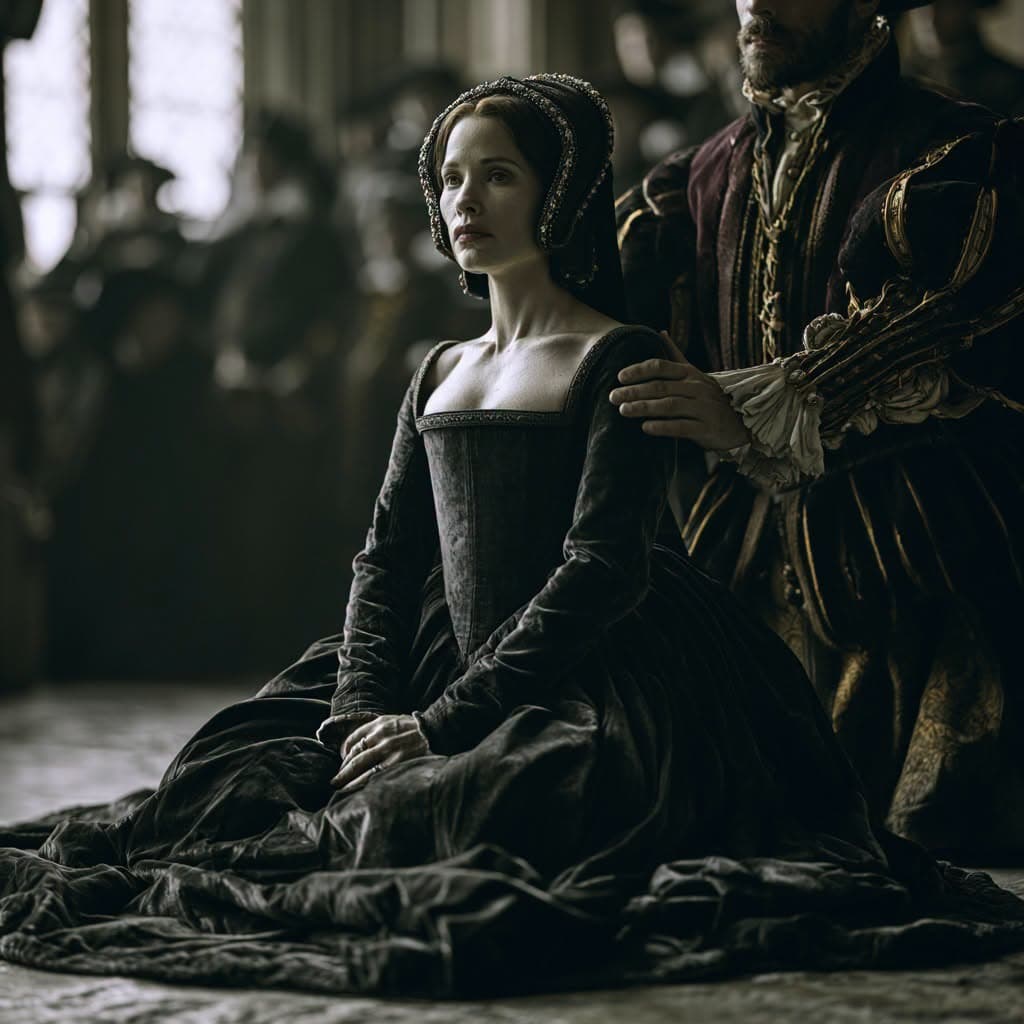
She was expected to defend herself through her lawyers. Instead she walked past them, crossed the room, and knelt at her husband's feet. She spoke. When she finished she stood up and walked out. The crier called her name three times. She did not stop.
The legatine court had been sitting at Blackfriars since the thirty-first of May 1529. Its purpose was to examine the validity of Henry VIII's marriage to Catherine of Aragon, and on the twenty-first of June the hall was filled with the men appointed to decide it: Cardinal Wolsey and Cardinal Campeggio presiding, bishops and nobles assembled on either side, Henry seated beneath his canopy of estate at the far end of the room.
George Cavendish, Wolsey's own gentleman usher and the closest thing the day had to an eyewitness recorder, described what followed as the strangest and newest sight he had ever seen — a king and queen appearing in court as common persons to abide the judgment of their own subjects.
Catherine did not sit with her counsel. She crossed the floor, knelt before Henry, and spoke directly to him in front of the entire assembly. The words Cavendish recorded have survived intact. "Sir, I beseech you for all the loves that hath been between us, and for the love of God, let me have justice and right, take of me some pity and compassion, for I am a poor woman and a stranger born out of your dominion. I have here no assured friend and much less indifferent counsel."
She told him she had come to him a maid and reminded him of the twenty years she had given to his crown. Then: "I take God and all the world to witness, that I have been to you a true, humble and obedient wife."
Henry tried twice to raise her from her knees during the speech. She would not move. She stayed where she was and said what she had come to say, kneeling at the feet of the man who had built a court to unmake her, in front of every bishop and nobleman he had assembled to watch it happen.
When she finished she rose, made her reverence, and walked toward the door. The court crier called her name three times ordering her to return. Catherine kept walking. Her answer, recorded across multiple sources, was this: "On, on, it makes no matter, for it is no impartial court for me, therefore I will not tarry." She left the hall, stepped out into the London light, and did not look back.
She was forty-three years old. She never entered his courtroom again.