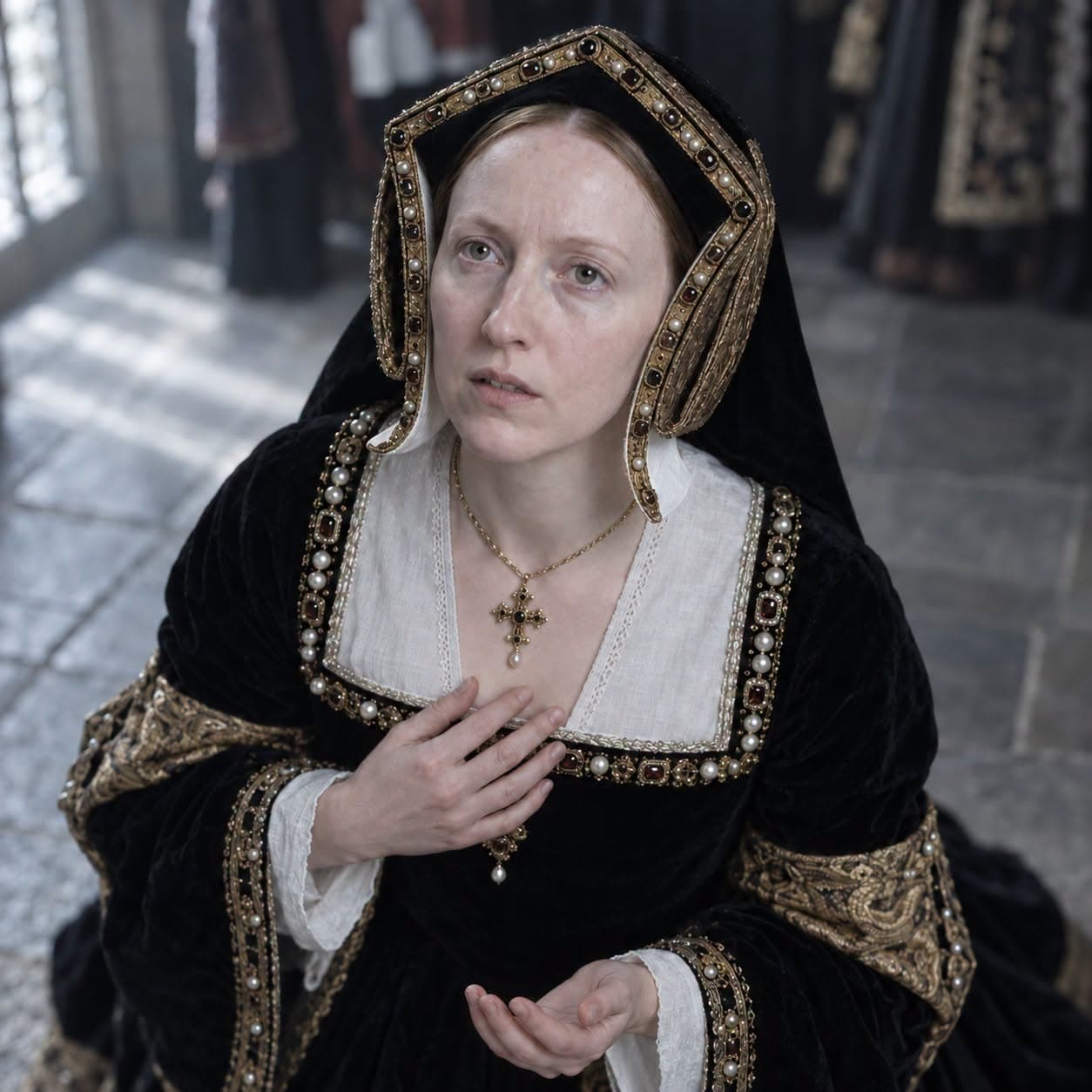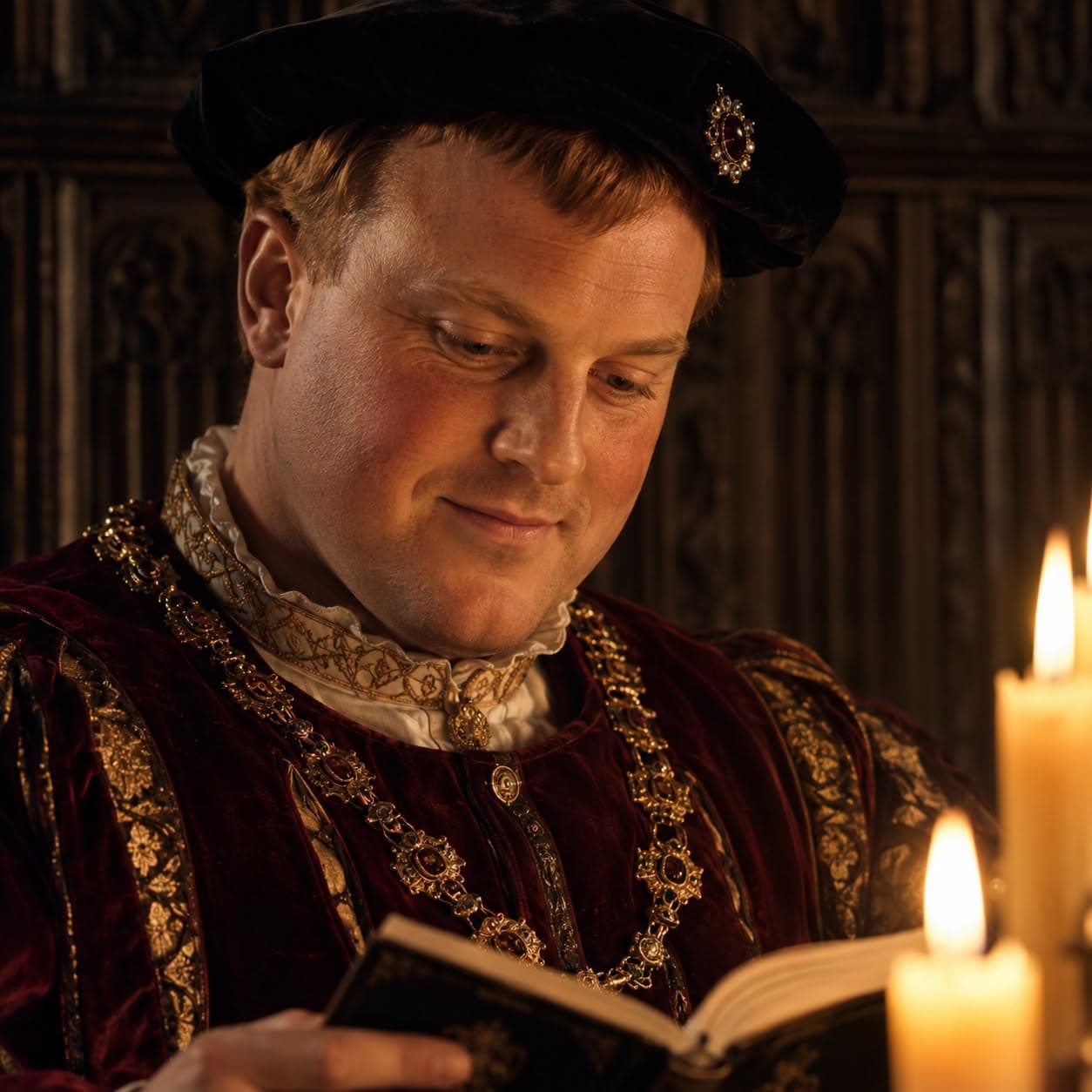

Catherine de' Medici watched her husband ride into a tournament wearing another woman's colours. He was carried out with a lance through his eye and called for his mistress from the bed where he was dying. Catherine refused to let Diane de Poitiers in. The queen had finally found a door she could close.
Henry II had insisted on jousting that summer to mark the peace with Spain and his daughter's marriage into it, ignoring the warnings that came with the occasion. He rode into the lists wearing Diane de Poitiers' colours, not his wife's, as he had for years without apology. The lance shattered on impact, and splinters of wood drove through his visor into his eye and skull. He was carried away barely conscious. The finest physicians in France, including men who would later be remembered as founders of modern surgery, worked on him for eleven days and could not stop what the wound had already started.
For more than two decades before that afternoon, Catherine had lived in a marriage arranged for money and a name, not affection. She had been sent to France as a Medici bride, valuable for her family's wealth and papal connections, largely irrelevant to the king she married. Diane de Poitiers, older and more polished, had claimed Henry's devotion almost from the start, and the court had arranged itself accordingly.
The royal monogram was carved into palaces with their initials entwined, as though the mistress were the second half of the monarchy. Diane held the crown jewels. Diane held Chenonceau, the castle Catherine wanted for herself. When the marriage produced no children for years, it was Catherine who bore the blame at court. Henry had a physical condition his own physicians recorded, and it was Diane, not Catherine, who arranged for him to visit his wife's bed often enough that ten children eventually followed.
It changed nothing about where his loyalty stood.
As the king lay dying, that arrangement finally met its limit. Infection spread through the wound faster than anyone could treat it, and Henry, drifting in and out of consciousness, asked for Diane to be brought to him. Catherine, at his bedside as his wife and queen, did not allow it. For the first time in their marriage, the most important decision in Henry's life belonged only to his wife.
He died on 10 July 1559, at the age of forty. Catherine moved immediately. Diane was barred from the funeral. The crown jewels were reclaimed. Chenonceau, held for years by the mistress while the wife looked on, was taken back and given instead to Catherine, who sent Diane away to Chaumont in exchange. The woman who had shared the king's monogram went home without his crown or his castle.
France now belonged, on paper, to a fifteen-year-old boy. Francis II took the throne sickly and inexperienced, with his young wife Mary, Queen of Scots, beside him as queen consort. The real authority in the new reign settled quickly onto the Guise family, Mary's powerful uncles, who saw in Catherine a widow to be managed rather than a rival to be feared. She was, in their calculation, simply the king's mother, useful for legitimacy and safely ignored for everything else. It was a familiar mistake to make about a woman men had spent years underestimating.
The miscalculation did not last. Francis II died within eighteen months of taking the crown, and his younger brother Charles IX inherited a throne at the age of ten. Catherine became regent. She convened councils, tried at first to hold the kingdom together through limited religious toleration between Catholics and Huguenots, and worked to keep a fracturing monarchy from collapsing under men far more experienced than she had been permitted to seem.
As the wars of religion deepened, her methods hardened alongside them, and her name became bound permanently to the violence that followed, including the massacre that would define her reputation for centuries afterward.
For twenty years she had watched Henry ride in another woman's colours. When he fell, it was Catherine de' Medici who picked up the reins.