Sometime in the fifth century, in a country that Rome never reached, a woman could divorce her husband for hitting her.
Not petition for divorce. Not appeal to a church court or a lord or a male relative with sufficient standing to make the request on her behalf. She could initiate the separation herself, retain the property she had brought into the marriage, and leave with her honour-price intact. The law that permitted this was not the product of a reforming movement or a political argument about the rights of women. It was simply the law. It had been the law for as long as anyone could remember. It was called Brehon law, and it governed Ireland for approximately a thousand years, and it is worth understanding precisely what it contained before understanding what replaced it.
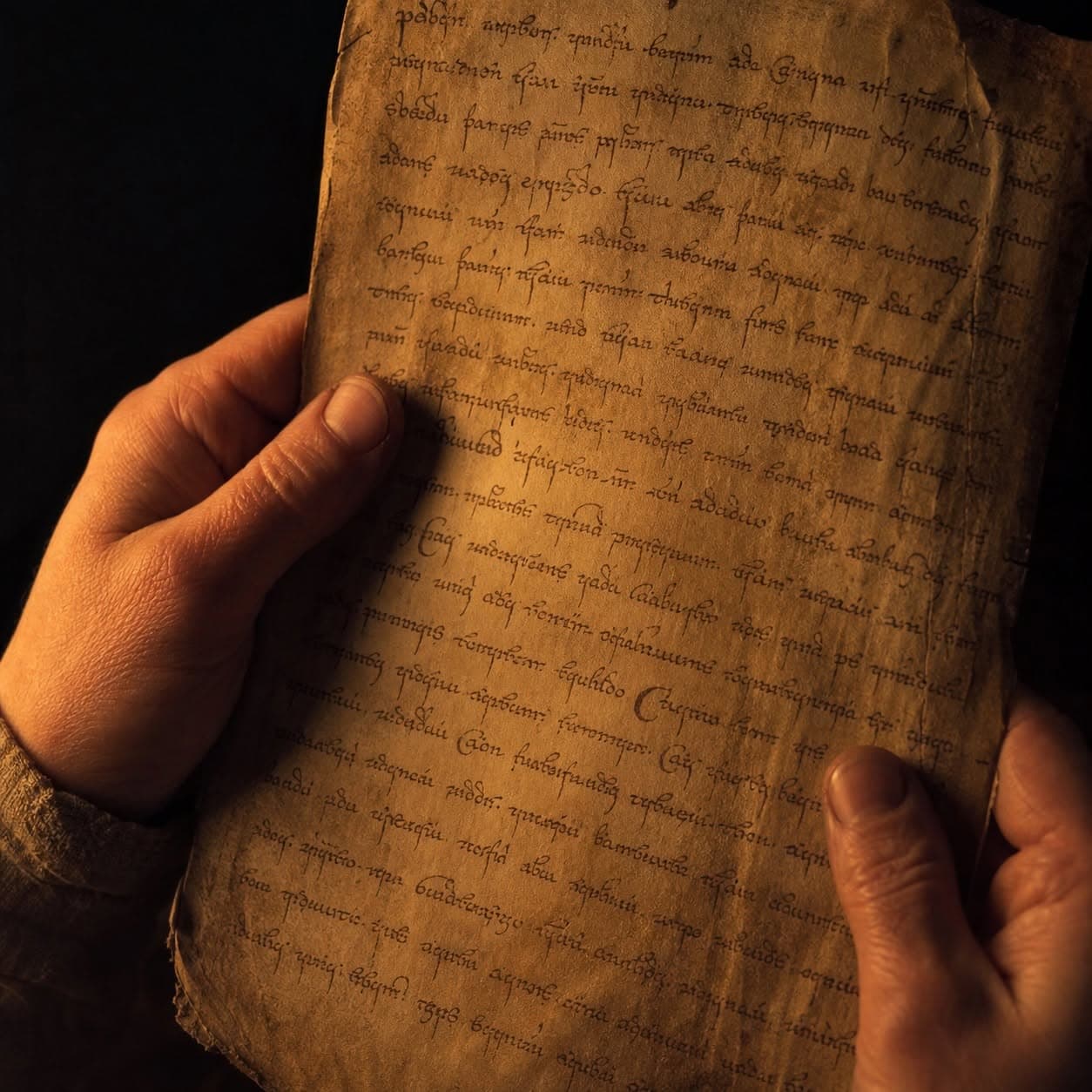
The Brehons were the professional judges of early Ireland, a hereditary caste of legal scholars who memorised the law across generations and administered it through arbitration rather than punishment. The system they maintained was not built on imprisonment or execution. It was built on the honour-price, the lóg n-enech, the price of a person's face, which assigned every individual in Irish society a quantified legal value based on their rank. To injure someone, to insult them, to steal from them or kill them, was to incur a debt calculated against that value. The law was a system of restoration rather than retribution. You paid what you owed and the matter was settled.
Every person had an honour-price. Women had one too.
In the legal frameworks of England, of France, of the Church that was beginning to spread across Europe, a woman's legal standing was conditional on her relationship to a man. A daughter. A wife. A widow. The relationship defined the rights and the end of the relationship ended them. Under Brehon law a woman's honour-price was her own. It moved with her. It did not belong to her husband.
The divorce provisions are where the specificity becomes remarkable.
A woman could divorce her husband and retain her property under Brehon law for the following documented reasons: physical abuse, impotence, failure to provide, obesity (the sources record it with complete seriousness as a ground because it affected the conjugal obligation), persistent neglect for another woman, spreading false stories about her, satirising her in verse, tricking her into marriage by sorcery or deception, and failing to maintain her in the manner her rank required. A man who struck his wife without legal justification forfeited the right to her continued presence in the household and owed her compensation from his own estate.
She did not need his permission to go. She needed only the documented ground.
The property arrangements that accompanied divorce were equally precise. What a woman brought into the marriage remained hers on exit. What she had contributed to the household during the marriage was calculated and returned to her in proportion. A woman who had managed the farm, raised the cattle, worked the land alongside her husband, left with a documented share of what that work had produced. The law had thought about this. It had worked out the calculation. It had written it down.
Children born outside marriage had inheritance rights. The father's obligation existed regardless of the circumstances of the birth. A woman of sufficient rank could enter contracts, own property, and hold professional standing in her own name.
The Norman invasion began in 1169.
Henry II of England arrived in 1171 and received the submission of the Irish kings, and the legal architecture that followed moved at the pace of conquest, which is to say faster in some places, slower in others, but always in the same direction. English common law came with English administration. English common law had a settled position on the legal status of married women. The position was this: upon marriage a woman's legal identity merged entirely with her husband's. She could not own property in her own name. She could not initiate legal proceedings. She could not enter contracts. She had no separate standing before the law because the law did not recognise her as a separate person from the man she had married.
The doctrine was called coverture. It was not a local cruelty or an administrative oversight. It was the considered legal position of the most sophisticated common law system in the medieval world, applied systematically across every territory England governed, replacing every legal tradition it encountered with the same settled answer to the question of what a married woman was.
The answer was: her husband.
Brehon law survived the early centuries of Norman presence in the areas beyond English control, the territories the colonisers called the wild Irish. It was not abolished by a single act. It retreated with the Gaelic order as English administration expanded, surviving in the unconquered territories until the Flight of the Earls in 1607 removed the last Gaelic lords under whose authority it had continued to function. The final recorded use in an Irish court is 1606. After that there was only English common law and coverture and the settled answer it carried.
The Married Women's Property Act passed in England in 1882. It gave married women the right to own property separately from their husbands. It gave them legal standing in their own name. It gave them, in the careful language of Victorian reform legislation, some of what the Brehon law of fifth-century Ireland had simply assumed they possessed.
Between 1171 and 1882 is seven hundred and eleven years.
Add the centuries of Brehon law's survival in the unconquered territories and the distance lengthens further. The women of early Ireland who could divorce a husband for hitting them and leave with their property intact were living inside a legal system that the world replacing them would not reconstruct for the better part of a millennium.
The Brehons are gone. The law they memorised across generations was never printed and much of it did not survive the conquest. What survives is enough to read what it said about women and to understand what was lost when it stopped being said.
It said: she has an honour-price.
It said: it moves with her.
It said: calculate what she is owed.