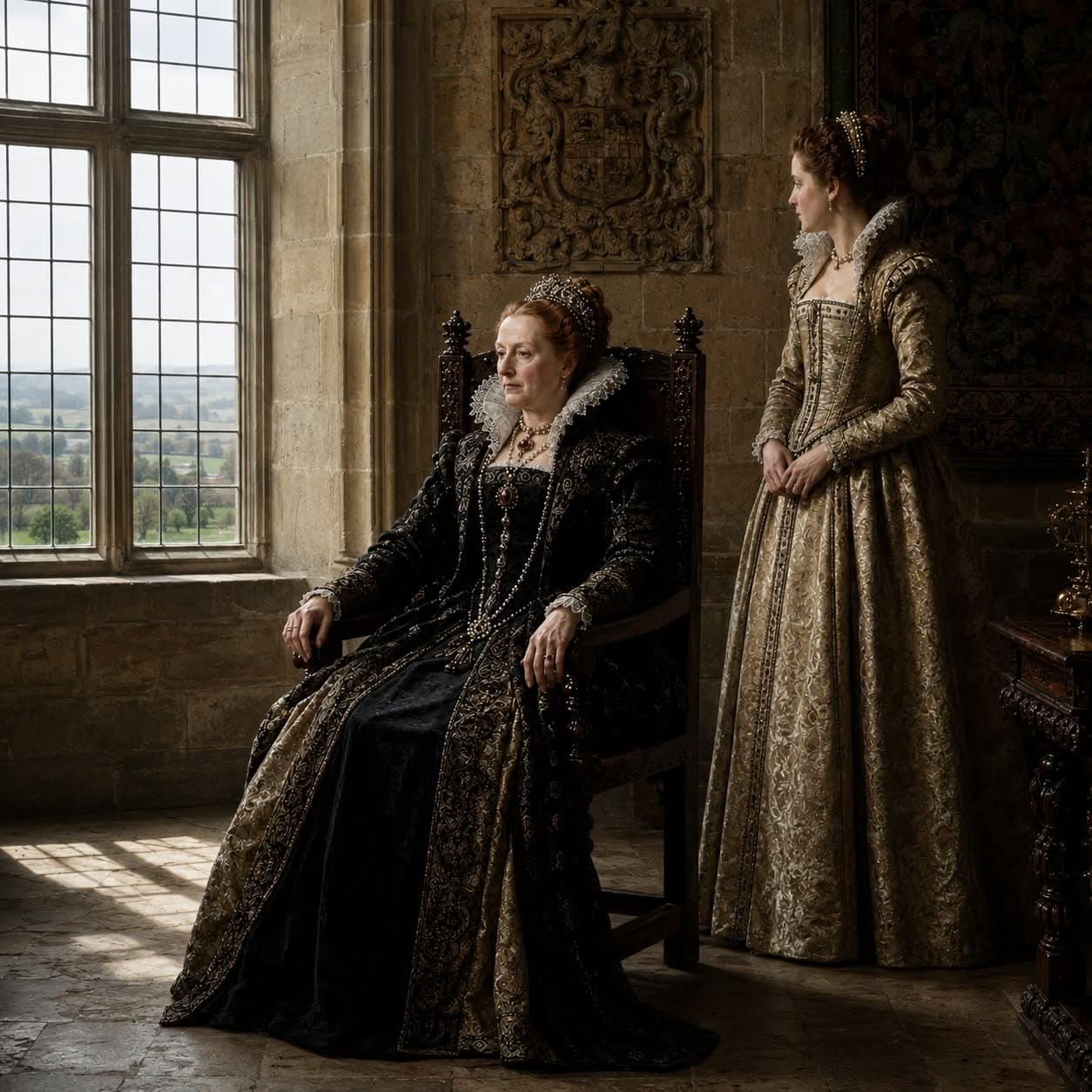
She was born with nothing. She buried four husbands, built four great houses, and died the second wealthiest person in England after the queen herself.
The granddaughter she spent forty years positioning for the throne died in the Tower of London. Bess of Hardwick outlived everyone. She could not outlive that.
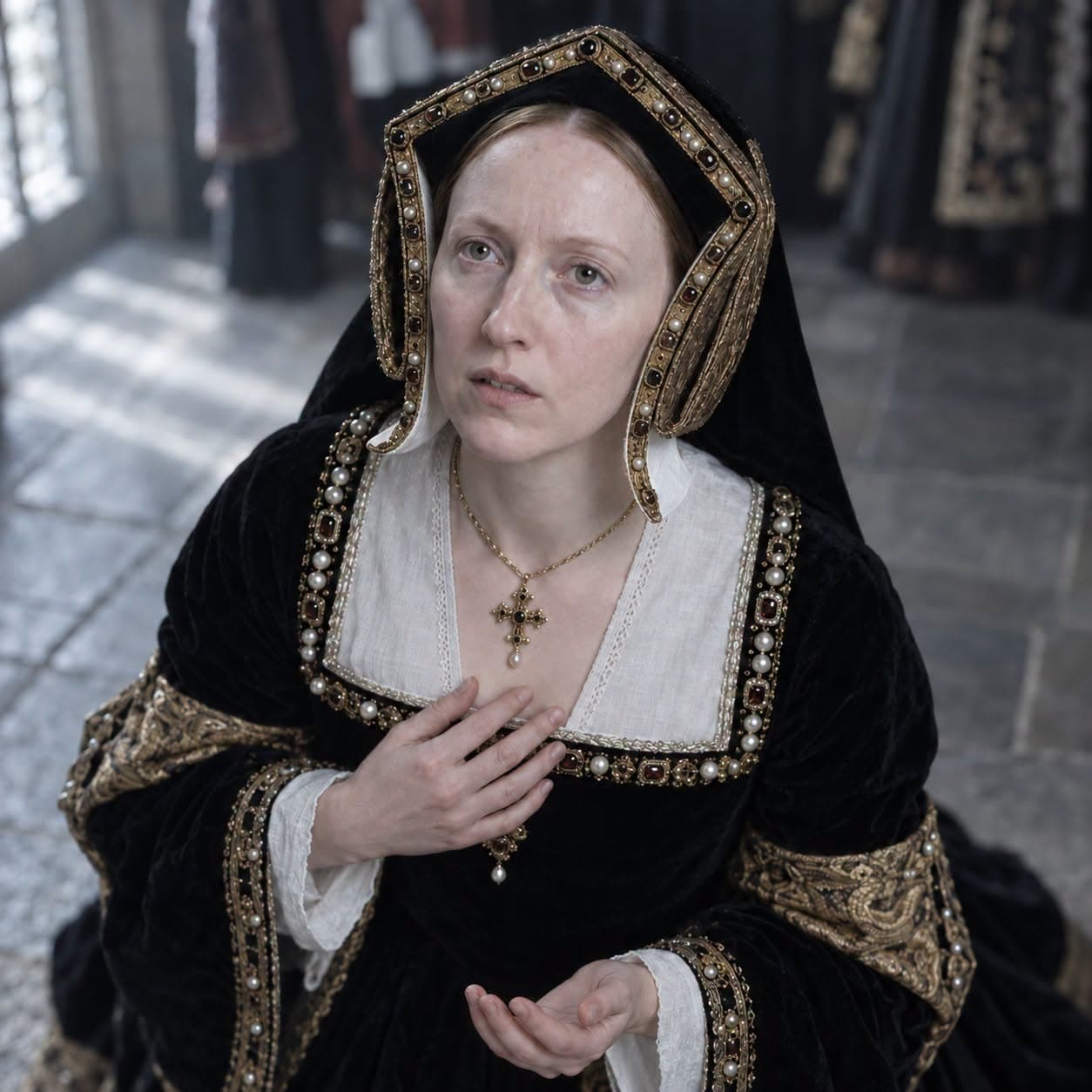
Elizabeth Hardwick was born around 1527 in Derbyshire, the third daughter of John Hardwick, a minor landowner who died when she was an infant and left the family with almost nothing. She grew up in a gentry household that was respectable in name and precarious in reality, and she understood from early childhood the specific arithmetic of Tudor survival: land meant security, marriage meant land, and the women who grasped that equation early and acted on it without sentiment were the ones who endured. She grasped it early. She acted on it without sentiment for the next eight decades.
Her first husband was Robert Barlow, a boy from a neighbouring Derbyshire family who was already ill when they married in 1543. She was approximately fifteen. He was younger. He died within the year and left her a modest jointure, enough to establish her independence but not enough to build anything on. She went to London as a lady-in-waiting and entered the orbit of the court, which in the 1540s meant entering the orbit of Protestant reform, political danger, and the kind of social mobility that simply did not exist anywhere else in England. She watched how the court worked. She watched which women survived and which did not. She was learning.
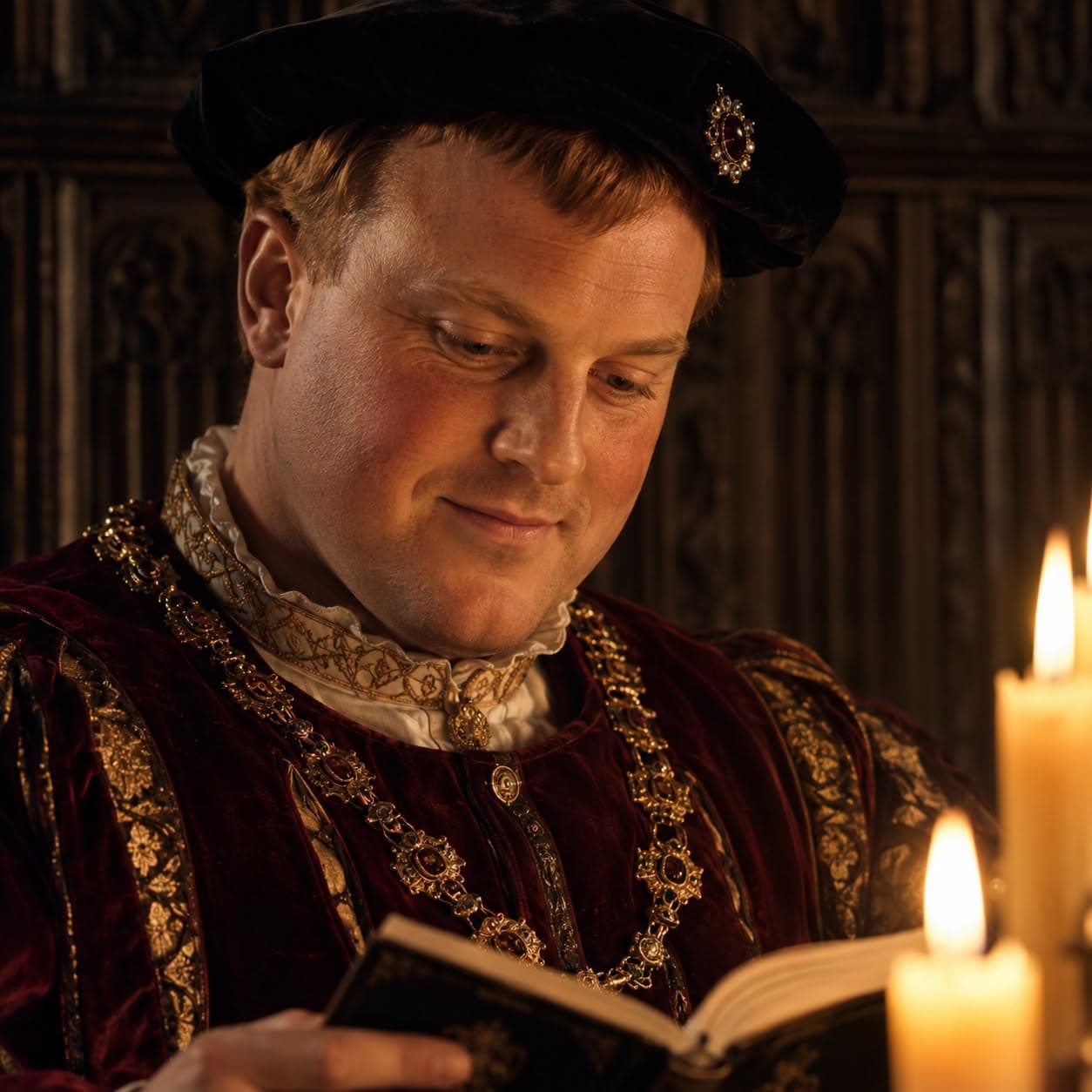
Sir William Cavendish was fifty-one years old, twice widowed, a former treasurer of the king's chamber, and one of the men who had administered the dissolution of the monasteries, which meant he had grown rich on the proceeds and was looking for somewhere to spend it. He married Bess in 1547. She was twenty. Within two years she had persuaded him to sell his properties in other counties and buy land in Derbyshire, her county, close to her family, on terms that put both their names on the deeds. This was not standard practice. Men did not customarily share legal title to their property with their wives. Cavendish did it anyway. They began building Chatsworth together. He died in 1557 leaving her the house, the land, the children, and a debt to the crown that she spent the next decade methodically clearing.
Sir William St Loe was the third husband, a wealthy Gloucestershire landowner and captain of Elizabeth I's guard who married Bess in 1559. His family despised her. His brother tried to poison him. His daughter contested everything in court. When St Loe died in 1565 he had disinherited his own children and left his entire estate to Bess, a decision that generated legal challenges she defeated one by one over the following years. She emerged from the St Loe marriage as one of the wealthiest widows in England. She then looked for a fourth husband and found the wealthiest man in the north.
George Talbot, sixth Earl of Shrewsbury, was the most powerful magnate in Elizabethan England outside of London, the lord of vast estates across six counties, a man of ancient name and considerable pride who married Bess in 1568. To seal the alliance Bess simultaneously arranged the marriage of her son Henry Cavendish to Talbot's daughter Grace, and Talbot's son Gilbert to Bess's daughter Mary. Two families. Two weddings. One negotiation. Bess understood that the most durable agreements were the ones where both parties had too much invested to walk away easily. She was forty years old and she had been building toward this her entire life.
Six months after the wedding, Elizabeth I handed Talbot the custody of Mary Queen of Scots.
For the next fifteen years Mary lived in Bess's houses under Talbot's supervision, moving between Sheffield Castle, Chatsworth, and Wingfield Manor as circumstance required. They embroidered together, producing the extraordinary Oxburgh Hangings that survive to this day. Mary was a queen who had spoken politics in four languages since childhood. Bess was a woman who had turned nothing into one of the largest fortunes in England. They understood each other's intelligence without sharing each other's interests, and that distinction would eventually matter enormously.
In 1574 Bess engineered the marriage of her daughter Elizabeth Cavendish to Charles Stuart, younger brother of Lord Darnley, Mary Queen of Scots' murdered husband. Charles Stuart had royal blood. The child of that marriage would carry a claim to the English throne. Elizabeth I did not need to be told why this was dangerous. She summoned both mothers to court and had them imprisoned in the Tower. The child was already conceived. The imprisonment did not last long. The child, a girl named Arbella Stuart, was born in 1575, and Bess took her to Derbyshire and began raising her granddaughter as a future queen.
By the early 1580s the Shrewsbury marriage had collapsed into open warfare over property, money, and the question of which of them had more to lose. It was at this precise moment, with Bess and Talbot's legal disputes escalating and their separation becoming public, that Mary Queen of Scots began circulating stories.
The stories were specific. Mary claimed that Bess had spoken treasonously about Elizabeth I, that she had made explicit comments about the queen's relationships with her favourites, the kind of statements that did not merely embarrass but endangered. A woman who had said such things about the queen of England had said something potentially fatal. Mary circulated the claims through correspondence, through intermediaries, through the network of Catholic contacts that fifteen years of captivity had done nothing to diminish.
The timing was not accidental. A destabilised Bess was a weakened jailer. A Bess facing a treason inquiry was a Bess who could not concentrate her formidable attention on the woman she was helping to keep prisoner. Whether Mary had fabricated the accusations entirely or had taken fragments of real conversation and constructed something unrecognisable from them has never been established. What is established is that she deployed them at the moment of maximum vulnerability and that they worked well enough to force Bess to appear before Elizabeth I and answer for them directly.
Bess answered. She survived, as she always survived, by maintaining her composure in front of a monarch and giving nothing away.
Talbot and Bess separated formally around 1584 and spent the remaining years of his life in furious legal dispute. He died in 1590 and left her everything she had argued for. She was sixty-three years old and she built Hardwick Hall on the ruins of her childhood home, the great house that still stands in Derbyshire with her initials carved in stone across the roofline. ES. Elizabeth Shrewsbury. Large enough to read from the fields below.
She spent her final decades raising Arbella and positioning her. The queen of England had no children. The question of succession consumed the court. Arbella Stuart had Tudor blood through both parents and Bess made certain she was educated, presented, and visible. Elizabeth I watched the project with the cold attention she gave to everything that touched the succession. She never moved against Bess directly. She moved against Arbella repeatedly, restricting her movements, monitoring her correspondence, keeping her close enough to control and far enough from court to prevent her building independent alliances.
Bess of Hardwick died in February 1608, aged approximately eighty. She had accumulated one of the largest private fortunes in English history from a starting point of almost nothing. She left behind a dynasty, a collection of houses, and a granddaughter whose claim to the throne she had spent forty years constructing.
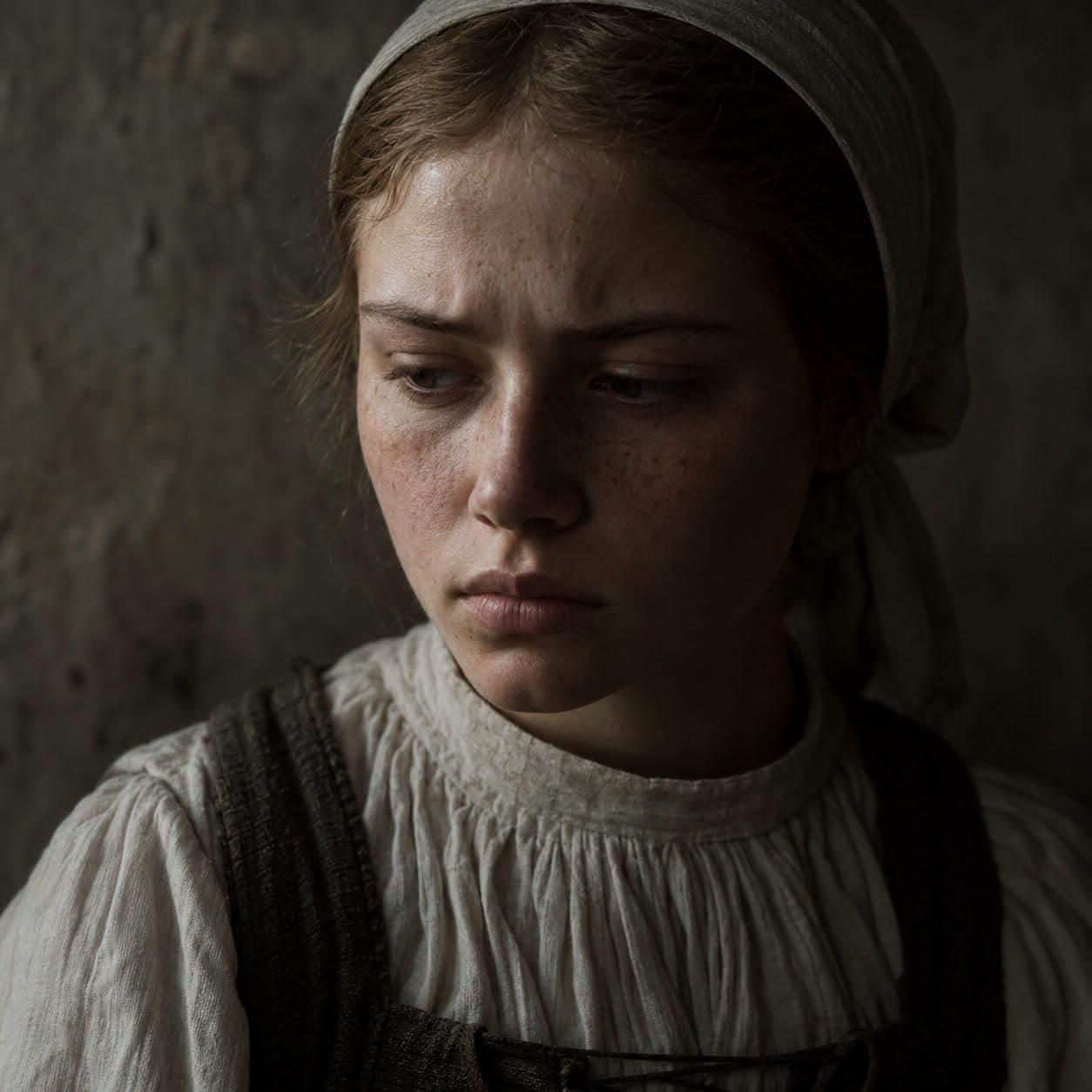
Arbella Stuart was imprisoned in the Tower of London in 1611 for marrying without the king's permission. She attempted to escape. She got as far as the coast of France before being recaptured and brought back. In the Tower she stopped eating. She lost her grip on reality. She died in 1615, forty years old, having never come close to the throne her grandmother had built her entire life trying to reach.
The initials on the roofline of Hardwick Hall are still there.