She was a queen in her mid-teens and a widow before she was twenty. Then came the argument with her husband's son over what she would live on.
Beatrice of Falkenburg died on 17 October 1277, in her early twenties. Eight years earlier she had married Richard of Cornwall, brother of Henry III of England and elected King of the Romans. He was sixty. She was about fifteen or sixteen, entering a family in which her new husband's sons were older than she was.
She came from the aristocracy of the lands between the Meuse and the Rhine, around what is now the Netherlands and western Germany. Her uncle Engelbert, Archbishop of Cologne, had been captured by the Count of Jülich in 1267 and was still his prisoner. Efforts to free him failed, and in October 1268 her father, Dietrich of Falkenburg, was killed in the fighting. Before the wedding, Richard placed her in the keeping of a kinsman, Philip of Bolanden. Richard brought an English earldom, a royal title and more than half a century of life. The Falkenburgs brought a girl whose father was dead and whose most powerful relative was in a cell.
They married at Kaiserslautern on 16 June 1269. Beatrice became his third wife. The title King of the Romans belonged to the elected German ruler who might go on to become Holy Roman Emperor, but Richard never reached that further dignity. His bride was a queen, though England already had a queen of its own, Eleanor of Provence, the wife of his elder brother.
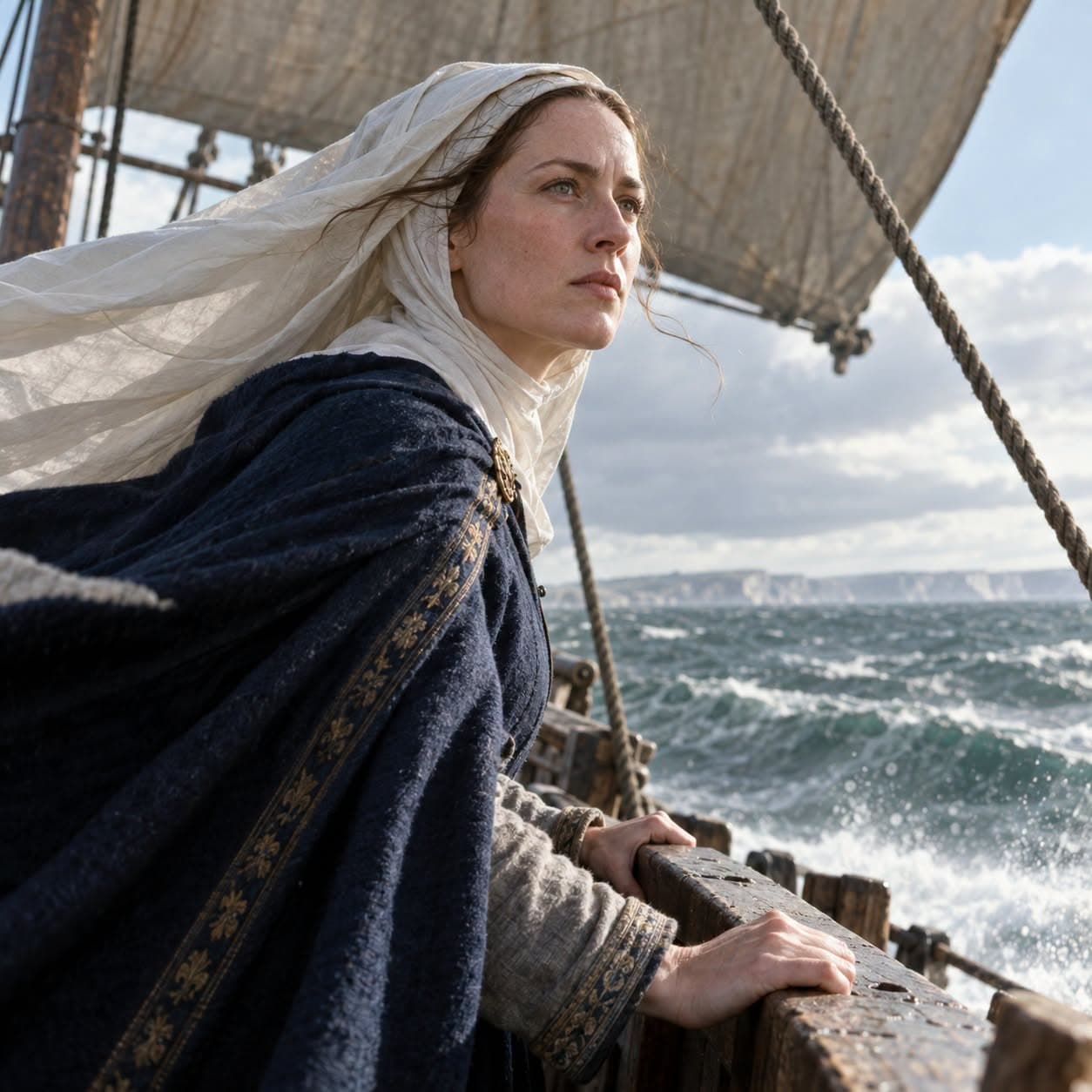
No summons to Rome for an imperial coronation came. Within weeks the couple left for England, landing at Dover on 3 August 1269. Neither of them saw Germany again. Beatrice's married life continued among her husband's English possessions, far from the family she had come from. The marriage produced no children. It lasted less than three years, and they were not quiet ones.
In March 1271 Richard's eldest son, Henry of Almain, was murdered in a church at Viterbo by his own cousins, Guy and Simon de Montfort, in revenge for their father's death at Evesham. In December Richard suffered a stroke.
He died at Berkhamsted on 2 April 1272.
Beatrice was still in her teens. Edmund, Richard's son by his second wife, Sanchia of Provence, inherited the earldom of Cornwall. The young woman who had entered the household as his father's queen now had to establish her provision as his father's widow. Her title survived the change. The arrangements for her maintenance required rather more attention.
Dower was the property from which a widow was to draw her living after her husband's death. For a woman of Beatrice's rank, it meant the income that maintained a household, paid servants and supplied the daily business of living as a great lady. It also meant separating her interests from those of the heir, who had his own claims upon the same estate. Being related did not make the accounts simpler.
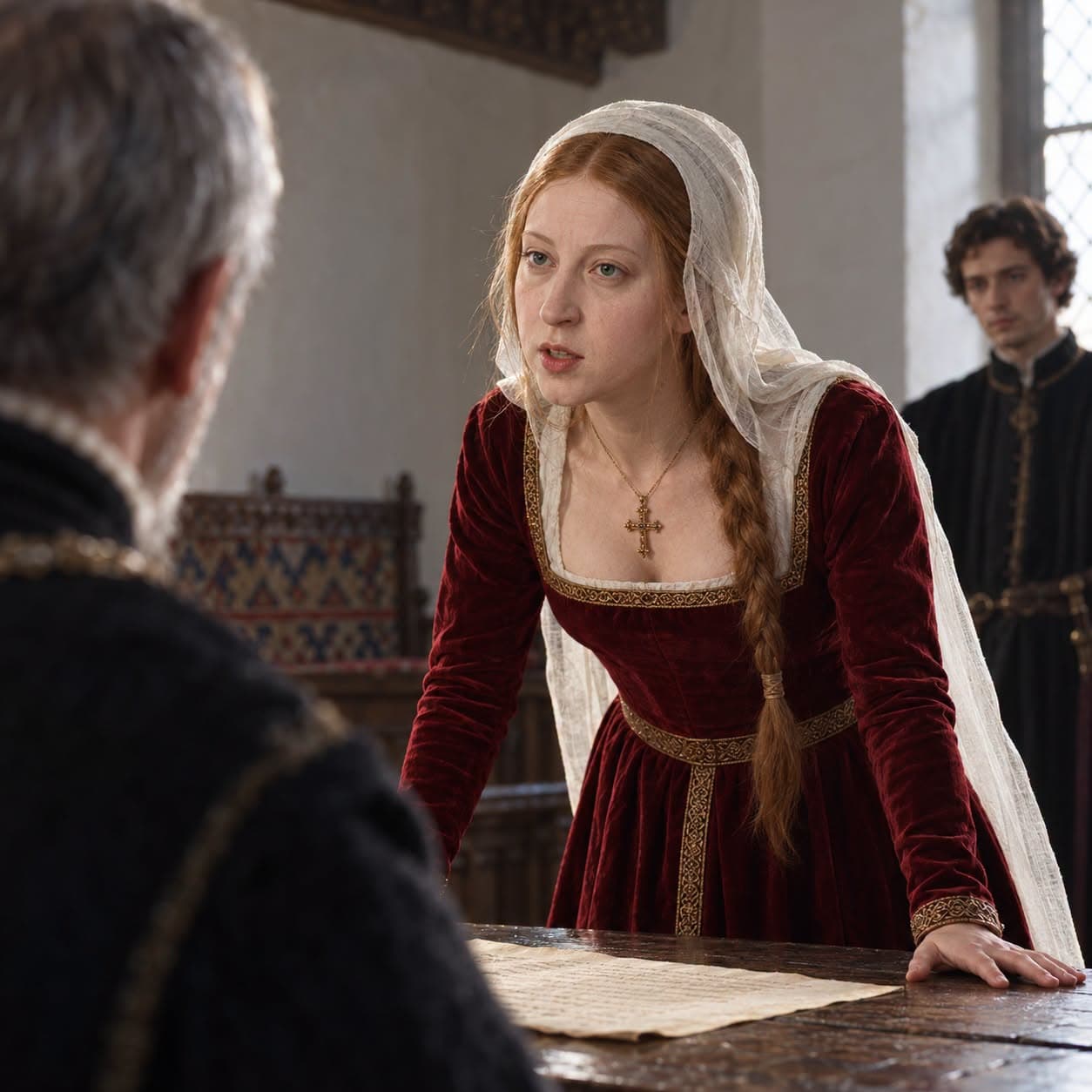
In November 1275, royal orders set in motion valuations of the manors that were to provide for her, to be made in the presence of both Edmund and Beatrice. At Lechlade, in Gloucestershire, valued at £98 a year, her side challenged the appraisal of the meadow. At Weldon, in Northamptonshire, the two sets of attorneys could agree on no part of the valuation at all, and she was not put into possession of any of that manor.
The meadow mattered.
Land had to yield the income attributed to it. A generous figure on a valuation could leave a widow with rather less to live on than the settlement appeared to promise. Here were the details beneath a royal marriage: the worth of a manor, the assessment of its fields, the objections that could hold up possession.
A settlement provided for lands and revenues worth 500 marks a year for her lifetime. In February 1276 the dispute over Longborough, property that had formed part of Sanchia's dower, was settled too. The dead wife, the living widow and the son who inherited were connected through the same lands. Beatrice was in her early twenties when her place in that arrangement was finally worked out.
She remained in England. During 1276, Edward I, her husband's nephew, made her gifts of fuel and meat from the royal forest of Wychwood. These were useful courtesies, wood for a household and food for its table, from a king to his uncle's widow. She continued to belong to the royal family, even as she and her husband's heir negotiated the income attached to her marriage.
Richard's body had been buried at Hailes Abbey beside Sanchia. His heart had gone elsewhere, to the Franciscan church at Greyfriars in Oxford. When Beatrice died five years after him, she was buried at Greyfriars too, before the high altar. She had spent longer in England after Richard's death than she had spent as his wife.
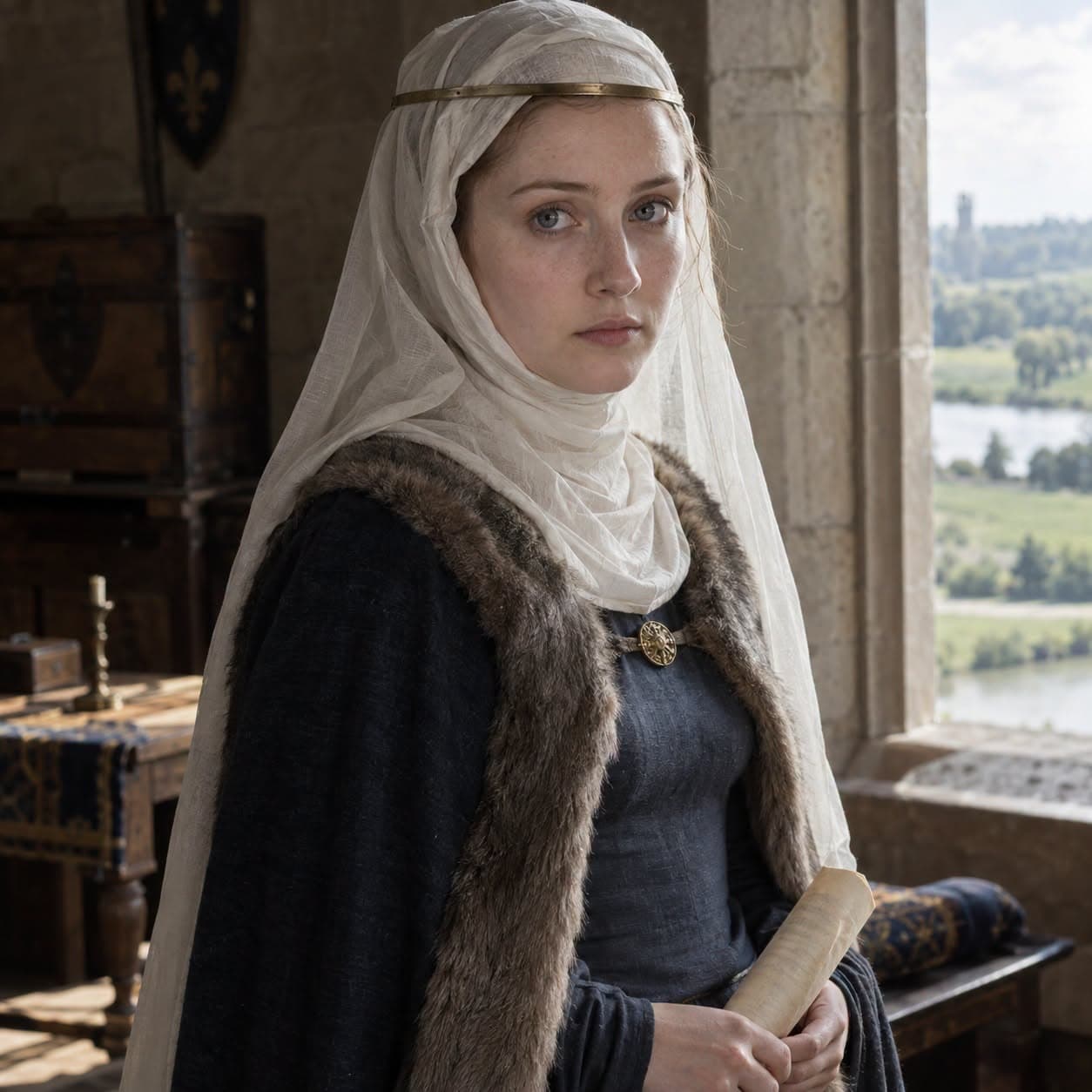
The glass panel now in Glasgow's Burrell Collection shows her in a red robe, a veil beneath a low gold crown, with imperial eagles behind her. Above her runs her name and title in Latin: Beatrix of Valkenburg, Queen of Germany. It preserves the royal identity she had acquired as a teenager, with none of the disputed valuations beneath it. It was made in Norwich, around 1293. By then the young woman in the crown had been dead for about sixteen years.