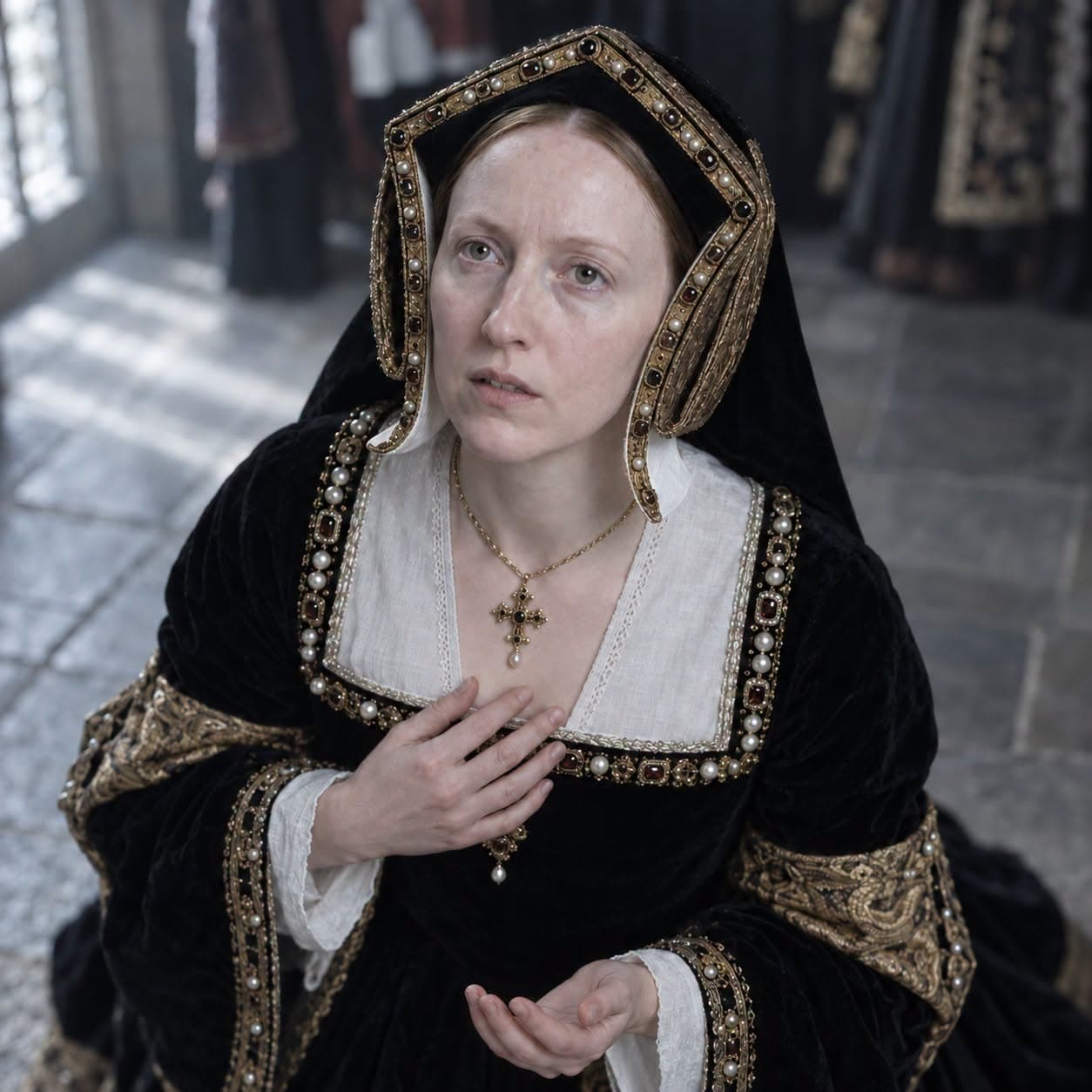
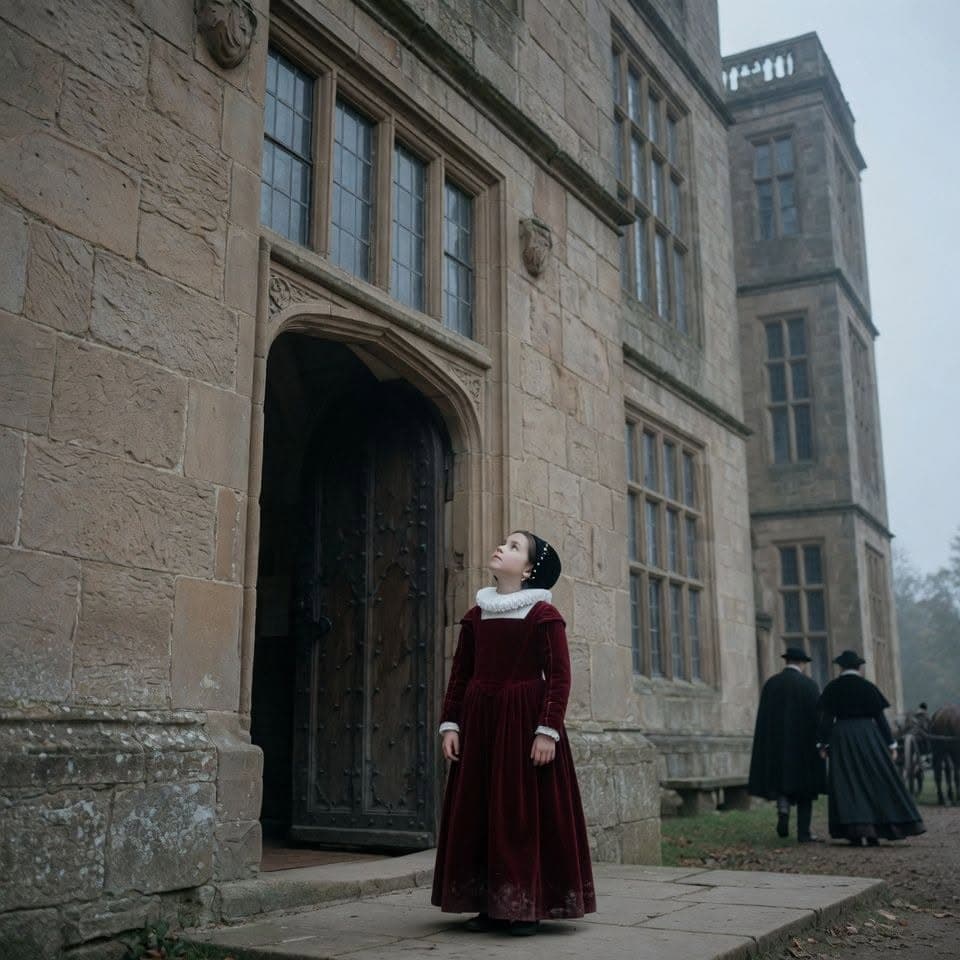
Elizabeth I never charged her. Never tried her. Never explained. She simply decided that a girl born with royal blood was too dangerous to be free, and Arbella Stuart spent thirty years learning what that decision felt like from the inside.
Arbella Stuart was born in 1575, the daughter of Charles Stuart, Earl of Lennox, and Elizabeth Cavendish. Her father was the younger brother of Henry Stuart, Lord Darnley, which made her the niece of Darnley and therefore the first cousin of James VI of Scotland, whose mother was Mary Queen of Scots. Through her grandmother Margaret Douglas she was the great-granddaughter of Henry VII. The blood was impeccable, the connections were immediate, and none of it was her doing.
She was an infant with a genealogy that made powerful people nervous, and she had not yet learned to walk.
Her father died in 1576 when she was one year old. Her mother died in 1582 when she was seven. She was placed in the care of her maternal grandmother, Elizabeth Talbot, known as Bess of Hardwick, one of the most formidable women in Elizabethan England. Bess had been married four times, had built Hardwick Hall with her own accumulated wealth, and understood with the cold precision of someone who had survived everything that her granddaughter's royal blood was simultaneously the most valuable and the most dangerous thing she possessed.
Elizabeth I had been watching Arbella since her birth. The queen had no children, no named successor, and a court full of people with opinions about who should follow her. Arbella's claim was strong enough to be taken seriously and inconvenient enough to require managing. Elizabeth's management strategy was simple and total: Arbella would live at Hardwick Hall in Derbyshire, under Bess's supervision, under the court's surveillance, and she would not marry, not travel, not build political alliances, not do anything that might allow her blood to become a political instrument without Elizabeth's permission.
The instruction was never formally stated because it never needed to be. Bess understood. Arbella understood, in the way children understand things that are never explained to them but are present in every room they enter.
She was educated extraordinarily well. Languages, music, theology, classical literature, the education of a woman being prepared for a position of consequence, developed with a thoroughness that produced one of the most learned minds at the Elizabethan court. What the education could not do was give her anywhere to go with it. A mind built for the world and a life confined to Derbyshire are two things that do not resolve quietly over time.
Marriage proposals arrived and were blocked. There were discussions about a match with Rainutio Farnese of Parma in the late 1580s, blocked. A possible match with James VI himself was briefly considered and dismissed. Esme Stuart was suggested, blocked.
Each proposal that arrived at court was examined, found inconvenient, and declined without explanation offered to Arbella. She was in her twenties, highly educated, of royal blood, and she was not permitted to marry because marriage meant children, and children meant heirs, and heirs meant a succession that Elizabeth had decided to manage by refusing to acknowledge it.
By the time Arbella was in her mid-twenties the isolation had been absolute for two decades. She lived at Hardwick with Bess, corresponded with the court, received visitors under supervision, and watched her life contract around her with the slow certainty of a woman who has been told by every available mechanism that her own choices are not available to her. She was not in a Tower. She did not need to be. Hardwick Hall was large and cold and Derbyshire was far from London and Elizabeth was on the throne and none of that was going to change.
In 1602 Arbella attempted to force the situation. She opened secret negotiations with Edward Seymour, Lord Beauchamp, proposing a match that she knew would terrify Elizabeth precisely because it combined two of the strongest rival claims to the succession in a single union. She was not in love with Seymour. She was not negotiating from hope. She was negotiating from the specific desperation of a woman who had spent thirty years waiting for permission that was never coming and had decided to make herself too politically urgent to ignore.
Elizabeth's response was fury. Bess was hauled before the council. Arbella was questioned. The proposed match collapsed. Arbella, under the pressure of interrogation and isolation and thirty years of controlled captivity, wrote increasingly erratic letters to the council and to the queen, letters that her contemporaries described as confused and her modern readers recognise as the correspondence of a woman whose mind was bending under an impossible weight. Elizabeth called her mad. The council called her difficult.
Elizabeth died in March 1603. Arbella was twenty-seven years old. She had spent her entire conscious life under surveillance, blocked from marriage, blocked from travel, blocked from every form of autonomous existence, not because she had done anything wrong but because her blood made her inconvenient and the most powerful woman in England had decided that inconvenience required management rather than resolution.
James VI of Scotland came to the throne as James I of England. He was Arbella's cousin. He knew her situation. He had the power to resolve it with a single decision, a sanctioned marriage, a position at court, the ordinary acknowledgement that she was a person rather than a problem.
The cage changed hands in 1603, and the door remained locked.