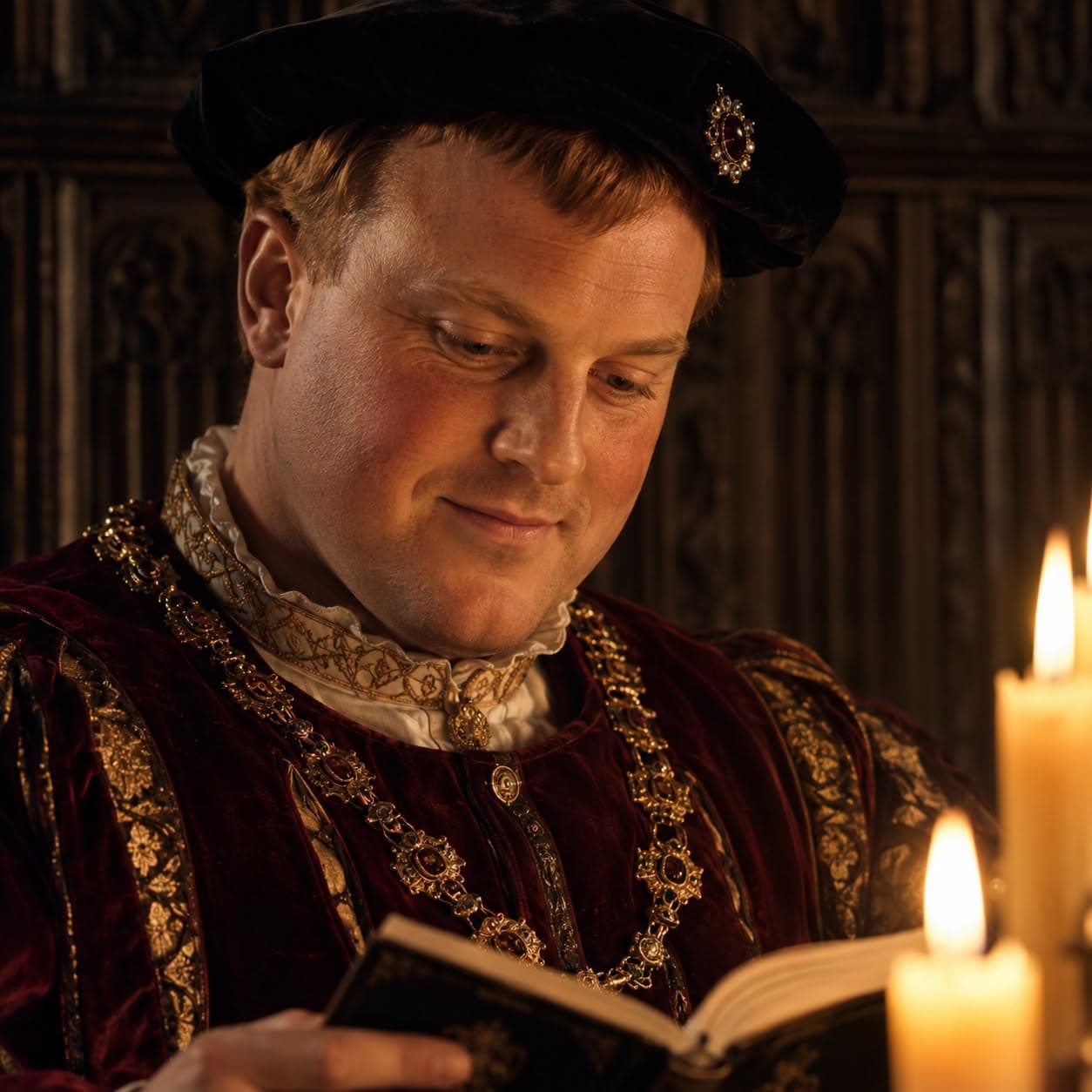

On the evening of the twenty-ninth of April 1483 Anthony Woodville dined with Richard of Gloucester at Northampton. The sources describe the dinner as apparently amicable.
He was arrested at dawn.
In the autumn of 1467 Anthony Woodville rode into the lists at Smithfield in London to fight the Bastard of Burgundy before the king and the court and the ambassadors of half of Europe. The tournament was one of the great spectacles of Edward IV's reign and Woodville was its English champion, celebrated afterward across the continent for the quality of his performance in the lists. His martial reputation extended well beyond the specific circumstances of the English dynastic conflict he had been born into. He was in his mid-twenties. He was also, at the time he rode into Smithfield, translating Christine de Pisan from the French and wearing a hair shirt under his armour.
Both of these things were true simultaneously and the gap between them is the man. Anthony Woodville was the queen's brother and a Woodville instrument and a figure of the factional politics of the Yorkist court, all of which is documented and none of which is the most interesting thing about him. The most interesting thing about him was the specific combination of martial excellence and serious intellectual life that the period produced occasionally in its most complete men.
Woodville possessed it to a degree that contemporaries noted with the specific warmth reserved for people who surprised them. He translated Cicero. He made the pilgrimage to Santiago de Compostela and to Rome. He was pious in the way that the period distinguished from performance, which is to say privately and at personal cost, the hair shirt worn where no one could see it as the specific sign of a man whose spiritual life was not arranged for public consumption.
In 1477 William Caxton's press produced its first book printed on English soil. It was Woodville's own translation of the Dictes and Sayings of the Philosophers. The printing press that would outlast the dynasty, that would outlast every faction and every claim and every battle of the Wars of the Roses by centuries, printed his words first. He had brought Caxton back from Bruges. The first English book was his.
He was at Ludlow in April 1483 governing the young Prince of Wales when the news of Edward IV's death arrived. He had been the prince's guardian for years, responsible for the education and the household of the boy who was now king, and his position in those first days after Edward's death was the most consequential any Woodville held. He had the king's person. He began moving south with the young Edward V and the escort and the coronation date of the fourth of May. He carried the specific understanding of a man who knew exactly what his family needed the next three weeks to produce.
The road from Ludlow to London passed through Northampton.
Richard of Gloucester arrived at Northampton on the twenty-ninth of April. He was not alone. Henry Stafford, Duke of Buckingham, had ridden to meet him with his own retinue. Rivers met them there. The king's party had moved ahead to Stony Stratford, fourteen miles further south. Rivers had sent the boy ahead to press the pace toward London while he rode backward to Northampton to formally submit to the Protector.
He separated himself from his leverage out of diplomatic courtesy. He dined with Richard and Buckingham that evening. The sources describe the dinner as apparently amicable. Three men who understood the situation completely, eating together in a Northampton inn, the candles burning down, the conversation proceeding in whatever register men who are each waiting for the morning adopt when they have no alternative to waiting.
At dawn on the thirtieth of April Rivers was arrested. Richard and Buckingham rode to Stony Stratford and took custody of the king. The escort was dispersed. Rivers was sent first to Sheriff Hutton and then to Pontefract Castle in Yorkshire. The road that had begun at Ludlow with a coronation date and a king in his charge ended in a Yorkshire fortress with neither.
He was held at Pontefract through May and June 1483 while the eighty-seven days ran their course in London. He was not tried. The charges against him, of conspiracy with Hastings and the Woodville faction against the Protector, were never tested in a court because no court was convened to test them. On the twenty-third of June 1483 he wrote his will. On the same day, or close to it, he wrote a poem.
He was executed at Pontefract on the twenty-fifth of June 1483. He was in his early forties. The charges for which he died were never proven and no verdict was ever recorded. He had governed the young king with documented competence for years and had ridden to Northampton in good faith to meet the Protector and had not left.
The poem he wrote in the days before his death survives. A man who had spent his life between the tournament field and the translator's desk, who had worn a hair shirt under his armour and brought the printing press to England and made the pilgrimage to Rome, wrote these words in a Yorkshire castle in June 1483 and left them for the record to keep:
Somewhat musing And more mourning, In remembering Th'unsteadfastness; This world being Of such wheeling, Me contrarying, What may I guess?
I fear, doubtless, Remediless Is now to seize My woeful chance; For unkindness, Withoutenless, And no redress, Me doth advance.
With displeasure, To my grievance, And no surance Of remedy; Lo, in this trance, Now in substance, Such is my dance, Willing to die.
Methinks truly Bounden am I, And that greatly, To be content; Seeing plainly Fortune doth wry All contrary From mine intent.
My life was lent Me to one intent. It is nigh spent. Welcome Fortune! But I ne went Thus to be shent But she it meant: Such is her won.