Anne Stanhope was taken to the Tower of London while her nephew was king. His birth had made her a countess. His reign would leave her a widow.
On 18 October 1537, Anne Stanhope became Countess of Hertford when Henry VIII created her husband, Edward Seymour, an earl. Six days earlier, Edward's sister Jane had given birth to the king's son at Hampton Court. Anne was the queen's sister-in-law and the new prince's aunt by marriage. Six days later, Jane would be dead.
Anne had married into the Seymour family before March 1535, becoming Edward's second wife. She was the daughter of Sir Edward Stanhope and Elizabeth Bourchier, and through her mother she descended from Edward III. She did not need the Seymours for her ancestry. What marriage to the brother of a future queen brought was a different order of opportunity. When Jane married Henry in May 1536, her brother became Viscount Beauchamp within days. Anne became a viscountess. October 1537 brought another step upwards.
At Hampton Court, the arrival of a boy was being celebrated with all the ceremony the Tudor court could provide. Henry had daughters, Mary and Elizabeth, but this child was the son for whom he had waited. The Seymours were now connected to the succession through a living male heir. Jane's marriage had made them the king's relations. Her child would keep them the next king's relations too.
On the night of 15 October, the prince was carried to the Chapel Royal for his christening. Gentlemen walked two by two with torches that were not to be lit until he had been christened. An octagonal platform had been built for the font so that the assembled guests could see the ceremony. Mary stood godmother to her baby brother. Elizabeth, only four, carried the chrisom cloth and was herself carried in the arms of Anne's husband, Edward Seymour. Three days before becoming an earl, he was carrying the king's daughter at the baptism of the king's son.
Jane did not attend the service. A new mother kept to her chamber, and the baby was brought back to the royal apartments afterwards, where she received him. Within days she was ill. Anne's new title arrived in the nine days between the christening and the queen's death.
The earldom remained. Jane did not.
She died at Hampton Court on 24 October, twelve days after giving birth. Anne had been a countess for less than a week. The Seymours kept their royal nephew. The nephew had lost his mother. It had taken no change of king and no loss of favour to put mourning beside advancement. Childbirth had done both in a fortnight.
The boy survived. When Henry died in 1547, he became Edward VI, and his uncle became Lord Protector and Duke of Somerset. Anne was now a duchess, married to the man governing for the young king. The baby whose birth had preceded the Hertford title was on the throne. What had begun as a connection to a queen had become a place at the centre of government.
Anne used that position. She supported religious reform and became a patron of Protestant books. In 1549 she sponsored the second volume of the English translations of Erasmus's Paraphrases, explanations of the New Testament. Printers and translators needed patrons as well as convictions. Her name and support helped carry their work into print.
She also acquired enemies. Her dealings with the dowager queen Katherine Parr turned sour, and she was accused of claiming precedence over Henry's widow. Pride and overbearing ambition became attached to her name. The quarrels did not stop printers seeking her patronage, and the patronage did not soften the reputation. At court, there was room for both.
Her husband's authority did not last. He lost the Protectorate in 1549. In October 1551, after renewed accusations of conspiracy, he was sent to the Tower again. Anne was taken there too. Among the men caught up in the arrests was Francis Newdigate, who had served in the Seymour household.
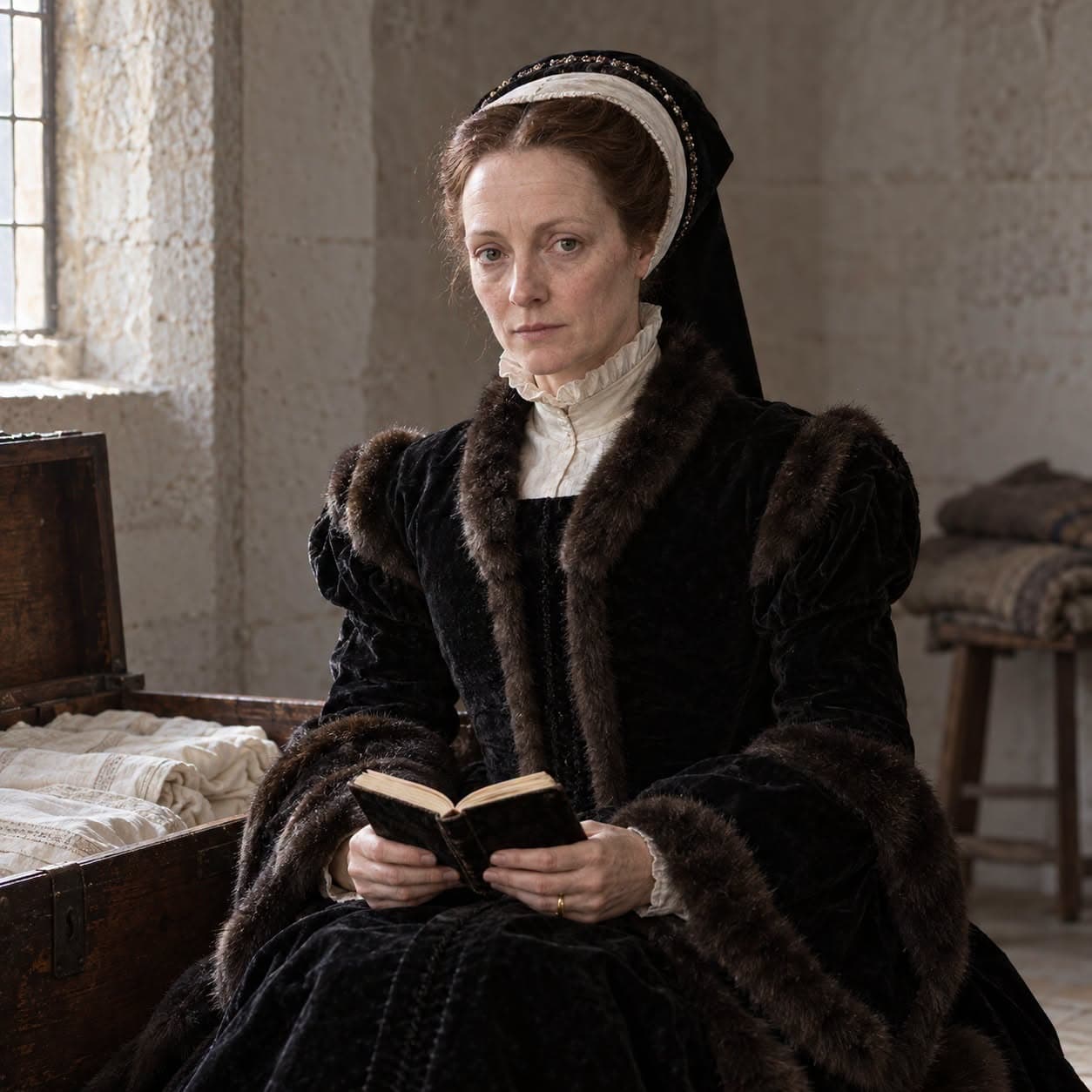
Inside, a list was drawn up of the things the duchess prayed to have. Seven plain smocks, the ones last made. Two pairs of knitted hose and two pairs of gloves. A pair of leather slippers. A gown of black velvet edged with genet fur, or else the black satin one. A plain black velvet kirtle and a farthingale. Twenty pounds for washing, cleansing and other necessaries. And three little books covered in black velvet, which were in the chest where the linen lay. A duchess still needed clean clothes, and someone outside had to know which chest to open.
On 22 January 1552, Edward Seymour was beheaded on Tower Hill. Anne remained a prisoner. The child born at Hampton Court was still king, but being his aunt had not kept her out of the Tower, and being his uncle had not saved her husband.
She was released in 1553. The dukedom had fallen with her husband and did not come back. She lived on through Mary's reign and deep into Elizabeth's. In time she married Francis Newdigate, her first husband's former steward, whose name had been among those taken in the same arrests. In his will, made in 1580, he acknowledged that his advancement had come through marrying the duchess. He left her all he could give and made her his sole executor.
He died in 1582. When Anne made her own will four years later, the dukedom had been forfeit for more than thirty years and she had outlived a second husband. She still began it "Anne by the goodness of God Duchess of Somerset".