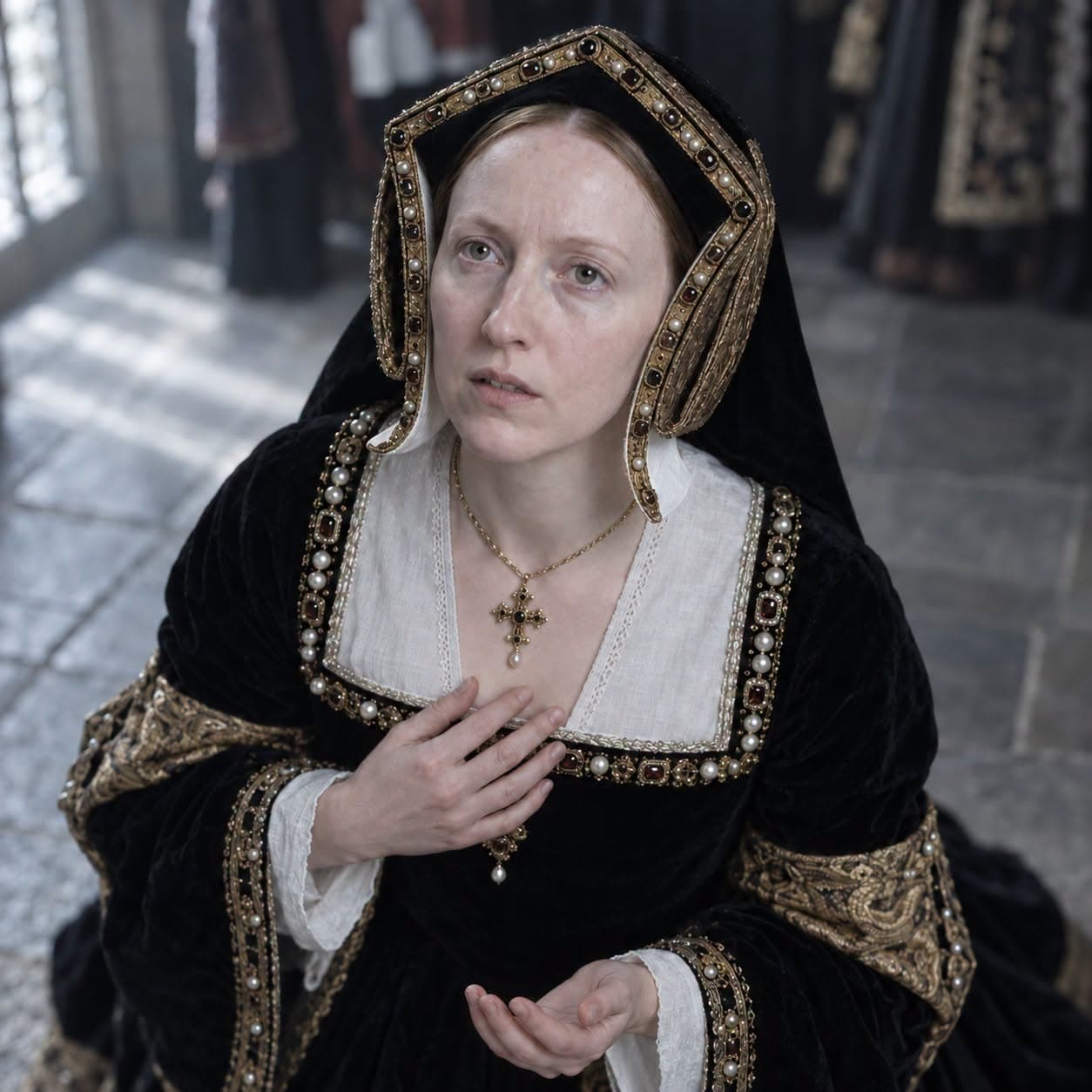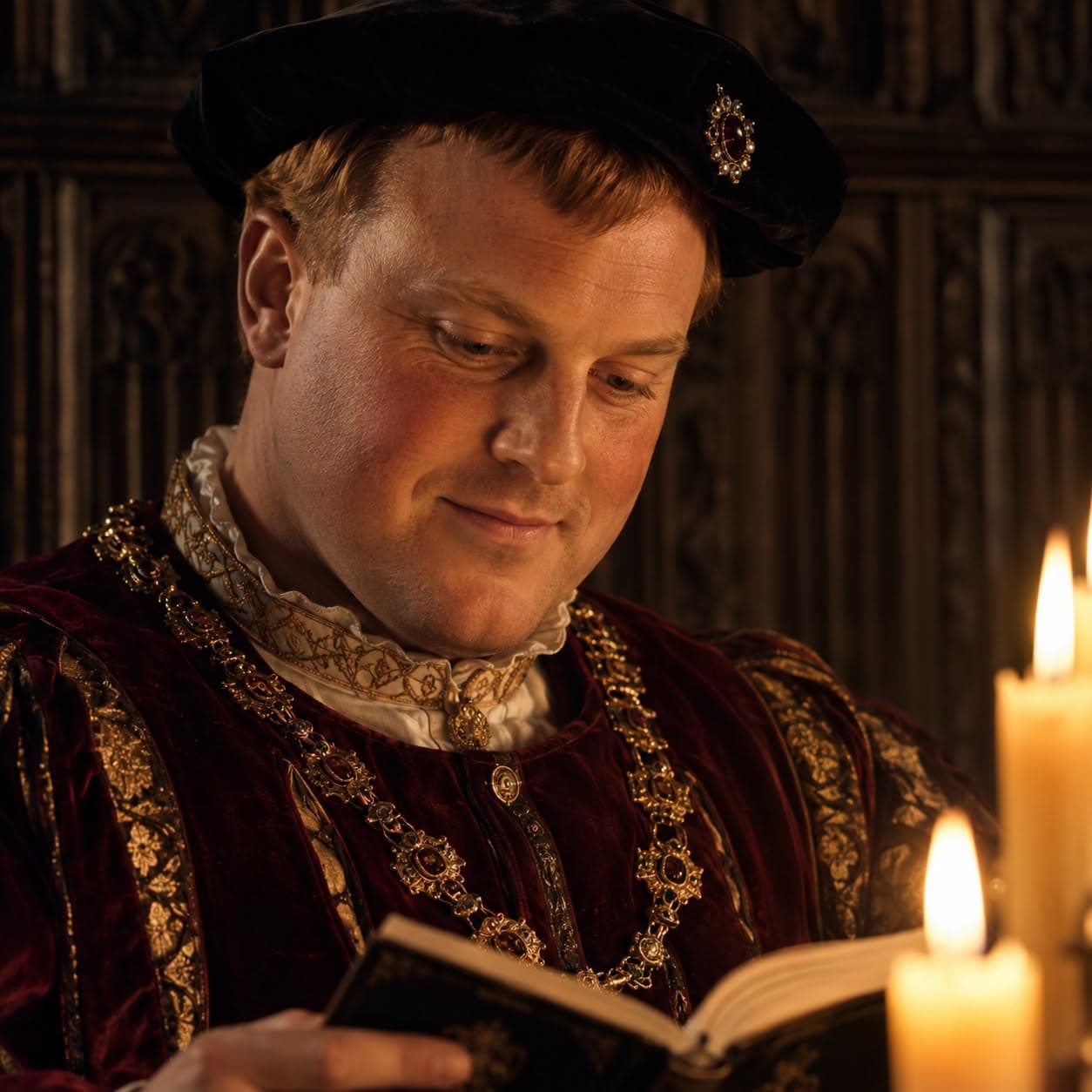

His wife had been watching for weeks. She finally wrote to her ambassador about what she could see. Four days later Henry VIII sent her away.
Anne of Cleves had come to England through a Holbein portrait and a diplomatic marriage, and Henry’s first disappointment had never really left the room. The marriage had been arranged for alliance, not desire, and from the moment Anne arrived in December 1539 it was clear that the king had wanted the image more than the woman. The marriage was never consummated. By the summer of 1540 she was queen in title, but the court was already moving around her as if that title had an expiry date.
The woman Henry was looking at instead was Catherine Howard, Anne’s own lady-in-waiting, young enough to belong to the household rather than the throne. She had been brought forward inside Anne’s circle, where her presence was familiar before it became dangerous. That was what made it so unmistakable. The king’s attention was not drifting toward some distant court beauty. It was settling on a girl who had been placed close enough to Anne for the replacement to happen in front of her.
Anne said as much to Karl Harst, the Cleves ambassador, on the twentieth of June 1540. Courtiers had already noted that the king had crept too near another lady. Anne had seen it from closer than any of them. Harst dismissed Catherine as a light romance and told Anne the summer progress would put distance between them. He could afford to believe that. Anne could not.
Four days later Henry sent her from London to Richmond under cover of plague. The excuse was practical, sanitary, and false. It moved Anne out of the way before the public annulment could do the rest. Less than three weeks after her complaint, the marriage would be declared null and void. Catherine Howard would step into the place Anne had just been pushed out of.
She had been queen. She was being replaced.