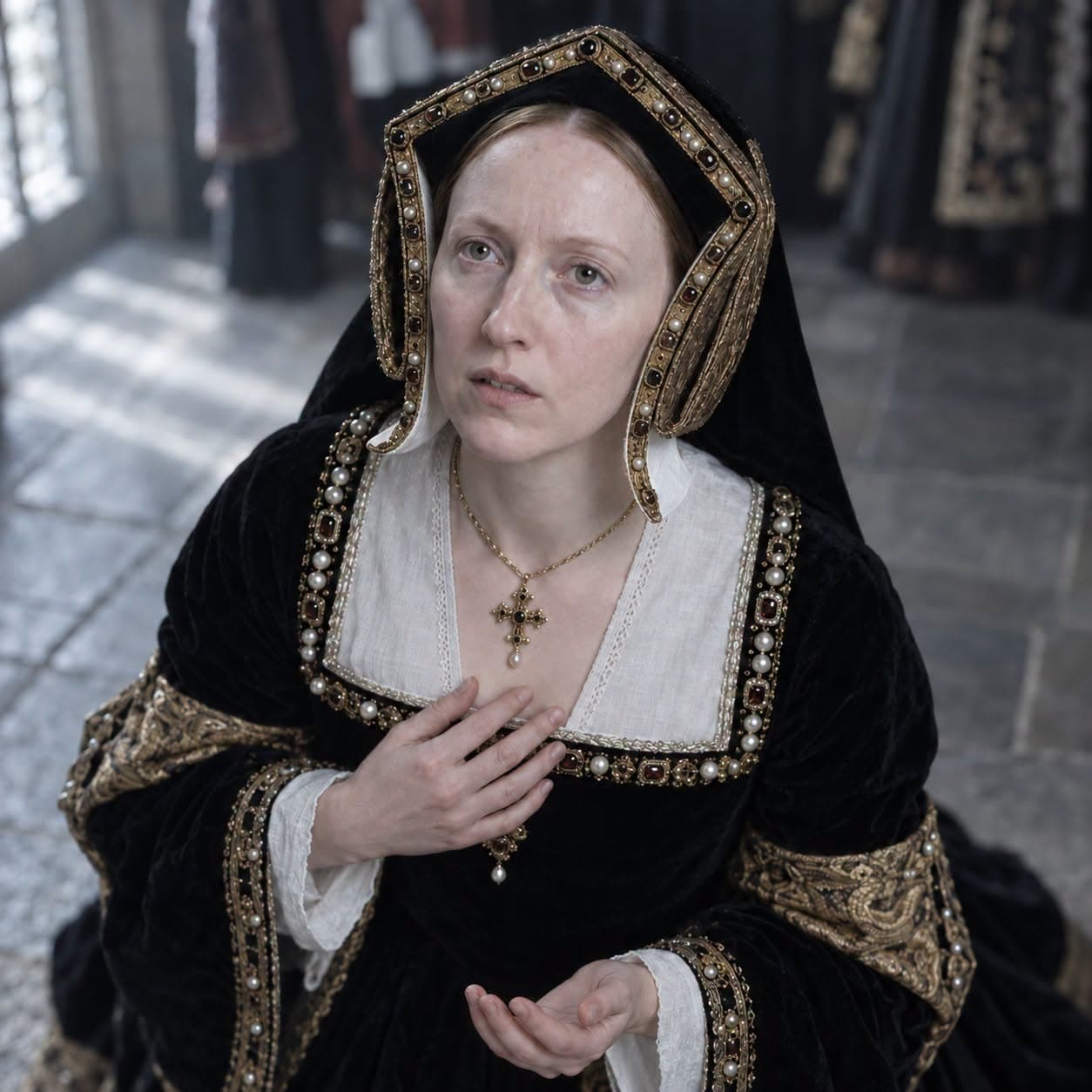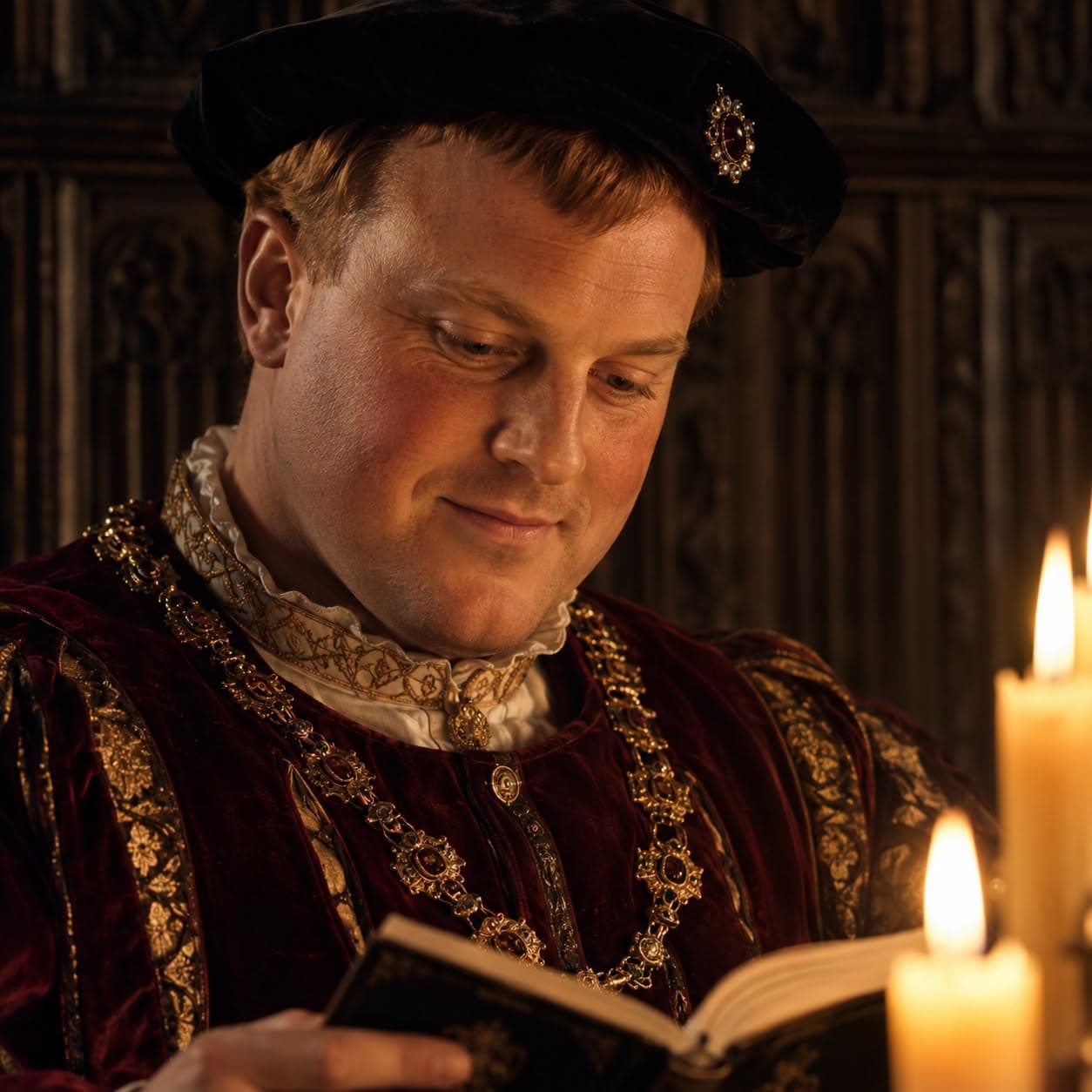
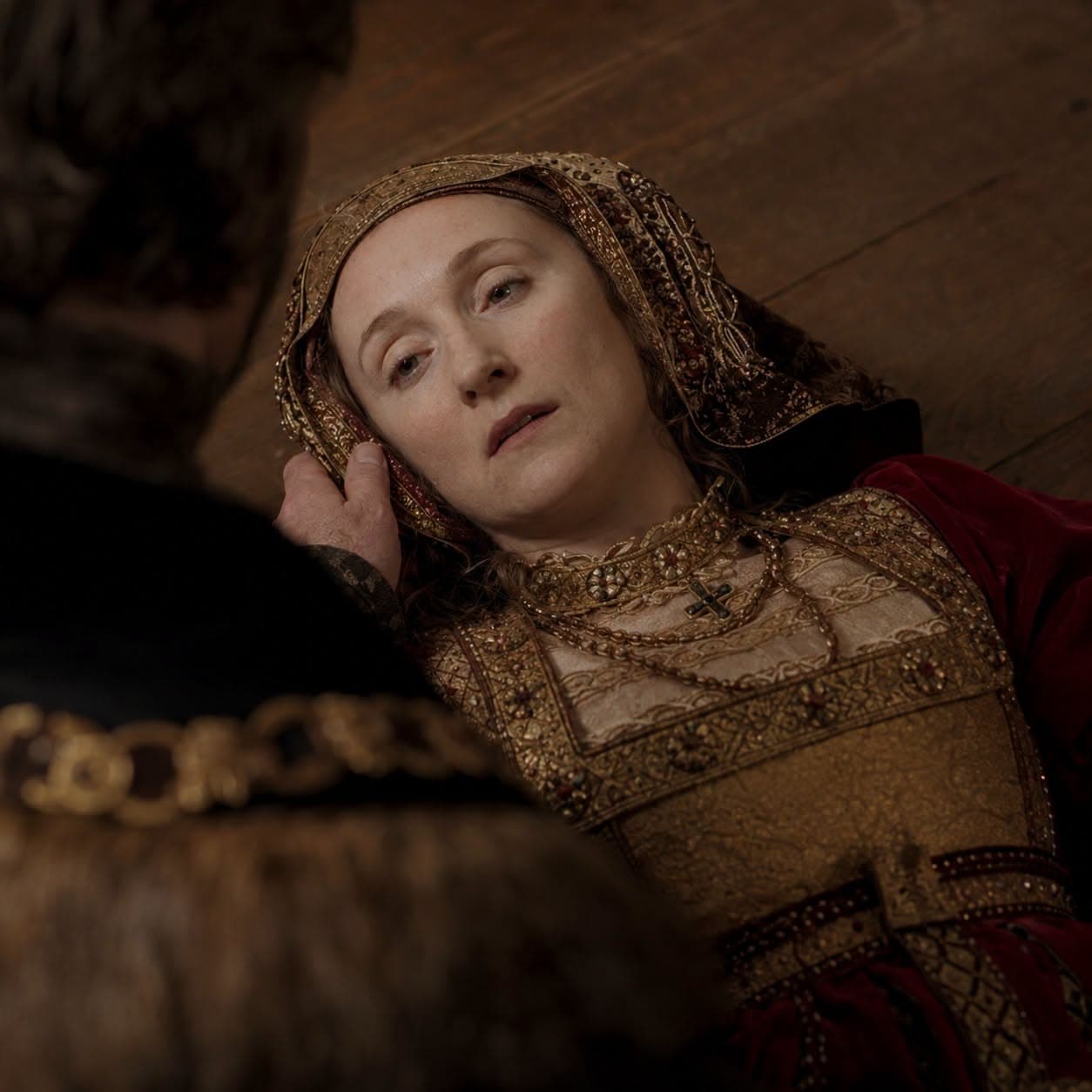
The French Ambassador reported that Anne of Cleves had collapsed in terror when the men arrived and told her that her marriage no longer existed. The men sent to inform her said she took the news without any change of expression. She knew exactly what had happened to the wives who had fought him.
In the early months of her marriage, Anne had confided in the Countess of Rutland about her nights with Henry. He kissed her, she said, and called her good night, sweetheart, and in the morning kissed her again and called her farewell, darling. Rutland, who understood exactly what a queen's duty required, told her flatly that there must be more than that, or England would be waiting a long time for a Duke of York. Anne had grown up in Cleves, in a conservative household that had prepared her for needlework and piety, not for the particular arithmetic a English queen was expected to perform in the dark. She may genuinely not have understood what was missing.
By the summer of 1540, the men around Henry had decided what to do about it. On 5 July, proceedings opened to determine whether the marriage had ever been valid at all. Archbishops and bishops assembled at Westminster to hear the case argued in Latin, weighing a supposed precontract with the Duke of Lorraine from years before, the plain fact that the marriage had never been consummated, and the claim that Anne had entered into it without true inward consent. She was not called to speak. She was at Richmond, told only that the matter was being considered, while a room full of clergymen she had never met decided the shape of her own life. On 9 July, convocation delivered its judgment. The marriage was null.
She had been given a ring at her wedding, engraved with the words God send me well to keep. After the annulment, she sent it back to Henry and asked that it be broken into pieces, as a thing she said she knew to be of no force or value. It was a small, cold, deliberate act, the only gesture in the whole affair that was entirely her own choice rather than something arranged for her.
What Henry offered in return for her calm was generous almost past reason. She kept Richmond Palace. She was given Hever Castle, the childhood home of Anne Boleyn, along with Bletchingley Manor and a house at Lewes. Three thousand pounds a year came with the lands. She was granted precedence over every woman in England except the queen herself and the king's own daughters, and a title that no other of his wives would ever hold: the King's Beloved Sister. Her jewels, her gowns, her plate, all of it stayed hers.
Nineteen days later, on 28 July, Henry married Catherine Howard, a maid of honour barely out of her teens. On the very same day, Thomas Cromwell, the minister who had built the Cleves marriage in the first place, was executed on Tower Hill. The man who had arranged the match that nearly destroyed her was dead before the month was out. The wife he had chosen for the king was alive, landed, and titled, watching from a safe distance as her replacement walked to the altar.
She remained welcome at Henry's court for the rest of his reign, invited to feasts and entertainments as the King's Sister rather than shut away. She grew genuinely fond of Catherine Howard, and when Catherine was arrested and executed in 1542, Anne was said to be distressed by it, not triumphant. She and her brother in Cleves let themselves hope, briefly, that Henry might take her back as his wife. He did not. When Henry died in January 1547, her royal status slipped. Her precedence had depended entirely on being his sister by his own grant, not by blood, and the new regime saw no reason to maintain it at the same scale. While her legal settlement remained intact for life, she sold some of her larger properties for smaller, more manageable ones as money grew tight. She had been queen of England for six months. She lived another seventeen years after the annulment, quietly outlasting every woman who had shared her position and place at Henry's side.
She died on 16 July 1557, at forty-one, having outlived Henry by a decade. Of Henry VIII's six wives, she is the only one buried in Westminster Abbey, her tomb set across from the shrine of Edward the Confessor, arranged by Mary I, the stepdaughter Anne had once helped bring back into her father's favour.
The others are scattered: Catherine of Aragon at Peterborough, Anne Boleyn and Catherine Howard both at the Tower, Jane Seymour beside Henry at Windsor, Catherine Parr at Sudeley.
Anne alone rests among kings.