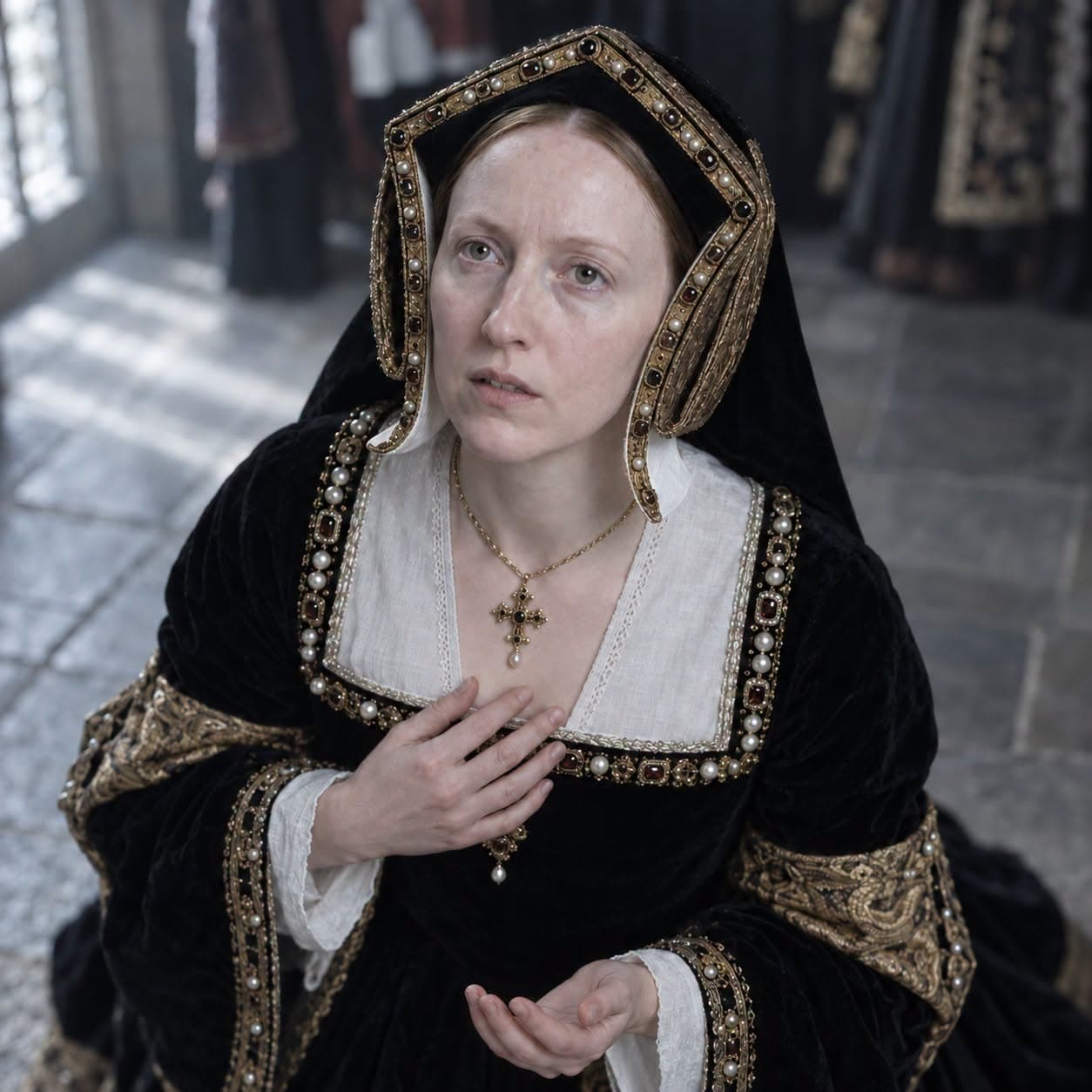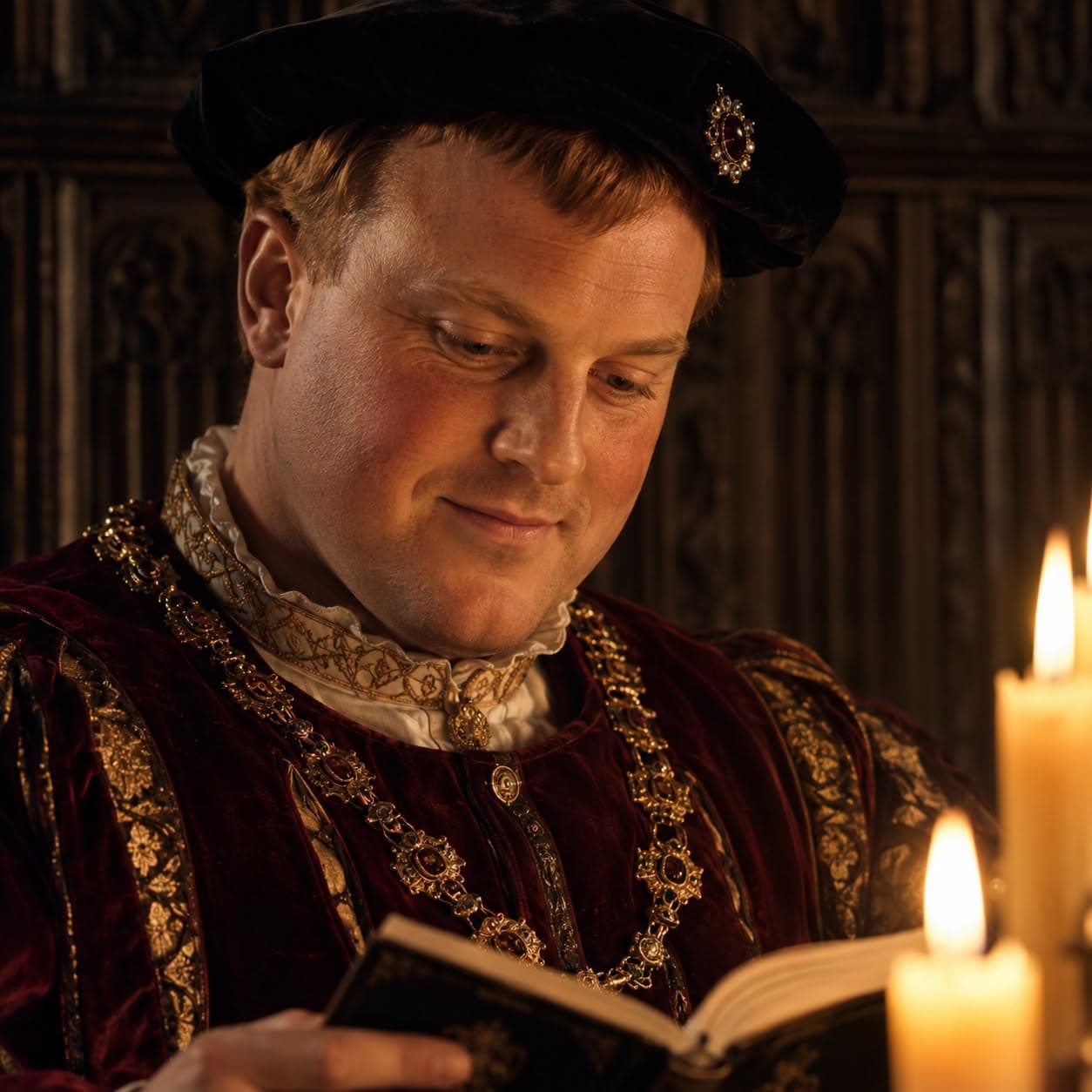
She walked out of her marriage in 1545 and went to London to preach on street corners. Women were not permitted to speak in church. She did not find this a compelling reason to stay quiet.
Anne Askew was born around 1521 into a Lincolnshire gentry family, the second daughter of Sir William Askew of Stallingborough. Her father arranged her marriage to Thomas Kyme, a local landowner who had originally been betrothed to her elder sister Martha. Martha died before the wedding. Sir William replaced her with Anne, and Anne had no say in the substitution. She was approximately fifteen years old.
Kyme was Catholic. Anne had been reading scripture in ways her husband found uncomfortable, and the marriage was a collision between two people who held irreconcilable positions on the question of whether a woman's religious convictions were her own business. Kyme eventually threw her out.
The historical accounts differ on the sequence, some say she left, some say he expelled her, but the outcome was the same. She went to London, resumed her maiden name, and by 1545 was moving through Protestant court circles, reading scripture aloud in the precincts of Lincoln's Cathedral, and making herself visible in ways that women with any instinct for self-preservation did not.
She was arrested for the first time in 1545 and questioned about her beliefs on the Eucharist. The specific charge turned on whether she accepted the doctrine of transubstantiation, the Catholic teaching that the bread and wine of communion become, in substance, the actual body and blood of Christ. Anne did not accept it. She was also fluent enough in scripture to conduct her own legal argument during the examination, turning the interrogators' questions back on them with chapter and verse. She was released when the evidence was judged insufficient to convict. She went back to London. Kyme came to find her and took her home to Lincolnshire. She left again.
By 1546 the conservative faction at court, led by Stephen Gardiner, Bishop of Winchester, had identified Catherine Parr's Protestant household as a target. Gardiner needed evidence. Anne Askew had known connections to women in Catherine's circle and was, by the spring of 1546, the most accessible link in the chain between the reformist network and the queen. She was arrested again in May 1546, taken for examination, and questioned by the Privy Council.
The interrogators wanted names. Specifically they wanted the names of women at court, ladies of the queen's household, who had been funding Protestant literature and hosting theological discussion in defiance of the Act for the Advancement of True Religion. Anne had those names. She understood precisely what was being asked of her and precisely what would happen to the women she named if she gave them up.
She gave them nothing.
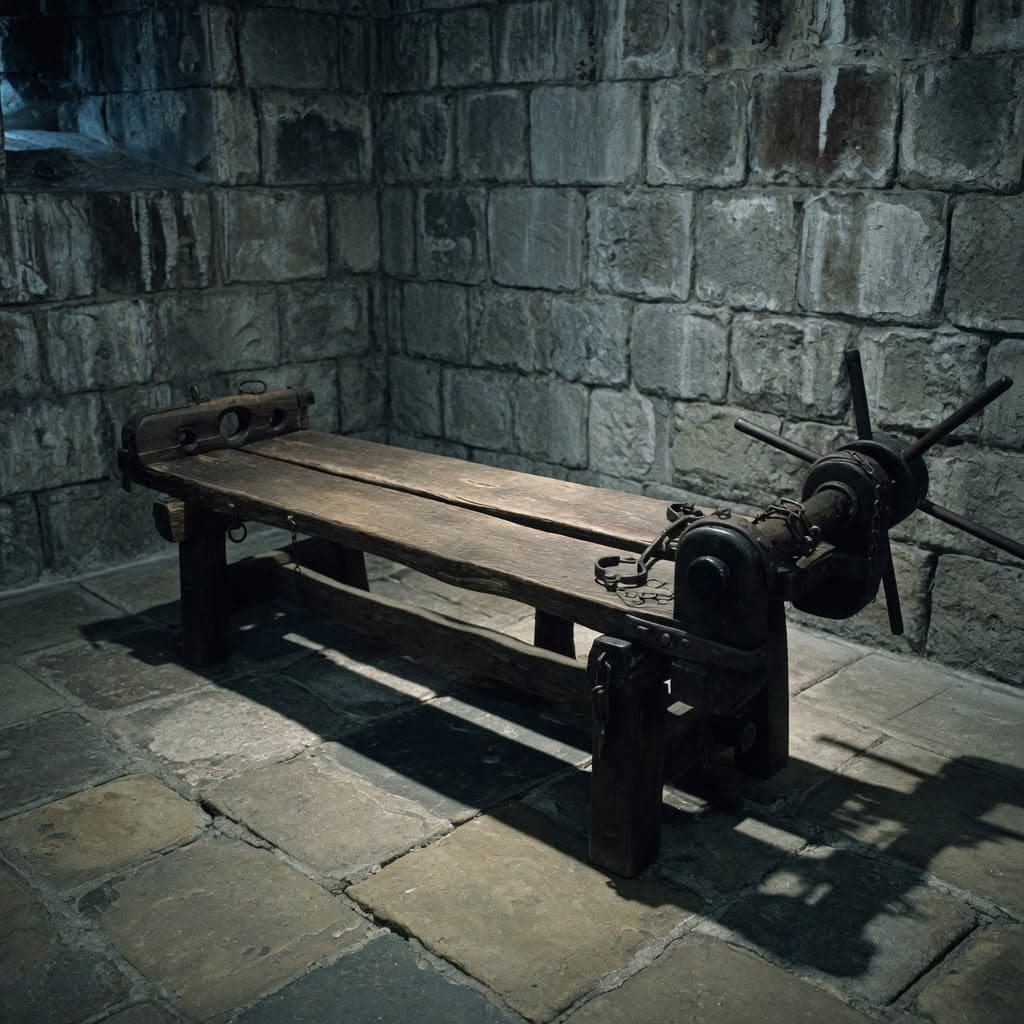
She was convicted of heresy on the eighteenth of June 1546 and sentenced to death by burning. A conviction was sufficient. The legal process was complete. What happened next had no basis in law. Richard Rich and Sir Thomas Wriothesley, two of the most senior men in Henry VIII's government, came to the Tower personally and ordered Anne put on the rack. The Tower's lieutenant, Sir Anthony Knyvet, operated the rack once and then refused to continue, telling them the law did not permit the torture of a convicted gentlewoman who was already sentenced to die. Rich and Wriothesley dismissed him from the room.
The two men turned the rack themselves.
Anne sat on the floor of the Tower for two hours afterward while guards and officials urged her to recant and name the women who had supported her. She sat with her joints pulled from their sockets and her body broken and she did not give them a single name. She was eventually carried back to her cell.
At some point during her imprisonment, between the interrogations and the execution, she wrote it all down. Every question she was asked. Every answer she gave. Every exchange with every interrogator, including the specific words Wriothesley used when he promised her a pardon if she would simply name the queen's ladies. She recorded it in the form of a personal examination, a first-person account of what was done to her and what she refused to do in return. The men who racked her left no equivalent record. She made sure the record that survived was hers.
Nicholas Shaxton had been Bishop of Salisbury before his own heresy conviction. Facing the same sentence as Anne, he had recanted to save his life and was permitted to preach the sermon at her execution as proof of his rehabilitation. He came to see her in prison beforehand and urged her to follow his example. Anne told him that it would have been better for him if he had never been born.
On the sixteenth of July 1546 she was carried to Smithfield in a chair because she could no longer walk. The standard procedure for burning required the condemned to be tied at the waist to the stake with a rope. Anne's joints had been so damaged by the rack that the rope could not be applied in the usual way. She was chained directly to the stake. A letter arrived from the king's council offering a full pardon if she recanted at the last moment. She refused it. The fire was lit. She was twenty-five years old.
Henry VIII died six months later. The religious settlement she had been burned for denying began moving in the direction of her beliefs within a year of her death. John Bale, a Protestant scholar who had received her written accounts through contacts in her network, published them within months of the execution under the title The Examinations of Anne Askew.
They were widely read. They were reprinted repeatedly across the sixteenth century. The men who broke her on the rack, Rich went on to become Lord Chancellor and Wriothesley became Earl of Southampton, left behind political careers. Anne Askew left behind her own words.
Every one of the women she did not name survived.