She was fifty-two when she married for the first time. Her husband received a crown that day. So did she. Having needed her to secure the throne, he would govern largely without her.
Anna Jagiellon was born in Kraków on 18 October 1523, daughter of King Sigismund I of Poland and his Italian queen, Bona Sforza. She grew up at Wawel, in a Renaissance court where royal marriages brought countries into alliance and royal daughters were part of the negotiations. Her name belonged to the family that occupied the throne. For decades, that would give her rank without settling what her own life was to be.
There was no shortage of splendour around the young princess. The household accounts record chessboards, ornamental coffers and birdcages for Anna and her sisters. They wore jewels and fashionable Italian clothes, standing behind their mother's chair at official appearances or following her in procession. They were beautifully provided for, and beautifully arranged around someone else.
In surviving family miniatures, Anna, Sophia and Catherine wear such similar clothes that their initial pendants help distinguish them. Anna's is an A. The jewels identify three separate women in a display of family resemblance. Their marriages, when they came, would take them in different directions.
Anna's took the longest.
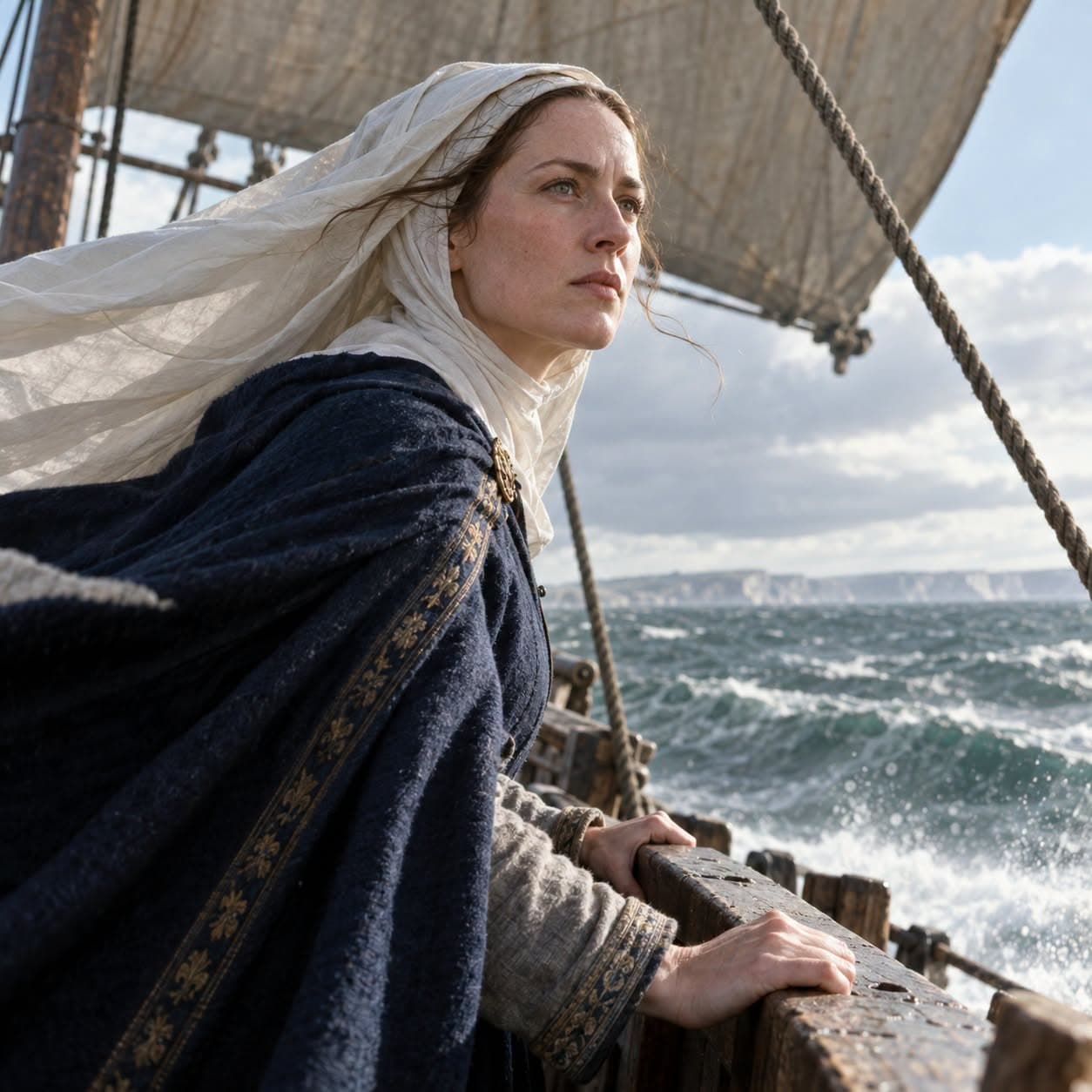
In 1562 her younger sister Catherine married John, Duke of Finland, the future king of Sweden. It was unusual for a younger sister to marry first, and Anna gave her consent. She was thirty-eight. Catherine left to begin a married life, while Anna remained a princess whose future still required arranging. The sister who went away would later have a son called Sigismund.
By then Anna was running a household of her own at Warsaw and nearby Ujazdów, and it grew through the 1560s. She had a place and people who depended on her, even while the question of a husband remained unanswered.
Then, in 1572, her brother Sigismund II Augustus died without children. The dynasty had lost its king. Anna was one of his surviving sisters, and suddenly the ancestry she had carried all her life became an immediate political asset.
The nobles elected Henry of Valois, a French prince, in 1573. His representatives had pledged that he would marry Anna. She supported his candidature, and he obtained the crown, but the wedding did not follow. In June 1574, after the death of his brother opened the French throne to him, Henry slipped away from Wawel by night and returned to France.
Anna was still unmarried. Poland was looking for a king again.
In December 1575, nobles opposed to a Habsburg succession proclaimed Anna king of Poland, using the title of a reigning monarch rather than a consort, with Stephen Báthory, Voivode of Transylvania, as her intended husband. The arrangement joined a new candidate to the old dynasty. Anna brought something that military experience and foreign alliances could not supply: she was the daughter of one Polish king and the sister of another.
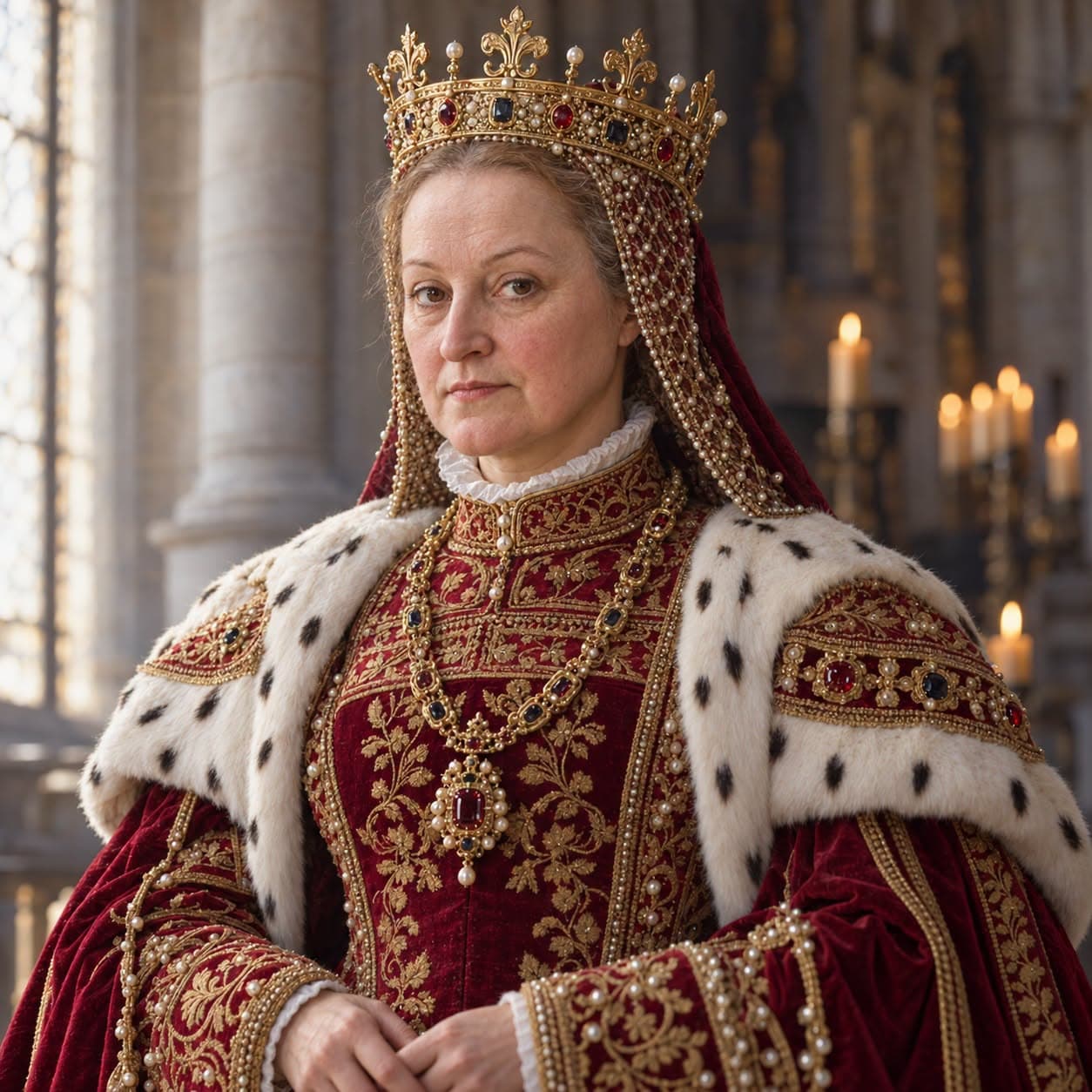
On 1 May 1576 she married Báthory at Wawel, and they were crowned there together. She was fifty-two, returning as a bride to the place where she had grown up behind her mother's chair. Her royal position rested on her own election as well as her marriage. She had not simply acquired the courtesy title of a king's wife.
Being crowned together did not mean governing together. Báthory largely excluded Anna from state affairs. The woman whose ancestry had made his election possible had far less say in his government than her title suggested.
Anna went on commissioning work, keeping her household and spending money on the places attached to her family. She paid for building at Warsaw and Ujazdów. At Wawel, the domed Sigismund Chapel held the tombs of her father and brother, and she gave it precious textiles and goldsmiths' work, adding her own contributions to the setting in which the dynasty would be remembered.
When Báthory died in 1586, the crown was empty again. Anna backed her nephew, Sigismund Vasa, Catherine's son. She spent money and sought support for him, and in 1587 he was elected king. The younger sister's marriage had once left Anna behind. Now its son came to the Polish throne with Anna behind him.
This time Anna did some of the arranging.
She also saw to her husband's memory. She ordered a tomb for Báthory in Wawel Cathedral, and it was finished in 1595. The man who had governed largely without her was commemorated at her expense.
Anna died in Warsaw on 9 September 1596, aged seventy-two, the last of the Jagiellons. Her body was taken to Wawel and laid in the crypt beneath the Sigismund Chapel, beside her father and brother. She had married and been crowned there at fifty-two, and twenty years later she came back to the family tombs. Above them, the dome still carries the gilded covering she paid for in 1591.