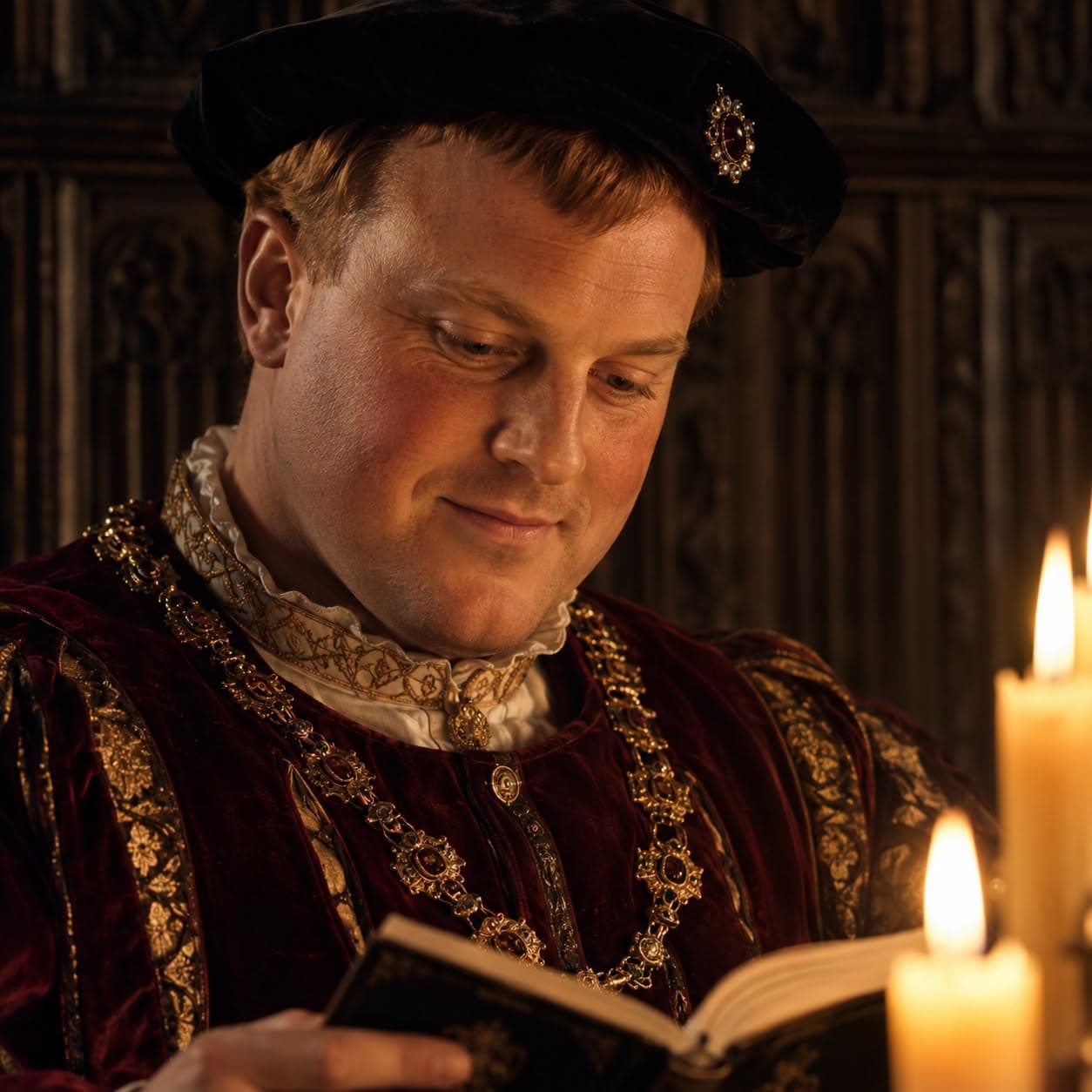
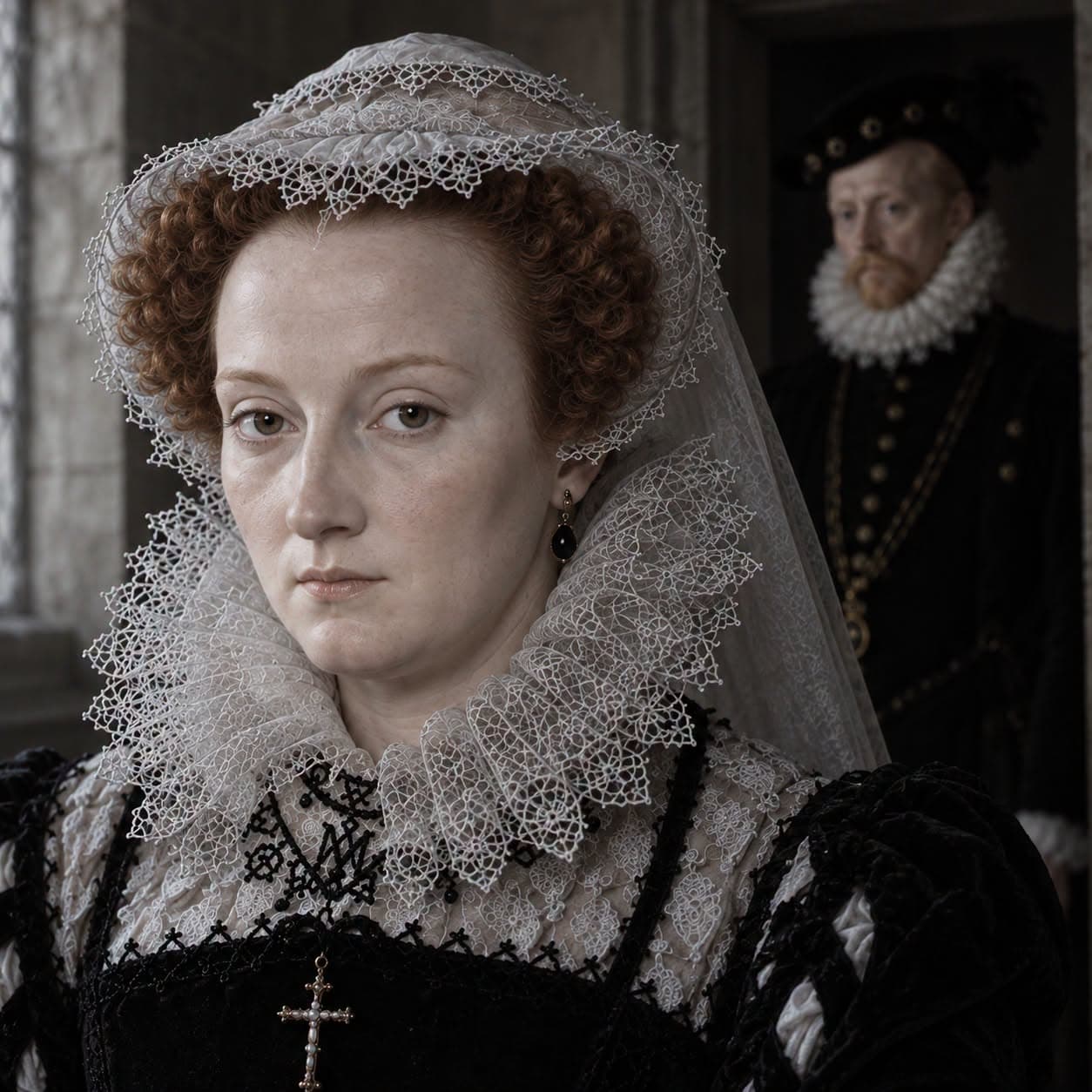
Queen Elizabeth was displeased he had not yet found some way to "shorten the life" of his prisoner. His loyalty was unquestionable, as was his honour. His response was blunt and immediate.
Sir Amias Paulet spent nearly two years as the gaoler of Mary, Queen of Scots, moving her between Tutbury, Chartley, and finally Fotheringhay as the government tightened its watch over what she might still be able to arrange from inside a locked household. He was a committed Puritan, chosen for the post precisely because he was not the kind of man who could be charmed, bribed, or worn down by a captive queen's complaints.
Mary found him rigid and joyless. He found her a continuing danger to Elizabeth's life. He ran her captivity accordingly, reading her letters, controlling her visitors, and giving her almost no opportunity to communicate with anyone beyond his own household.
By early 1587, that vigilance had already produced what the government wanted. Mary had been implicated in the Babington Plot, tried, and sentenced to death, and Elizabeth had signed the warrant authorising her execution. What remained unresolved was not Mary's guilt but the manner of her dying, and it was this second question that Elizabeth's secretaries brought to Paulet directly.
On 1 February 1587, William Davison and Francis Walsingham wrote to Paulet and his fellow keeper, Sir Dru Drury, conveying the queen's displeasure that the two men had not yet found some way to "shorten the life" of their prisoner without the need for a public execution. The letter pointed them toward the Bond of Association, the oath by which subscribers had pledged themselves to pursue and destroy anyone found complicit in a plot against Elizabeth's life, as though that oath were authority enough for what was being asked of them now. Mary was in their custody. She could not leave the rooms they controlled or receive anyone they did not permit. If her death came quietly, at their hands, there would be no scaffold, no crowd, and no warrant that Elizabeth would ever have to be seen using.
Paulet received the letter at Fotheringhay the following afternoon, and answered it the exact same day, without hesitation. He wrote that he would rather die a thousand deaths than make "so foul a shipwreck of my conscience," or leave so great a blot on his posterity, as to shed blood "without law or warrant."
Drury, given the same instruction, refused it in the same terms. Neither man argued that Mary was innocent or asked that she be spared the sentence already passed on her. What they would not do was become the means by which that sentence was carried out in secret, at the queen's private wish, rather than in the open, under the warrant she had already signed.
Mary was executed at Fotheringhay Castle on 8 February 1587, before an assembled company of witnesses, under the very warrant her gaolers had refused to circumvent.
What followed exposed how much that refusal had cost Elizabeth, and how little she was prepared to own the outcome even after insisting on it. She wept when news of the execution reached her, and had it put about that the warrant had been sent and acted upon without her full knowledge and consent, as though the document bearing her signature had somehow moved on its own. Davison, who had passed the warrant to the Privy Council for sealing, was arrested, examined, and imprisoned in the Tower, made to answer for a death Elizabeth herself had ordered and then declined to be seen ordering.
Paulet faced no such reckoning. He returned to the queen's service, and in time was made Chancellor of the Order of the Garter, an honour that arrived without any suggestion that his refusal had cost him Elizabeth's favour.
He died on 26 September 1588, nineteen months after the queen whose secret death he had refused to arrange, and whose public execution he had done nothing to prevent.