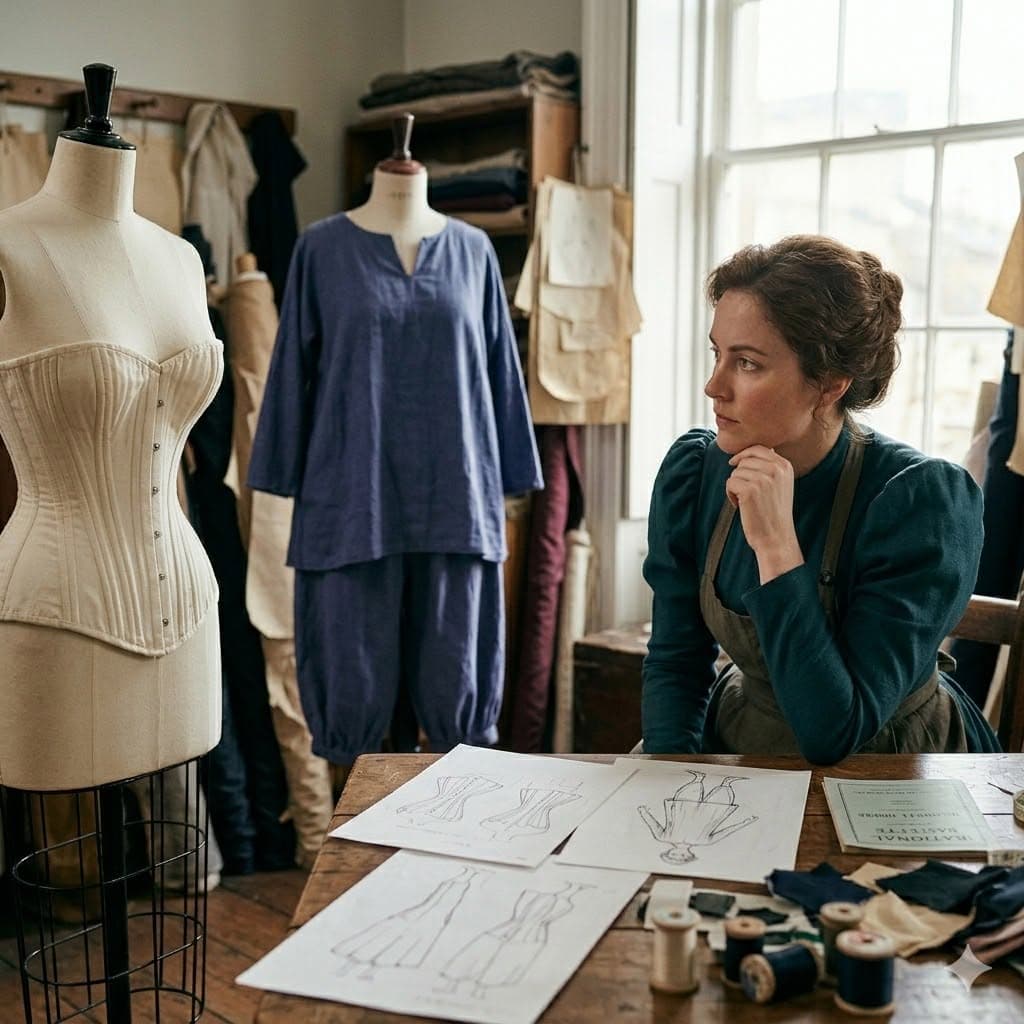
Born on May 27 1818, Amelia Bloomer revolutionized female fashion by fiercely advocating for a new style of trousers that finally allowed women to breathe, move, and work without the suffocating physical constraints of Victorian dress. During the mid-nineteenth century, women were expected to wear heavy skirts layered over tight corsets that crushed their internal organs. These garments were not just uncomfortable but actively dangerous to female health and mobility. Amelia saw this enforced fashion as a physical prison that kept women subservient and physically weak.
She was not the original inventor of the bifurcated garment, but she became its most powerful champion. As the editor of the first newspaper created strictly for and by women, The Lily, she had a unique platform to speak directly to a female audience. When she published illustrations of herself wearing a knee-length dress over loose trousers, the response was explosive. Women across the country wrote to her begging for the sewing patterns so they could finally experience physical freedom.
The trousers soon became universally known as "bloomers," cementing her name in fashion history. Stepping out in this new outfit required immense personal courage. Women who wore bloomers in public faced intense ridicule, harassment, and public mockery from a society that viewed bifurcated garments as strictly male territory. Yet the physical relief of taking a full breath and walking without dragging ten pounds of heavy fabric through the mud gave thousands of women the strength to endure the social backlash.
Her advocacy extended far beyond the realm of clothing. By proving that women did not have to accept the physical limitations placed upon them by society, she helped lay the groundwork for the broader women's rights movement. The rational dress movement was a crucial first step in arguing that women deserved full agency over their own bodies and their own lives. It was a tangible, wearable declaration of independence.
While the intense public pressure eventually caused Amelia to return to wearing traditional dresses, the impact of her defiance was permanent. She planted a vital seed of rebellion in the minds of Victorian women. The bloomer costume proved that societal rules could be challenged and changed, leaving a legacy of physical liberation that paved the way for every woman who enjoys the simple freedom of putting on a pair of trousers today.