Alice was asked whether she had a Testament. She had owned one. The authorities questioning her had taken it away.
On 4 November 1558, Alice Driver was burned for heresy at Ipswich, alongside a weaver named Alexander Gooch. She was about thirty, a married countrywoman from Grundisburgh in Suffolk. Mary I had thirteen days left to live.
Her story comes to us through John Foxe's Protestant account of the martyrs, which preserves the exchanges with her interrogators. In his telling, a woman accustomed to farm work repeatedly asks learned men to justify what they teach. They have their offices, their education and the power to condemn her. She has read the book they are arguing about.
Alice's husband farmed. Before her marriage, she had worked at her father's plough. Her world was the Suffolk countryside, a long way from the universities where the men examining her had been trained. Yet when they questioned her, she said she had read both the Old Testament and the New. Working the land and reading Scripture belonged to the same life.
Under Mary, that reading could lead into dangerous disagreements. The queen had restored Catholic worship, and the revived heresy laws made persistent rejection of Catholic teaching punishable by burning. One question in particular ran through Alice's examinations: what happened to the bread and wine at Mass? Catholic teaching held that they became, in substance, Christ's body and blood. Alice would not accept the answers put to her.
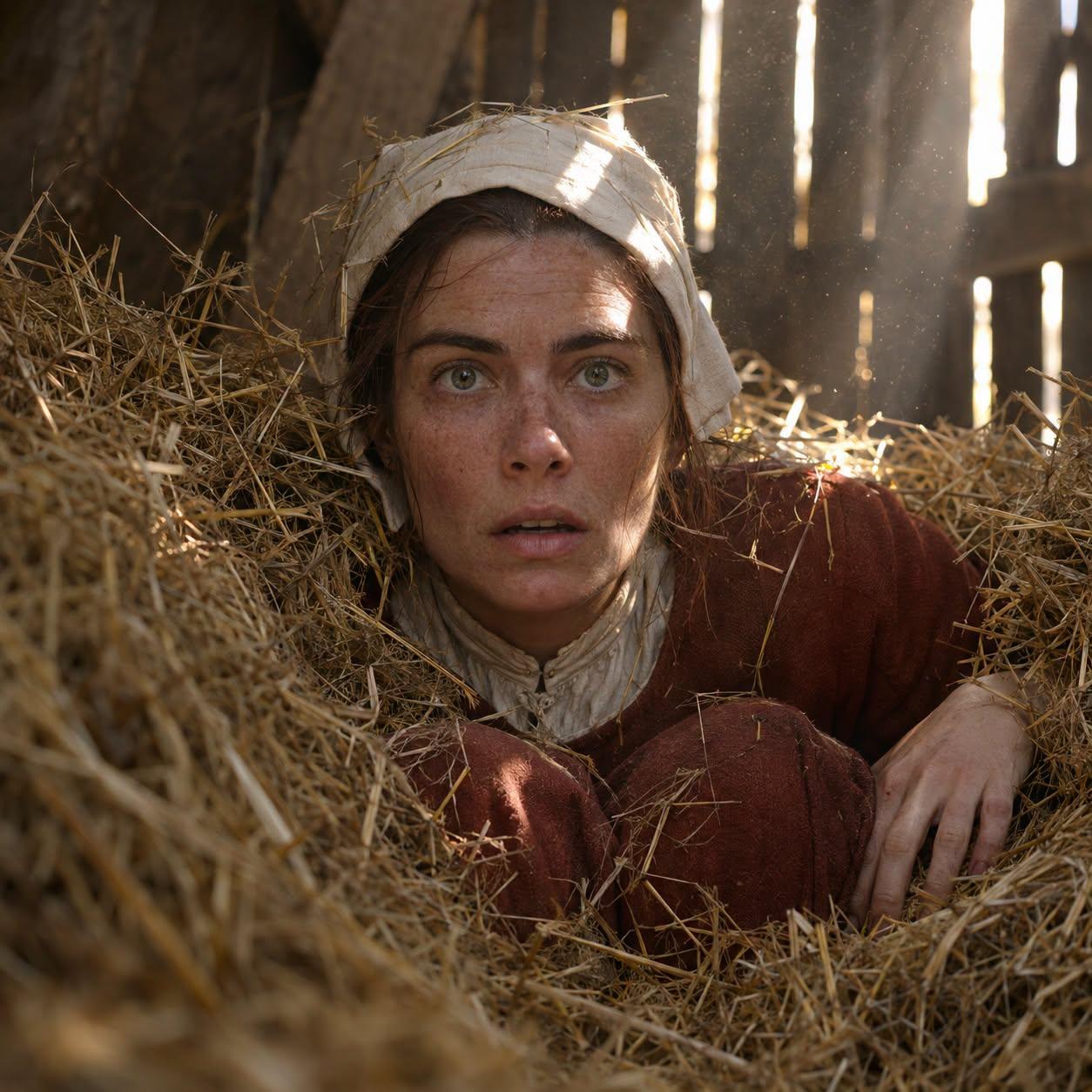
Her arrest began with an attempt to hide. Foxe describes a Suffolk justice named Noone coming to Grundisburgh with his men to search for her and Gooch, and the two of them concealing themselves in a store of hay. The searchers pushed pitchforks into it until they found them. They were taken to Melton gaol, then brought before the assizes at Bury St Edmunds.
There, according to Foxe, Alice compared Mary in her persecution to Jezebel, the biblical queen who hunted down God's prophets. Sir Clement Heigham, the chief judge, ordered her ears to be cut off, and the punishment was carried out. She was sent back to Melton. She still had plenty to say.
At Ipswich, in Foxe's account, Dr Spenser, the chancellor of Norwich, questioned her with a Dr Gascoigne. Alice said she could not find their phrase, the sacrament of the altar, anywhere in Scripture. She recognised the Lord's Supper. She asked them what a sacrament was.
A sign, they said. Then, she replied, it could not also be the thing it signified. Gascoigne turned to Christ's words, this is my body, and she asked what body was crucified the next day if the disciples had already eaten it. He had no answer. Spenser lifted his head from his cushion and told the gaoler to take her away.
They tried again the following day. When Alice reminded them that they had called a sacrament a sign, Spenser told her, "Thou liest, naughty woman, we did not say that it was a sign." She asked, "Will ye eat your own words?" and whether they were not ashamed to lie in front of so many people.
The dispute eventually came down to a missing book. Gascoigne told her there were three churches, the malignant, the militant and the triumphant, and Alice asked him to show her the passage. He said it was in the New Testament but could not tell her where. Told to look, he turned out to have no Testament with him. How, she asked, could he give judgement without the book of the law?
He asked whether she had one herself. No, she said.
"I am as good a doctor as you," he replied.
"Well sir, I had one, but you took it from me," she answered. Since then, she said, they had not let her have any book at all: "so burning is your charity."
She was a prisoner whose reading had been taken away. He had come to judge her on its contents without bringing a copy.
Then Alice addressed the difference in their education. She was an honest poor man's daughter, she said, never brought up at the university as they had been. Her experience had been elsewhere: "I have driven the plough before my father many a time."
She did not offer that as a reason to withdraw. "I will set my foot against the foot of any of you all," she said, and if she had a thousand lives, "it would go for payment thereof."
Spenser read the sentence of condemnation in Latin. Alice was handed over to the secular authorities and sent back to prison.
On the morning of 4 November, she and Gooch were brought from Melton to Ipswich. Foxe describes them kneeling in prayer and singing psalms until the sheriff's men ordered them to finish. When the chain was put around her neck, he says, she remarked, "here is a goodly neckerchief, blessed be God for it." People then came forward and took the two prisoners by the hands. The sheriff shouted for them to be seized, but a great number ran to the stake, and he let them all alone. Not one was taken. Alice and Alexander were burned there that day.
Mary died on 17 November. Alice's replies survived in Foxe's printed account, the plough and the missing Testament among them. The authorities had taken her book away. Readers could still find what she said about it.