He wrote to his seven-year-old son and told him to obey his mother. If anyone advised the boy otherwise, he was to treat it as bad counsel. Until that winter Suffolk had been the most powerful man in Henry VI's government. He wanted no doubt about whose advice his son should trust.
William de la Pole was born on 16 October 1396 at Cotton in Suffolk. He spent his youth fighting in France, married Alice Chaucer, granddaughter of the poet, and rose to dominate the government of Henry VI. By the time he wrote that letter in April 1450, Alice had already been widowed twice.
Her first marriage belonged to childhood. Her father, Thomas Chaucer, was a wealthy landowner who served five times as Speaker of the House of Commons; her mother, Maud Burghersh, brought estates of her own. Alice was their only child, an heiress whose marriage could be arranged long before she was old enough to manage the property involved. Her first husband, Sir John Phelip, went to France with Henry V in 1415. Before leaving, he made provision for her: a covered gold cup, a gold basin, and the furnishings of a hall and chamber. He contracted dysentery at Harfleur and died that October. Alice was still a child.
The same sickness at the same siege had already killed Michael de la Pole, Earl of Suffolk, and sent his son William home ill. Three weeks after Phelip's death, William's elder brother was killed at Agincourt. William was Earl of Suffolk at nineteen.
Alice's second husband was Thomas Montagu, Earl of Salisbury, one of England's leading commanders in France. In 1428 he was wounded by cannon fire during the siege of Orléans and died soon afterwards. William de la Pole took over the English command. Before he became Alice's third husband, he had already inherited her second husband's unfinished siege.
The war had a hand in every one of her marriages.
Alice and William received permission to marry in November 1430. He was then a soldier with fifteen years of campaigning behind him. She brought an inheritance and connections that mattered well beyond her famous grandfather's name. Their marriage joined two substantial interests, and at Ewelme in Oxfordshire they gave that partnership a lasting shape.
In 1437 they obtained royal permission for a religious foundation that would provide for thirteen poor men. There were almshouses arranged around a cloister, a chantry chapel for prayers, and a grammar school. The men were to pray for their benefactors; the estates would supply the income to maintain them. Charity and the care of the founders' souls occupied the same buildings. One priest oversaw the almshouses. Another taught the boys.
Their son John was born in 1442. While the boy was growing up, William negotiated the marriage of Henry VI to Margaret of Anjou, and Alice accompanied the new queen to England. William's influence at court grew until he was the dominant figure in the king's government. In 1448 he became a duke. Alice, who had first been married as a child, was now a duchess with a place in the queen's household.
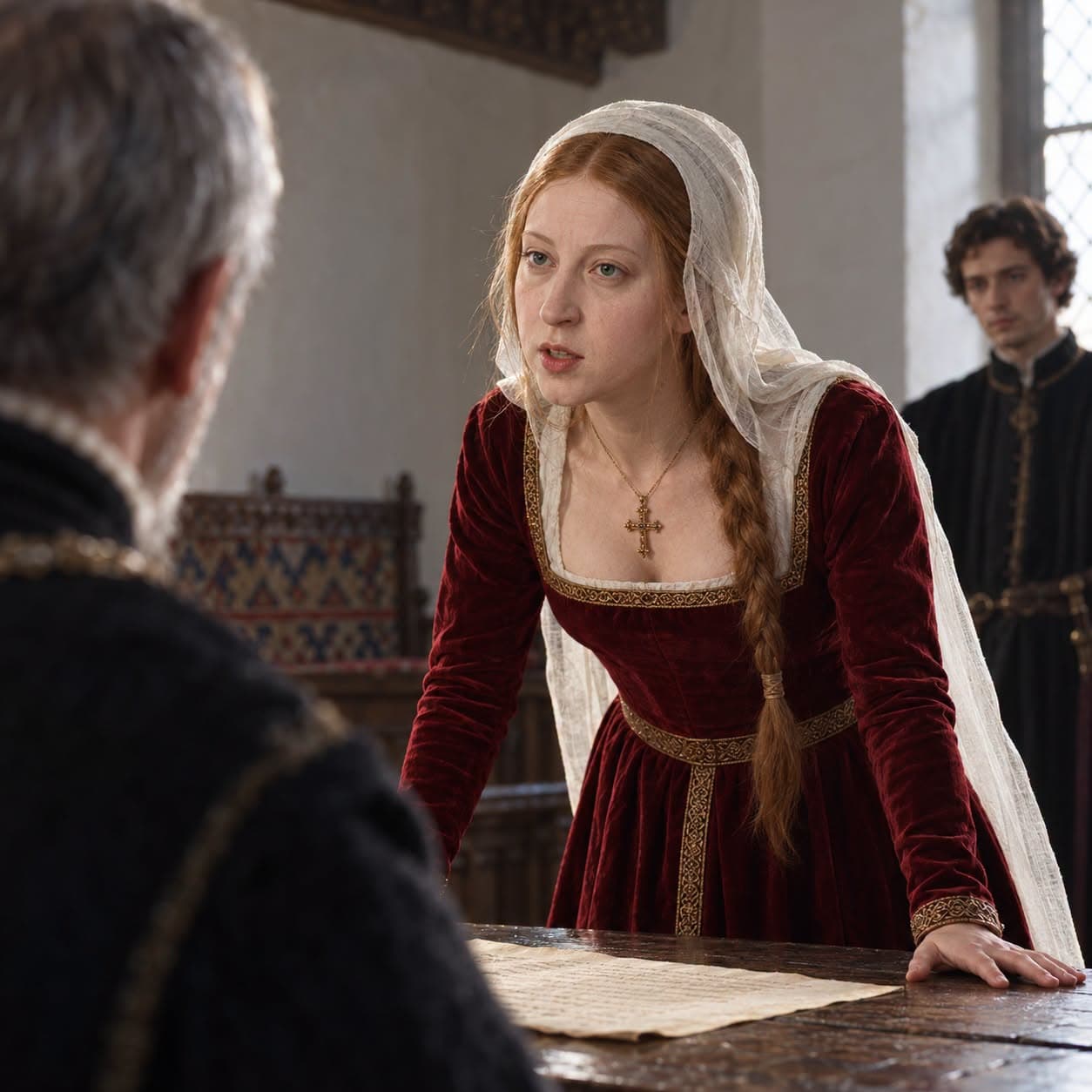
Then the French lands began to fall away. William had worked for a negotiated peace; the surrender of Maine and the losses in Normandy that followed made that policy a source of bitter accusation. In Parliament he was charged with treason and corruption. He denied the charges. Henry VI intervened and ordered him abroad for five years, avoiding a judgement on the treason accusation.
A king's favour could still get a man out of Parliament. It could not guarantee him a safe passage across the Channel.
Before leaving, William wrote to John. He began with God, then instructed the boy to remain faithful to the king. Even now, his son was to live and die in Henry's service. After that came Alice: John must love and honour her, obey her commands and believe her counsel in all his works. Anyone who steered him to the contrary was giving him bad advice.
This was more than a request to be good for his mother. William was directing the future head of the family to accept her judgement. He warned John against the company of proud men, covetous men and flatterers, and told him to seek out good and virtuous advisers. Then the instructions gave way to a blessing, given "as heartily and as lovingly as ever father blessed his child in earth". He noted that he had written it with his own hand, "the day of my departing from this land", and signed himself "your true and loving father".
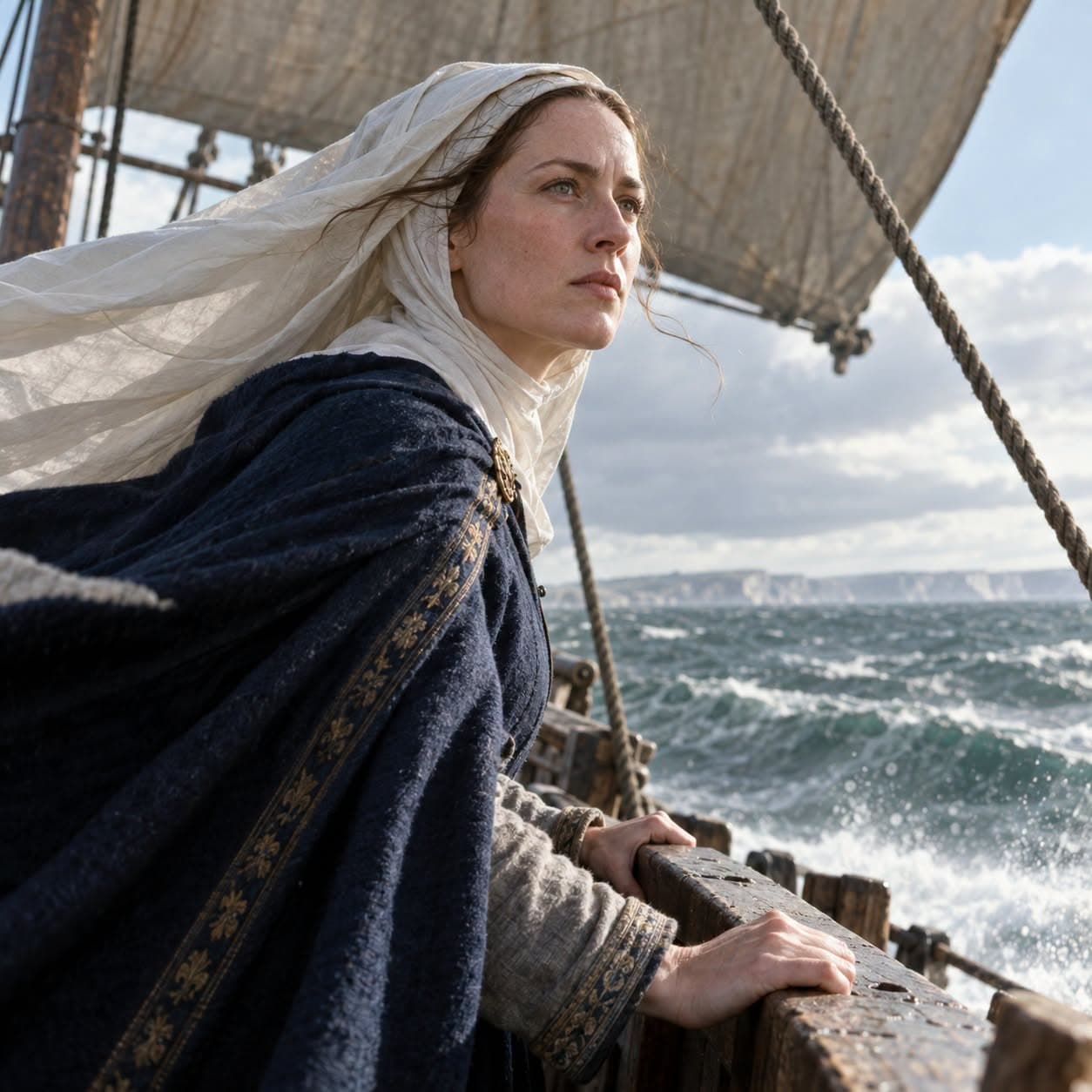
He sailed from Ipswich with two ships and a pinnace. Off Dover they were intercepted by the Nicholas of the Tower, and William was ordered aboard. On 2 May 1450 he was taken out in a small boat and beheaded. His body was left on the shore near Dover, carried first to Wingfield in Suffolk and later buried at the Charterhouse in Hull, as he had asked in his will.
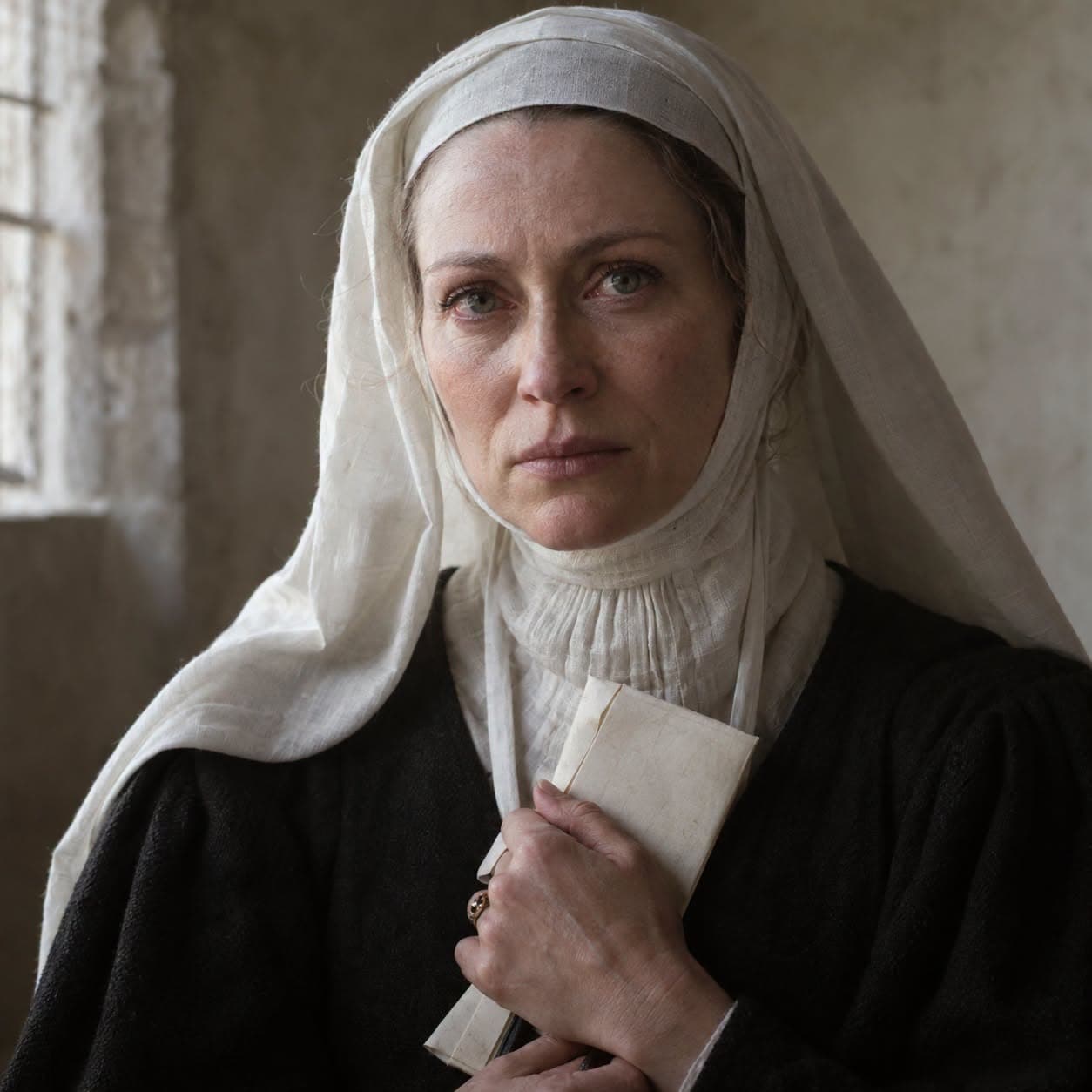
Alice was a widow for the third time.
Her husband's enemies had not finished with his household. That summer rebels in London forced a commission to indict her for treason. When Parliament next met, the Commons asked the king to remove a list of people from his presence, and Alice's name was second on it. Neither attack destroyed her. In 1458 she and Richard, Duke of York, agreed that John would marry York's daughter Elizabeth, sister of the future Edward IV and Richard III. The son whom William had instructed to serve Henry VI became the brother-in-law of the king who displaced him. In 1472 the defeated Margaret of Anjou was placed in Alice's keeping at Wallingford. Twenty-seven years earlier, Alice had escorted her into England as a bride.
At Ewelme the school and almshouses went on with the work the couple had founded them to do. Alice remained a landowner and the head of her own household for another quarter of a century. William's letter had told their little boy to trust her counsel. When she died at Ewelme in May 1475, that boy was thirty-two and Duke of Suffolk. She was buried in the church beside the almshouses, where the poor men she and William had provided for were bound to pray for them both.