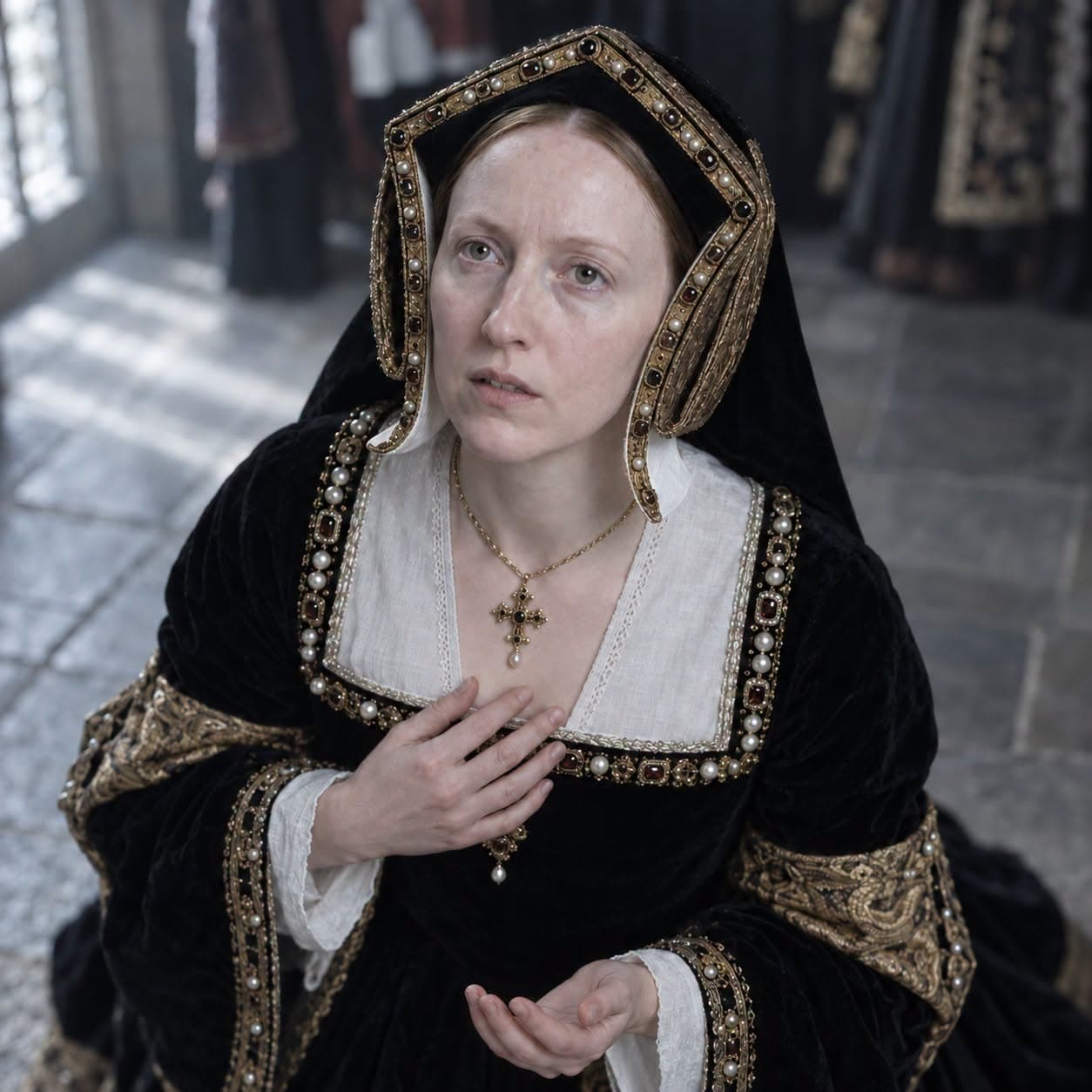
She was known as the Wise Wife of Keith. That was her title before they gave her another one.
In the parishes around Haddington in East Lothian, Agnes Sampson was the woman you sent for when the medicine of the period had nothing left to offer, when a child would not come, when a fever would not break, when a woman wanted to conceive and could not, or wanted not to conceive and had no other recourse. She was educated, respected, trusted. She had a reputation that had taken decades to build and that rested on the specific, accumulated knowledge of a woman who had spent her life learning what the body required. She was not on the margins of her community. She was at its centre.
In 1590 she was arrested on charges of witchcraft.
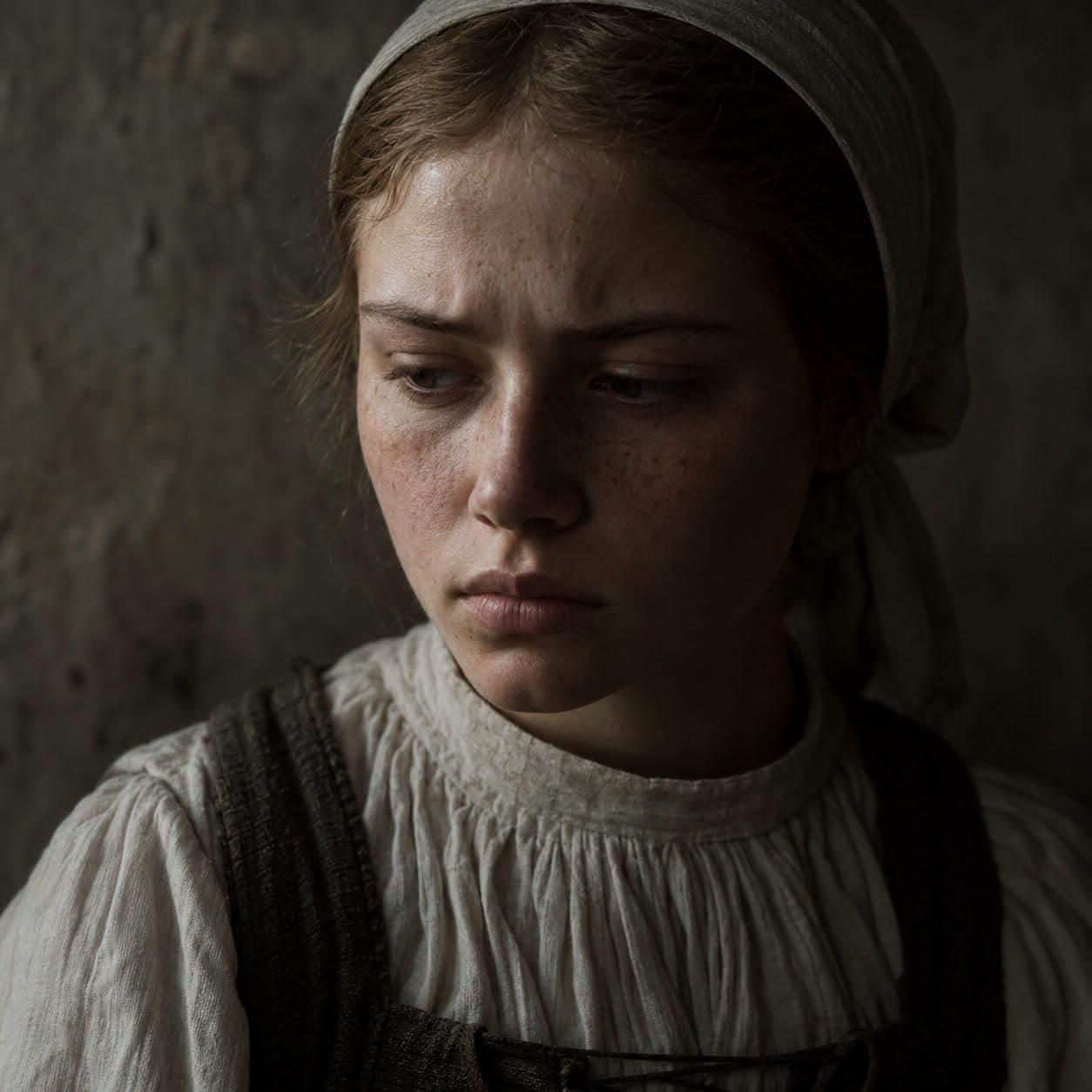
The North Berwick witch trials began not with Agnes but with a servant girl named Gilly Duncan, who had a talent for healing the sick. Her employer, concluding that the talent was too effective to be natural, tortured her until she confessed to diabolical assistance. With one eye on the instruments available to her employer and the other on the door that would not open until she gave him names, Gilly gave him names. Agnes Sampson was among them.
Agnes was brought to Edinburgh. She was elderly, educated, and she refused to confess.
The refusal did not last.
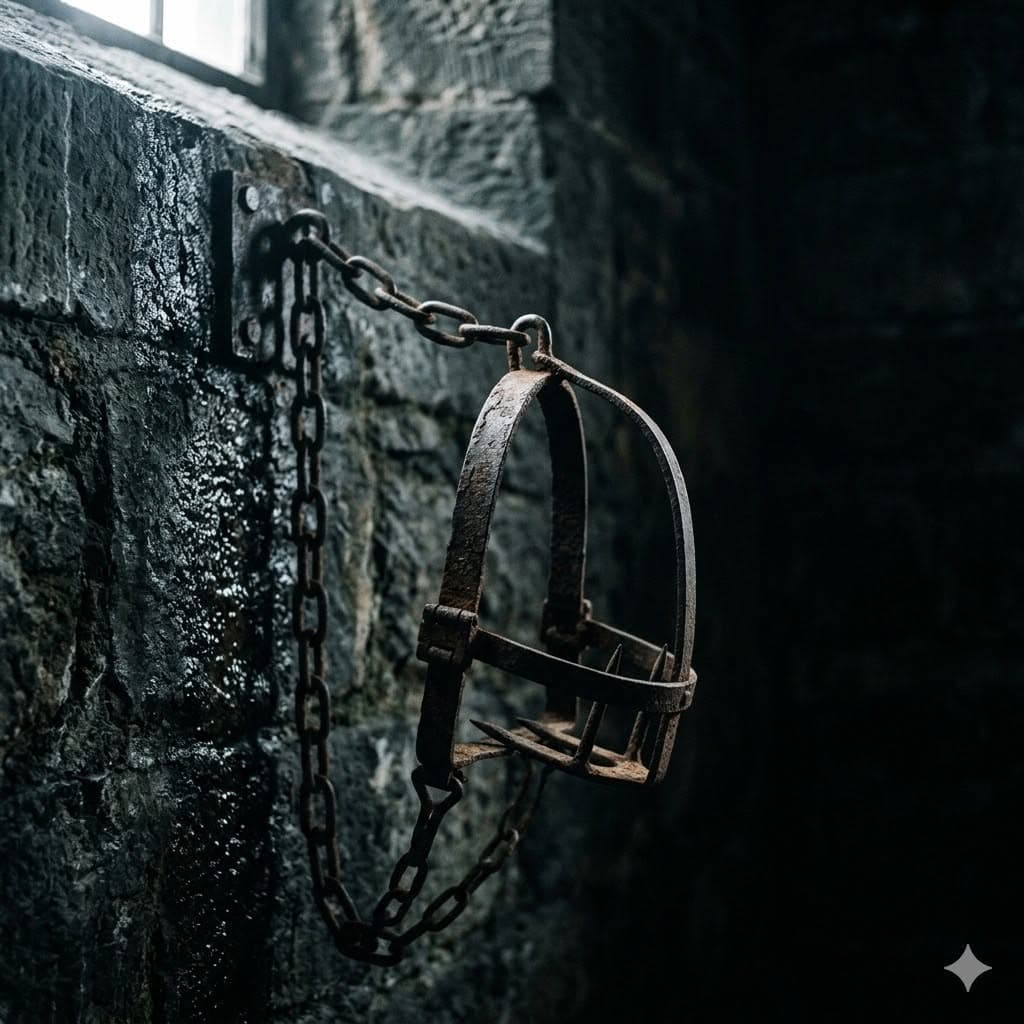
She was stripped. She was shaved from head to foot so that the devil's mark could be searched for on her body. She was subjected to the torture of the rope, a cord twisted around her head with sufficient force to produce the kind of pain that reorganises every prior commitment. She was pinned to the wall of her cell by the iron bridle.
The bridle was an iron frame that enclosed the head. Four prongs extended inward: two pressed against the tongue, two against the cheeks. It held the mouth forced open. It prevented speech, prevented eating, prevented sleep in any position that relieved the pressure of the metal against the soft tissue of the mouth. Agnes was chained to the wall in the bridle for days. She could not speak. She could not eat. She could not sleep. She could not attend to herself. She endured the days in the full weight of what the device was designed to produce, which was not simply pain but the specific, grinding exhaustion of pain without interruption and without relief.
She confessed.
The confession she produced was everything the court required and more. A company of witches had sailed in sieves to North Berwick on Halloween. They had danced. They had entered a church lit by black candles and done homage to the devil in the form of a man. They had plotted to raise a storm to sink the king's ship as he sailed home from Denmark with his new queen, Anne. They had worked magic against the king with the blood of toads and the severed parts of disinterred corpses.
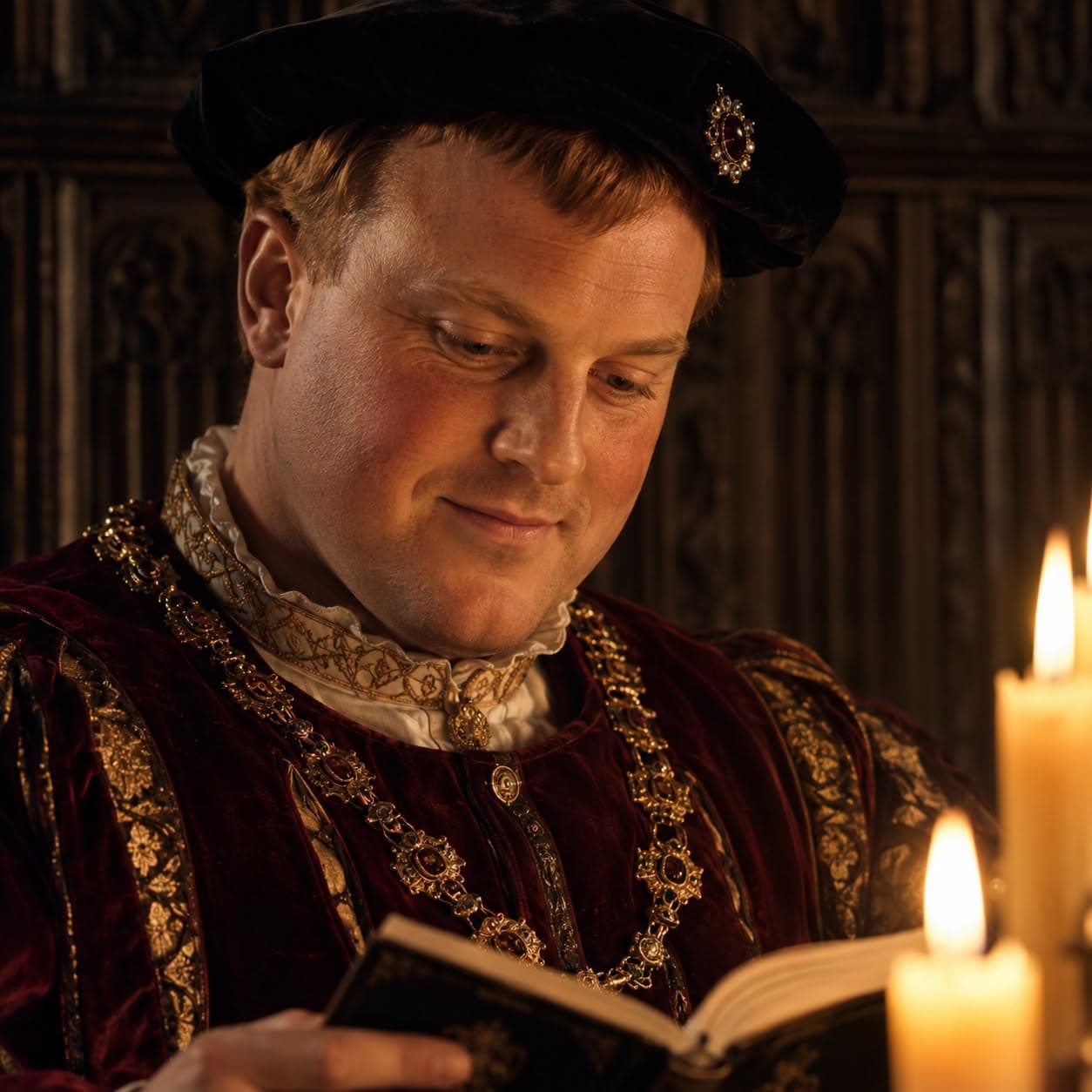
James VI of Scotland was personally present for part of Agnes's examination. He had an intense and documented interest in witchcraft that would later produce his treatise Daemonologie and, when he became James I of England, would shape the witch trials of two kingdoms. He was precisely the wrong king for Agnes Sampson to have come before. He believed in the threat she represented because he had constructed a theology around it, and her confession confirmed everything his theology had prepared him to find.
Agnes took the king aside during the examination. She leaned close and spoke to him quietly, and what she said were the words that had passed between James and his queen on their wedding night, words that no one outside that room could have known. James swore by the living God that all the devils in Hell could not have discovered the same.
What she had actually discovered was useful intelligence, gathered through the network of women who attended royal households, whispered across the months in the manner of women who understood that knowing things was one of the few protections available to them. It was not witchcraft. It was information, carefully held and deployed at the precise moment when something extraordinary was needed to hold the king's attention.
It held his attention. It did not save her.
Agnes Sampson was convicted of witchcraft on the twenty-seventh of January 1591. She was taken to Castle Hill in Edinburgh the following morning. She was garroted first, which was the mercy available to those who had confessed and not recanted, and then her body was burned.
The iron bridle that had been fastened to the wall of her cell, with its four prongs and its chain and its careful engineering of pain without pause, was the instrument that produced her confession. The confession produced her death. The death confirmed, for James VI, everything he already believed about the women who were sent for in the night when the medicine of the period had nothing left to offer.
He wrote it all down in Daemonologie. He took it with him to London in 1603. It informed the law of England for a century.
The Wise Wife of Keith had been at the centre of her community for decades. The iron of Edinburgh put her at the centre of something larger and more durable: the legal and theological framework that would send hundreds of women to the stake in the decades that followed, in Scotland, in England, in the colonies across the Atlantic where James's book travelled with the settlers.
She gave them the confession they needed after days in the bridle.
She gave them rather more than they had asked for.